An accessory-led way to make getting dressed easier
UniqueYou’s appeal is straightforward: its accessories are intended to work with a woman’s existing wardrobe. That is a useful starting point if your weekends are short and you would rather enjoy them than spend the morning assembling an elaborate look. A scarf can sit beside a familiar coat, soften a plain shirt or bring a favourite colour close to your face. The aim is not to make every outfit look new. It is to make a few reliable outfits feel more considered.
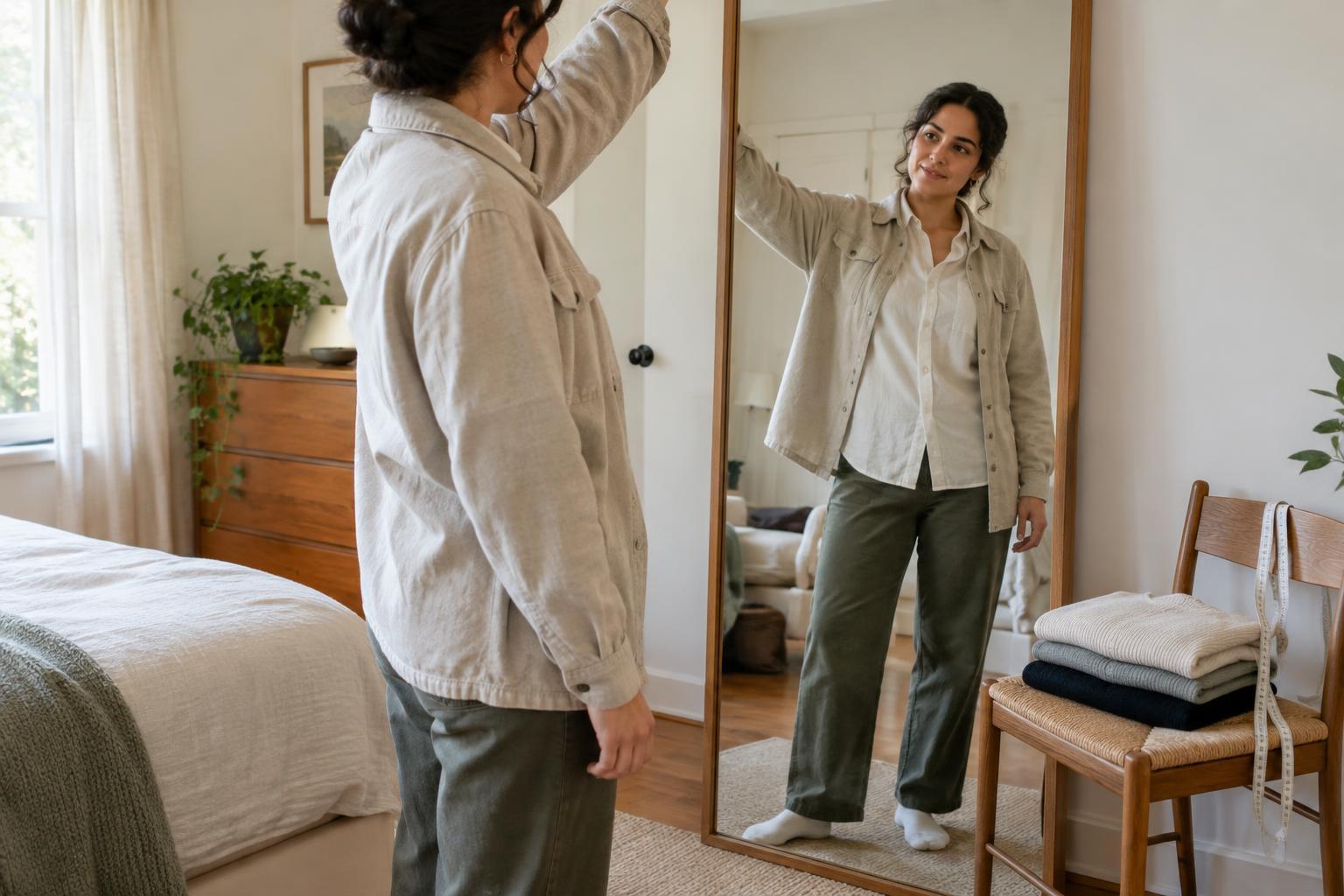
Before browsing, choose three things you actually wear: perhaps a coat for short outings, a relaxed top for errands and a dress or jacket for meeting friends. Notice which colours already repeat and where an accessory might help. If everything is neutral, a patterned square scarf could introduce interest; if your clothes already have strong prints, a quieter wrap may be more useful. This small exercise gives you a reason to choose a piece, rather than relying on a beautiful photograph alone.
The brand story, without pretending it was a straight line
UniqueYou began in 2014 with scarves and clothing. There was a pause, followed by a return after the domain was recovered, so it would be misleading to describe its history as uninterrupted trading. Its original brown wordmark includes a horse motif and a “Since 2014” detail; a neutral taupe palette also forms part of its identity. Those visual cues suggest a restrained way of presenting accessories, but they are not a substitute for looking closely at the individual item you may buy.
The assortment described here centres on women’s scarves, shawls, wraps and square scarves, including silk, cashmere and wool categories. Think of the category name as an invitation to investigate, not a guarantee about every fibre in every product. Composition varies by product. A good weekend choice is one you can picture wearing on an ordinary Tuesday as well as on a special Saturday; that is where accessible elegance becomes practical rather than merely aspirational.
Start with the scarf shapes you will actually use
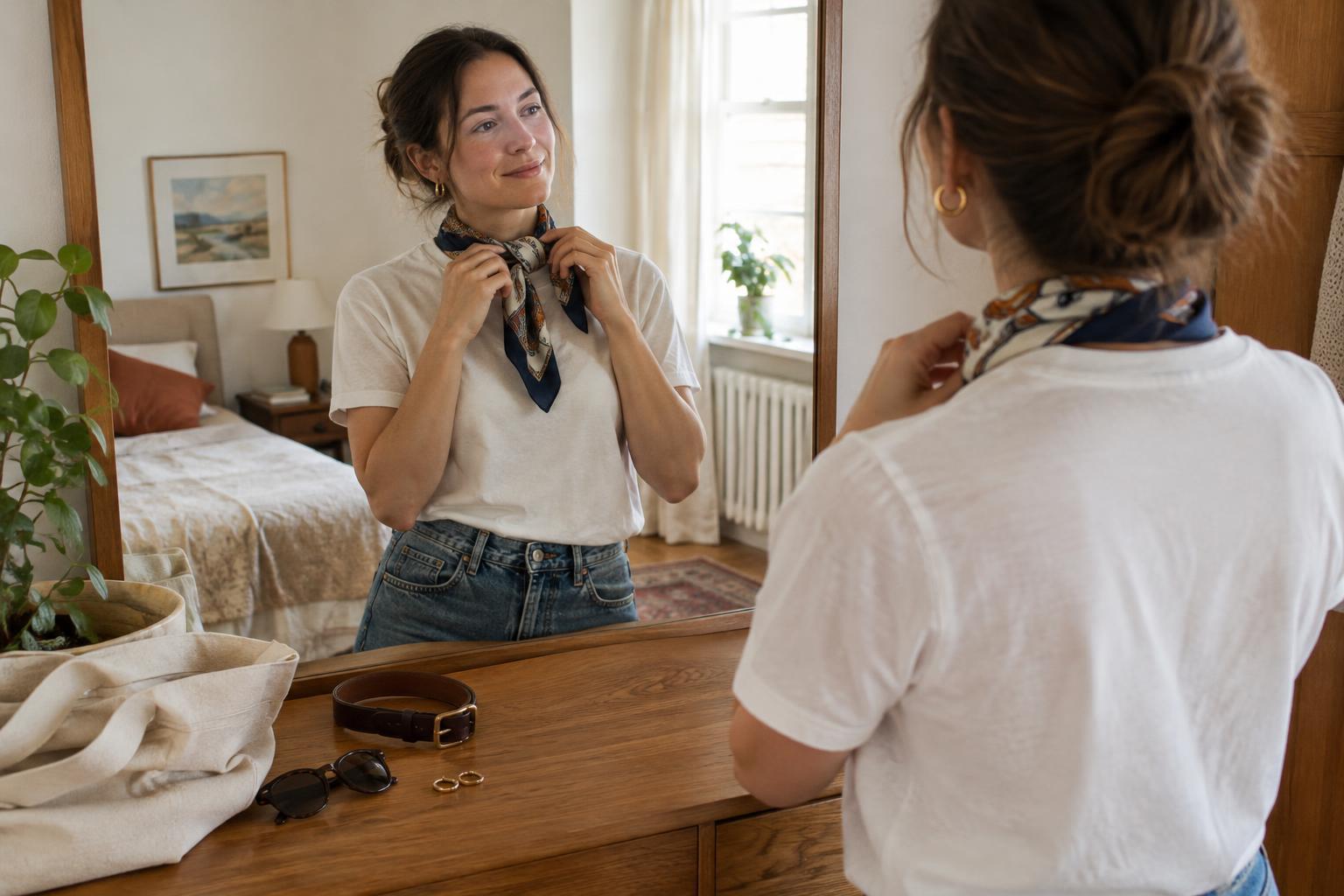
A long scarf is easy to test against an everyday coat: drape it loosely, fold it once or tuck the ends beneath a collar. A shawl or wrap can cover more of your shoulders, which may suit a cool room or an unhurried evening out. A square scarf offers a different kind of flexibility. Fold it into a narrow band for the neck, tie it to a bag handle for colour, or wear it as a head or hair accessory when that suits your style. None of these approaches requires a complicated knot.
Scale matters as much as colour. A large wrap may be the piece you reach for when you want a noticeable layer, while a smaller square can be easier to keep in a bag. If you dislike adjusting an accessory throughout the day, try a simple fold and see whether it stays comfortable while you move. Check the stated measurements for any item you consider; a photograph may show the styling idea but not tell you how much fabric you will have in your hands.
Choose a material for the way you plan to wear it
Material is a sensible place to narrow the choice, provided you check the composition of the specific product. Silk categories may appeal when you want a smoother-looking accent or a square scarf that can be folded neatly. Cashmere and wool categories may come to mind when you are planning an extra layer for cooler weather. The material name alone cannot tell you how a particular scarf will feel, how substantial it is or how it should be cared for; those details belong to the individual item.
Give yourself a short practical checklist. Will this scarf touch your neck for hours, or mostly sit over a jacket? Would you prefer a light accent that packs away easily, or a larger wrap that becomes part of the outfit? Read the product description and care information before deciding, especially if the piece is a gift and the recipient has particular preferences. Choosing with a real use in mind is more helpful than assuming that one fibre or one category is right for everybody.
Build a small colour plan around clothes you own
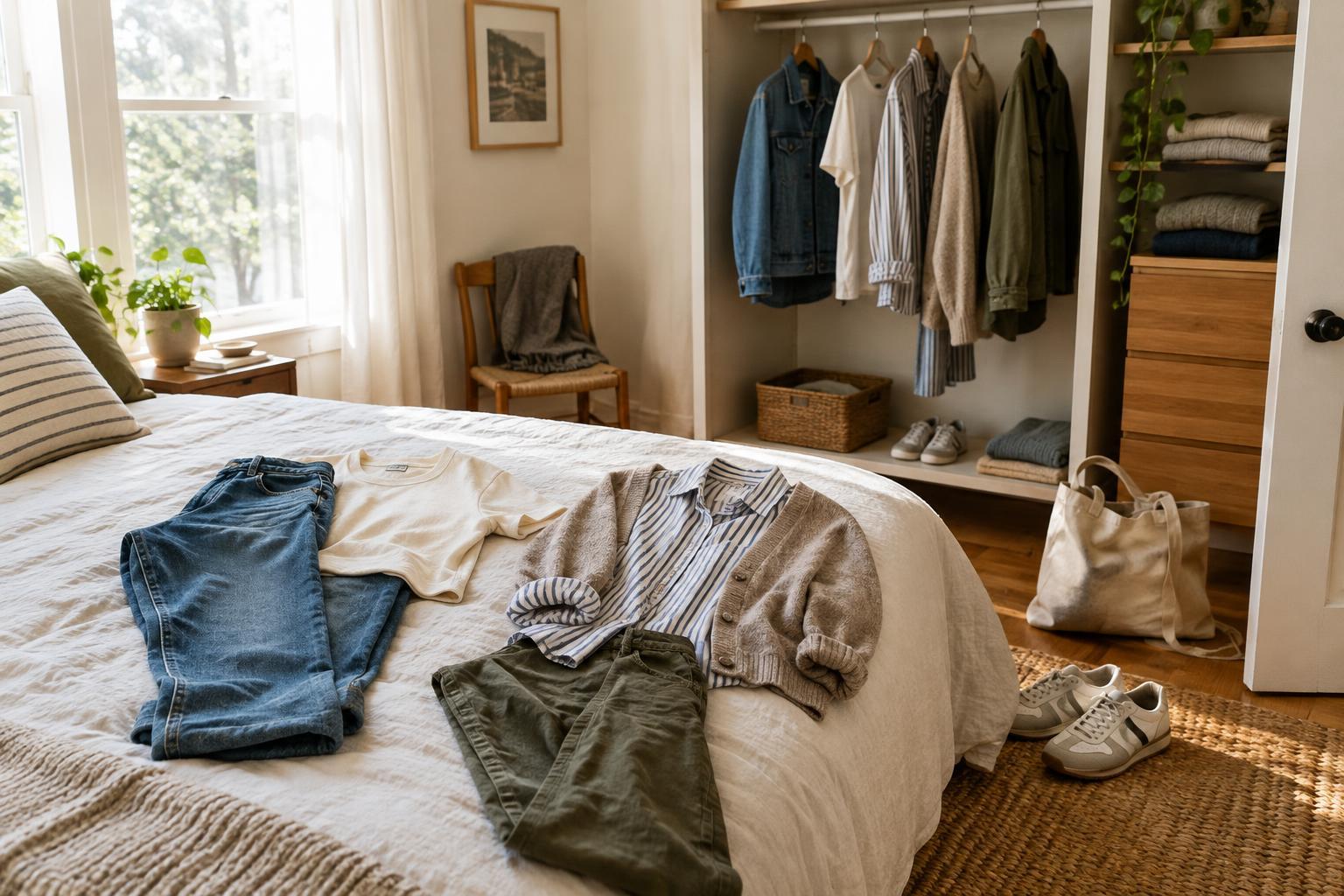
For a quick wardrobe exercise, put your most-worn outer layer next to two tops and one pair of trousers or a skirt. Identify a base colour, a supporting colour and one accent you would enjoy seeing more often. A brown or taupe scarf might extend an understated palette; red could give a quiet outfit a focal point. Stripes can connect two colours already in your clothes, while a plain scarf can give a patterned coat some breathing room. These are prompts for looking, not rules you need to obey.
Pay attention to contrast near your face. If a colour makes you feel at ease but seems overwhelming in a large garment, a smaller scarf may be a manageable way to wear it. If you own several scarves that are lovely but rarely leave the drawer, ask what they have in common: perhaps their size, their pattern or the effort their knots demand. That observation is more useful than buying another near-duplicate. The best addition has an obvious partner in your wardrobe before it arrives.
Three low-effort styling ideas for a real weekend
For a short outing, begin with the coat and shoes you would have worn anyway. Add a long scarf in a colour that picks up a detail from either one, then keep the knot loose enough to feel natural. For an afternoon spent moving between a home project and a simple meal, fold a square scarf into a narrow neck band or tie it to a bag instead. You get a visible change without committing to an accessory that might get in the way of what you are doing.
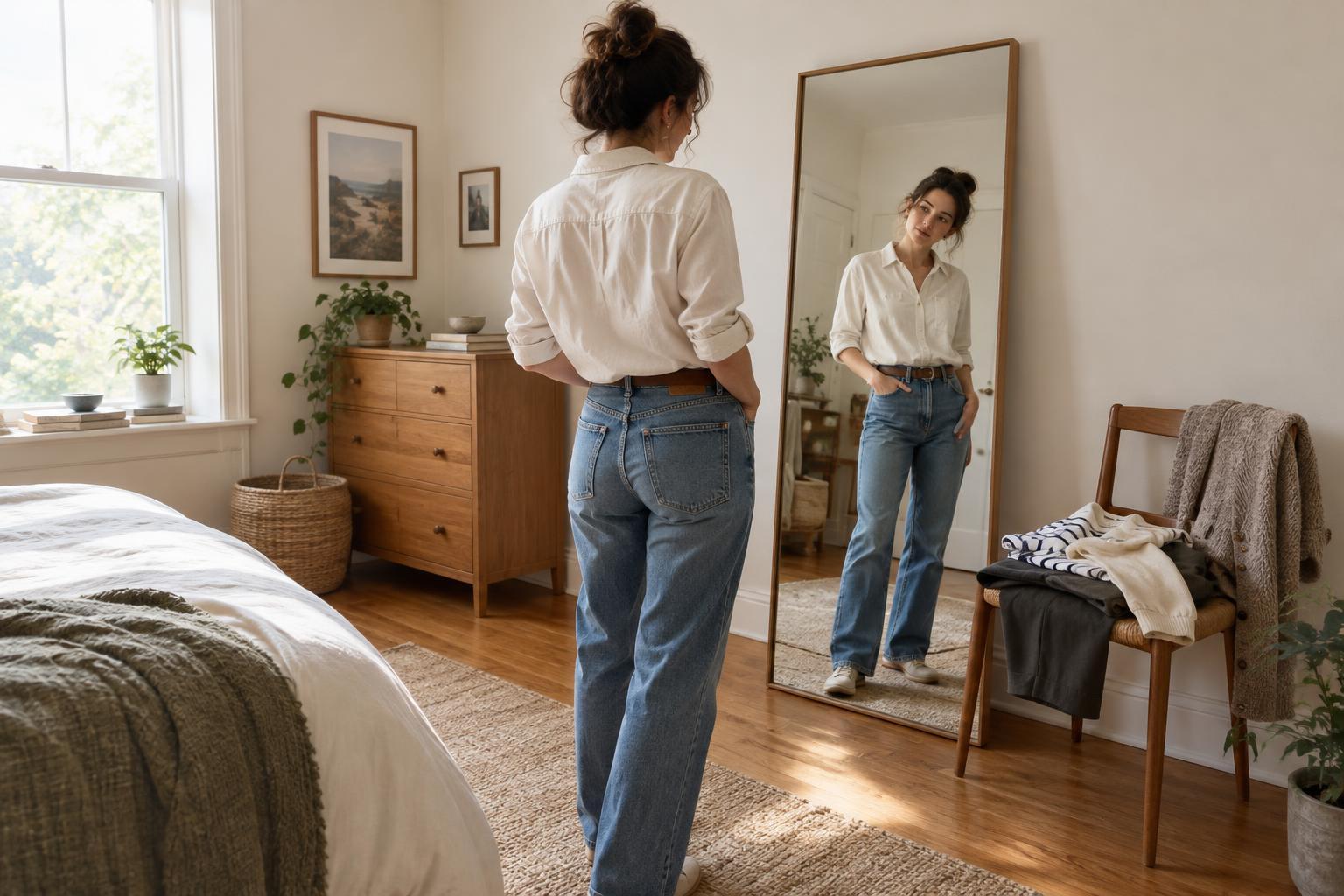
For an evening visit or a relaxed dinner, try a wrap over a familiar dress or shirt. Let the fabric provide the softer line and leave other accessories simple. Spend five minutes in front of a mirror testing one fold and one drape, rather than learning every possible tie. If the arrangement needs constant fixing, choose another. Weekend style should leave room for the outing, the conversation or the hobby you made time for, not become the main task of the day.
Make a scarf gift feel personal, not risky
A scarf can be a thoughtful gift because it need not depend on the precise fit of a tailored garment. It still benefits from observation. Notice whether the recipient reaches for compact neck scarves, generous wraps or accessories they can remove easily indoors. Look at the colours of their frequently worn coat and bag rather than guessing from a one-off occasion outfit. When in doubt, a colour that already appears in their wardrobe has a better chance of feeling familiar.
If the gift is for someone who enjoys a strong print, a square scarf may invite playful styling. If they prefer simple layers, a restrained long scarf or wrap may make more sense. Check the listed size, composition and care guidance on the particular item before you choose. You can also include a small note explaining the outfit you pictured it with; that personal connection often says more than an extravagant claim about the accessory. Leave the recipient free to wear it their own way.
A calm browsing plan for limited free time
Set a modest goal for the search: one shape, one likely use and two colours that already work with your clothes. Then compare a few candidates rather than opening every category at once. If you are shopping for a scarf to accompany a winter coat, inspect its dimensions and composition before you become attached to a photograph. If you want a head or hair scarf, think about the folds you will actually use. A ten-minute shortlist can be more useful than a long, unfocused browsing session.
Pause before deciding and ask three questions: What would I wear this with next weekend? Is the size suitable for the styling idea I have in mind? Have I checked the item’s material and care details rather than making assumptions from its category? If the answers are clear, you have a practical basis for choosing. If not, put the idea aside. A restorative weekend also includes the freedom not to buy anything until the right use becomes clear.
One brand, several routes into a local collection
UniqueYou has 20 regional domains, 21 regional-language versions and 16 distinct languages. Those figures differ because countries may share a language, and one country can have more than one language version. The United Arab Emirates is the clearest example here: its Arabic version is at the root of its regional domain, while its English version uses /en. Germany and Austria both use German; Belgium and the Netherlands both use Dutch; several destinations use English.
The regional guide below keeps each destination language visible so you can tell which version you are considering. Its local terms point to a shop entry or a named scarf category, while brand-labelled routes identify another relevant entry or collection. Treat these as ways to orient your search, not as a promise that any particular product, size or composition is available. Choose the destination that suits your country and reading preference, then apply the same simple wardrobe questions to what you find.
A regional guide to finding your starting point
Each entry names the country and the language of its destination. A local-language term can be useful when the category name looks unfamiliar; the surrounding explanation tells you what sort of page it identifies. Once there, compare individual product details with the clothes and plans you already have.
Poland — Polish
The Polish-language shop entry is described by a local phrase for an online scarf and neckerchief shop — sklep internetowy z szalami i apaszkami. If silk interests you, the Polish-language brand route to the silk-scarf collection is — UniqueYou. Think first about whether you want a longer layer or a smaller accent for a familiar coat.
Germany — German
The German-language brand entry is — UniqueYou. For a brown women’s scarf category, the German local term is — schal damen braun; for a striped-scarf collection, use the German-language brand route — UniqueYou. Brown may blend with a neutral coat, while stripes can echo a colour already present in your outfit.
Czechia — Czech
The Czech-language shop entry uses a local phrase referring to a cashmere-scarf shop — obchod s kašmírovými šálami. The Czech-language brand route for neck scarves is — UniqueYou. If you are choosing between those ideas, decide whether you want a broad layering piece or a smaller scarf to wear close to the collar, and check each item’s composition.
Spain — Spanish
The Spanish-language shop entry is identified by a local phrase for a cashmere-scarf shop — tienda de bufandas de cachemira. For head and hair scarves, the Spanish-language brand collection route is — UniqueYou. A head scarf can be a playful wardrobe accent, but check its dimensions if you already have a particular fold or tying style in mind.
France — French
The French-language shop entry is introduced by a local phrase for a scarf boutique — boutique de foulards. If wool is the material category you want to explore, the French-language brand collection route is — UniqueYou. Consider the layer you would wear underneath it, then inspect the selected item’s composition and care instructions.
Hungary — Hungarian
The Hungarian-language shop entry is described by a local term for an online scarf shop — kendő webshop. For a red-scarf collection, the Hungarian-language brand route is — UniqueYou. Red can be a deliberate focal point beside a quiet coat; look at the shades in your wardrobe before deciding how much contrast you want.
Italy — Italian
The Italian-language shop entry is presented through a local phrase for a silk-scarf shop — negozio di foulard di seta. The Italian-language brand route to a cashmere-scarf collection is — UniqueYou. These are different starting points: consider whether you picture a neatly folded accent or a more generous layer, then read the details of the individual piece.
Romania — Romanian
The Romanian-language shop entry uses a local phrase for a headscarf shop — magazin de baticuri. For a headscarf collection, the Romanian-language brand route is — UniqueYou. If you plan to wear one in your hair, test a similar-sized scarf you already own to learn whether you prefer a compact knot or a looser fold.
Slovakia — Slovak
The Slovak-language brand entry is — UniqueYou. A local term for a stylish silk neck scarf points to its Slovak-language collection — štýlová hodvábna šatka na krk; a separate brand route leads to the scarf collection — UniqueYou. Decide first whether you want a small neck accent or a longer everyday layer.
Finland — Finnish
The Finnish-language brand entry is — UniqueYou. For a cotton-scarf category, the Finnish local term is — puuvillainen huivi; a broader scarf-collection route in Finnish is — UniqueYou. If you are comparing materials, check the product composition and care details rather than assuming every item in a category is identical.
Sweden — Swedish
The Swedish-language shop entry is described by a local phrase for a silk-scarf shop — butik med sidenscarfar. The Swedish-language brand route to brown scarves is — UniqueYou. Brown can be easy to pair with other neutrals; try placing a comparable shade beside your usual jacket to see whether you want harmony or contrast.
Denmark — Danish
The Danish-language brand entry is — UniqueYou. A local phrase for women’s striped scarves leads to the striped collection — halstørklæder med striber til damer; the Danish-language brand route to silk scarves is — UniqueYou. Stripes may help connect colours already in an outfit, while material and size still deserve a separate check.
Belgium — Dutch
The Dutch-language brand entry for Belgium is — UniqueYou. The Dutch local term for scarves leads to the general collection — sjaals, while a Dutch-language brand route leads to cashmere scarves — UniqueYou. Belgium shares Dutch as a destination language with the Netherlands here, but this is its own regional entry.
Austria — German
The German-language brand entry for Austria is — UniqueYou. A German local phrase for a women’s silk neck scarf identifies a silk collection — Halstuch aus Seide für Damen; the German-language brand route for cashmere scarves is — UniqueYou. Choose by the role you want the scarf to fill, not by the category label alone.
Netherlands — Dutch
The Dutch-language shop entry for the Netherlands uses a local phrase for a cashmere-scarf shop — winkel voor kasjmieren sjaals. The Dutch-language brand route to red scarves is — UniqueYou. If red appeals to you, compare it with the coat you wear most often; a single strong accessory may be enough to change the mood of a familiar outfit.
United States — English
The English-language brand entry for the United States is — UniqueYou. For the general women’s scarf collection, the local search phrase is — scarf for women; the English-language brand route to silk scarves is — UniqueYou. A useful shortlist begins with the scarf shape you will wear most often, followed by size and composition.
United Arab Emirates — Arabic
The Arabic-language brand entry at the regional domain root is — UniqueYou. The Arabic-language brand route to the cashmere-scarf collection is — UniqueYou. This is the Arabic destination, distinct from the English version; if you are considering a wrap, check its measurements and individual material details.
United Arab Emirates — English
The English-language version in the United Arab Emirates uses /en rather than the Arabic root. Its English local phrase for the shop entry is — online scarf shop. This is the starting point if you prefer to browse this regional destination in English; keep your intended scarf shape and wardrobe colours in mind as you look.
Ireland — English
The English-language brand entry for Ireland is — UniqueYou. A local phrase for women’s square scarves points to that collection — ladies square scarves, while the English-language brand route to cashmere wraps is — UniqueYou. A square and a wrap serve different styling purposes, so start with where and how you expect to wear the piece.
United Kingdom — English
The English-language brand entry for the United Kingdom is — UniqueYou. For a winter-scarf collection, the local phrase is — winter scarfs; the English-language brand route to red scarves is — UniqueYou. Check whether you need a practical extra layer, a strong colour accent or both before narrowing your choice.
Portugal — Portuguese
The Portuguese-language shop entry is described by a local phrase for a scarf shop — loja de écharpes. For head and hair scarves, the Portuguese-language brand collection route is — UniqueYou. If you have a particular tying style in mind, use the item’s dimensions to judge whether it will work with your usual hairstyle and clothes.
Keep the search as gentle as the weekend itself: begin with an outfit you already like, choose the scarf’s job, and check the details of the individual piece. A well-chosen accessory should fit into your life, not give you another project to finish.