Plan for the room you actually have
A small room may have less wall area to paint, but it often has just as many doors, outlets and awkward corners as a larger one. Before buying supplies, walk around the room and note what needs attention. Look for nail holes, peeling paint, stains, uneven patches and furniture that will be difficult to move. Decide whether you are painting only the walls or also the ceiling and trim; each added surface needs its own time and preparation.
Measure the walls and check the paint label or a store’s coverage guidance when estimating how much to buy. Gather a roller and tray, an angled brush for edges, a drop cloth, painter’s tape, mild cleaner, patching compound, sandpaper and any primer the surface calls for. Choose a time when the room can stay mostly unused while coats dry. If your schedule is tight, it is better to finish the preparation one day and paint the next than to rush both.
Clear space before you open the paint
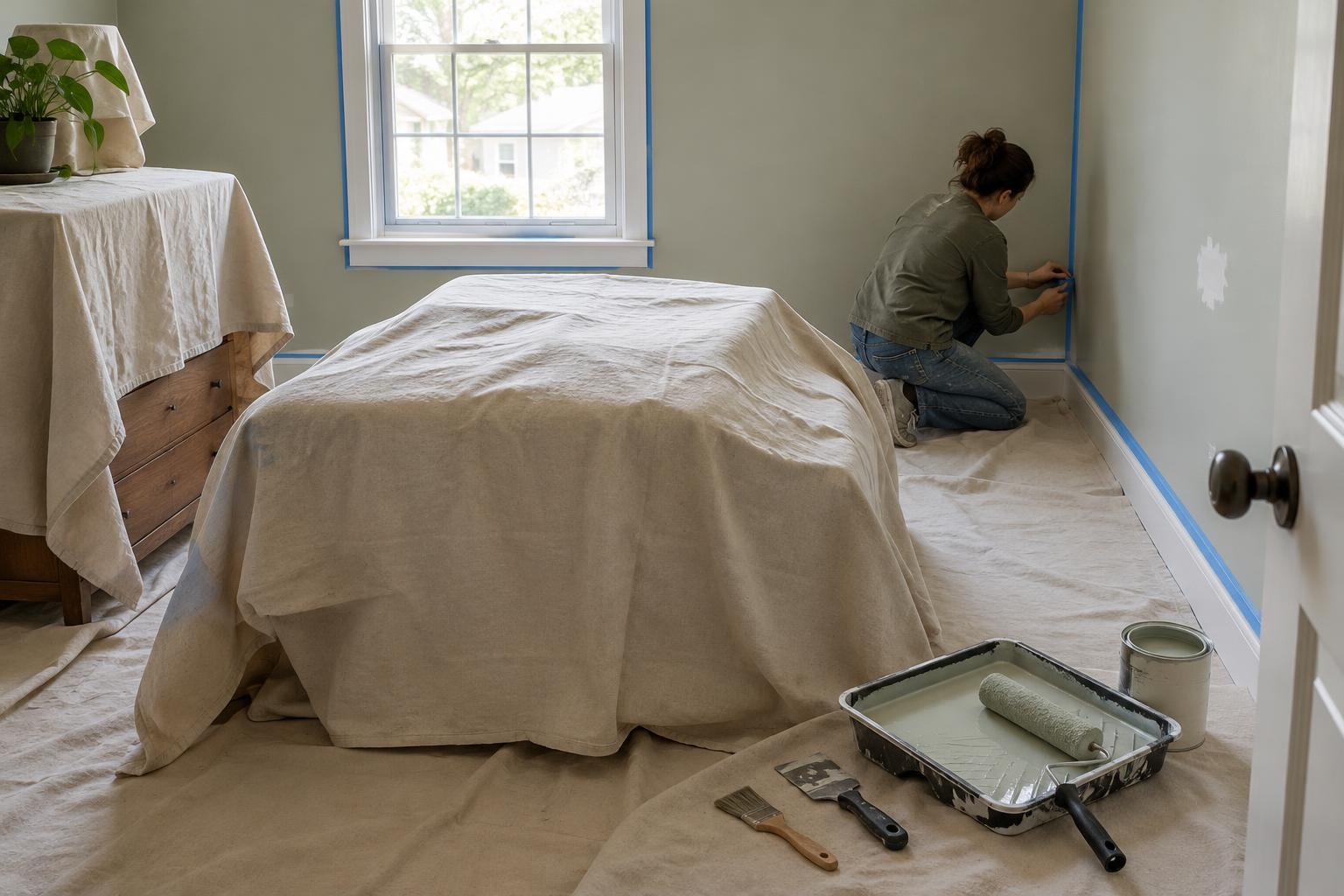
Move small items, wall art and loose furniture out of the room. If a large piece must stay, shift it toward the center and cover it fully. Leave enough space to reach every wall without stretching over furniture. Take down curtains and remove switch plates and outlet covers if you can do so safely; keep their screws in a labeled container. Do not paint over outlets, switches or fixtures.
Protect the floor with a drop cloth that will stay put underfoot. Cover anything that might catch a drip, including built-in shelves and hardware you cannot remove. Painter’s tape can help protect trim and other edges, but press it down carefully and follow its removal instructions. In a compact room, this setup can feel like most of the job. It also makes it much easier to move steadily once the brush is wet.
Clean, repair and prime where needed
Paint adheres more reliably to a sound, clean surface. Dust the walls, then gently clean marks and greasy spots with a suitable mild cleaner. Rinse if the cleaner’s directions call for it, and let the walls dry. Scrape away loose, flaking paint only when it is safe to do so. If you suspect an older coating may contain lead, avoid sanding or scraping it until you have checked the appropriate safety guidance for your home.
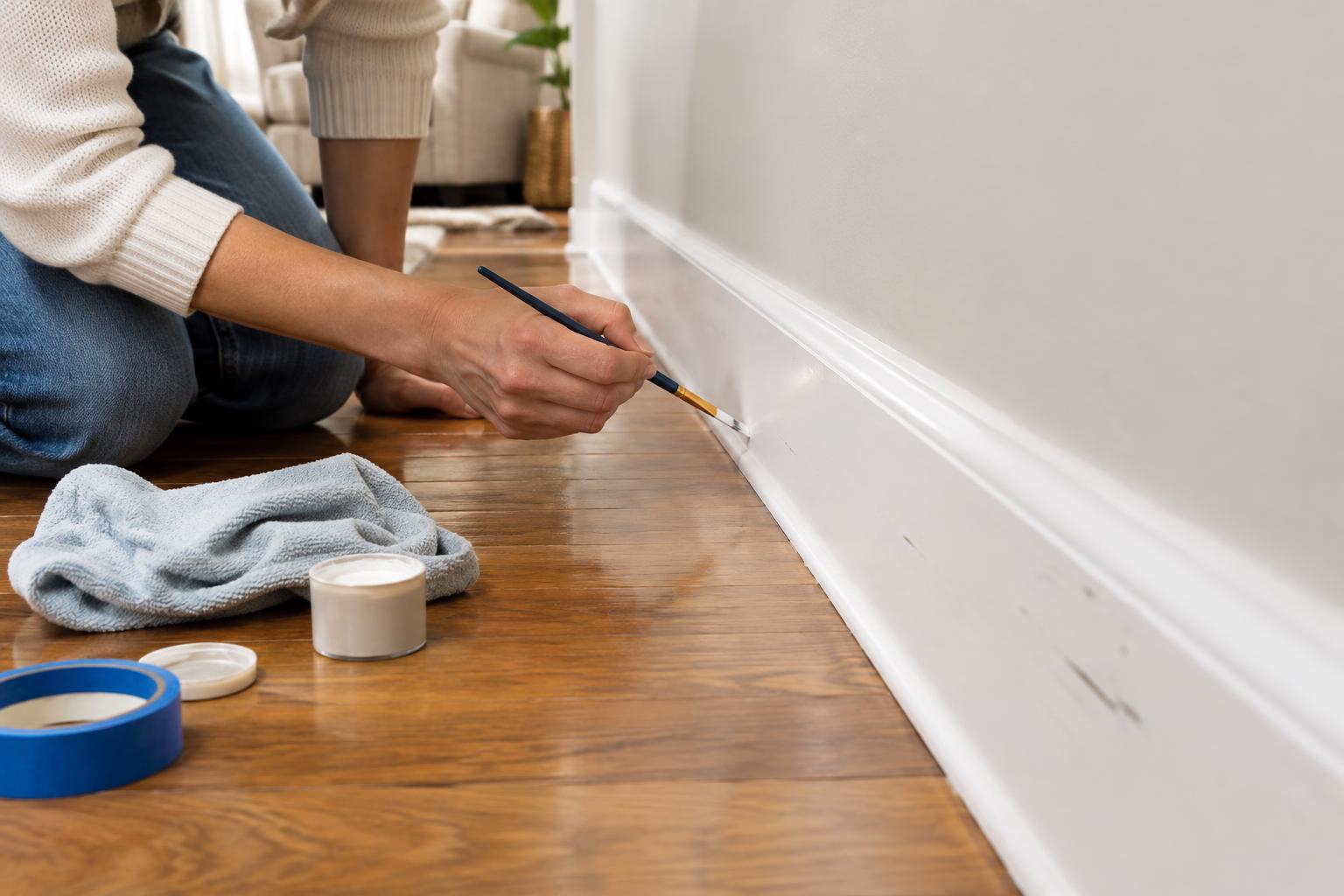
Fill small holes and dents with patching compound, following its directions for application and drying. Sand dry patches smooth and remove the dust before painting. Larger cracks, persistent dampness or paint that keeps peeling may need more investigation; a fresh coat will not fix the underlying cause. Primer can help on bare patches, repaired areas, stains or a strong color change. Choose one suited to the surface and follow the product directions rather than treating primer as an optional shortcut.
Paint in a sequence you can manage
Read the paint label for stirring, ventilation, temperature and drying guidance. Open windows when practical and keep the space ventilated as directed. Start by using an angled brush to paint a manageable band along corners, the ceiling line, baseboards and other places a roller cannot reach. Then roll the nearby wall area before those brushed edges dry, working in sections so the finish blends more evenly.
Load the roller without soaking it, and use overlapping passes to cover each section. Work from the top of the wall downward, checking for drips around corners and near the floor. A light, even coat is usually easier to control than trying to cover everything at once. If the paint calls for another coat, wait the recommended time. Small rooms can tempt you to close up and put everything back immediately, but paint needs the drying and curing time described on its label.
Finish without undoing the careful work
Check the walls in good light for missed spots, drips or uneven edges. Remove painter’s tape according to its directions, and touch up carefully where needed. Clean brushes and rollers as the paint label recommends, close containers securely and store leftover paint where its instructions permit. Reattach covers only when the surrounding paint is dry enough to handle.
Bring furniture back gradually rather than scraping it along a newly painted wall. If the room still smells strongly of paint, continue ventilating it and delay using it as needed. The satisfying part of a small-room project is not just the new color: it is being able to enjoy it without spotting a dusty patch or paint on the floor. Leaving room in your weekend for preparation and drying makes that outcome much more likely.