Start with a simple plan
Soup is a useful weekend meal because it gives odds and ends a shared purpose. A carrot, a handful of greens and a can of beans may not look like dinner separately, but they can become one in a pot. You do not need to choose exact amounts first. Decide what kind of soup sounds good: light and brothy, thick with vegetables, or hearty enough to eat with bread. That choice will guide what you add and how much liquid you use.
Look for three parts: something that builds flavor, something that gives the soup substance, and a liquid. Onion, garlic, celery, spices or a little tomato paste can build the base. Vegetables, cooked beans, lentils, pasta or leftover cooked meat can provide substance. Broth or water can supply the liquid. You do not need an ingredient from every category. A modest combination that tastes good together is easier to manage than a pot filled with every leftover in the fridge.
Build flavor before adding the liquid
Put a little oil in a pot over medium heat. Add chopped onion, celery or another sturdy aromatic vegetable if you have one, and stir until it softens. Add garlic later so it is less likely to scorch. For a different starting point, warm spices briefly in the oil, or cook a spoonful of tomato paste until it darkens slightly. If the bottom of the pot begins to brown, a splash of water or broth can loosen those flavorful bits.
Keep this step simple when time is short. Even a few minutes of cooking a base can give the finished soup more depth. If you have no fresh aromatics, start with the liquid and use pantry seasonings instead. Dried herbs, garlic powder or a little soy sauce can help, but add them gradually. It is easier to add more flavor later than to rescue a soup that has become too salty or heavily spiced.
Add ingredients in the order they need
Pour in enough broth or water to cover the ingredients you plan to simmer, then bring the pot to a gentle simmer. Add firm vegetables such as carrots, potatoes or winter squash first. Softer vegetables, including zucchini and peas, can go in later. Cooked beans and leftover cooked meat need only enough time to heat through. Tender greens can be stirred in near the end, when they need just a short time to wilt.
Think separately about pasta, rice and other grains. They absorb liquid as they cook and may keep absorbing it after the soup is put away. If you want a brothy soup or expect leftovers, cook them separately and add them to each bowl. If you prefer a thicker soup, cook a small amount directly in the pot, adding more liquid if needed. Check that every ingredient is cooked through before serving, especially if you use uncooked meat.
Taste, then make one adjustment at a time
Once the vegetables are tender, taste a spoonful. If the soup seems flat, it may need a little salt. If it tastes heavy, try a small squeeze of lemon or a splash of vinegar. If it feels thin despite having enough ingredients, mash some of the beans or soft vegetables against the side of the pot and stir them back in. You can also simmer the soup uncovered to reduce some liquid, or add liquid if it is thicker than you wanted.
Give each change a moment to mix in before tasting again. A finishing touch can make the bowl feel complete without adding another cooking step: chopped herbs, black pepper, grated cheese, a drizzle of olive oil or something crunchy on top. Choose one or two that suit the soup rather than treating them as requirements.
Keep a loose formula for next time
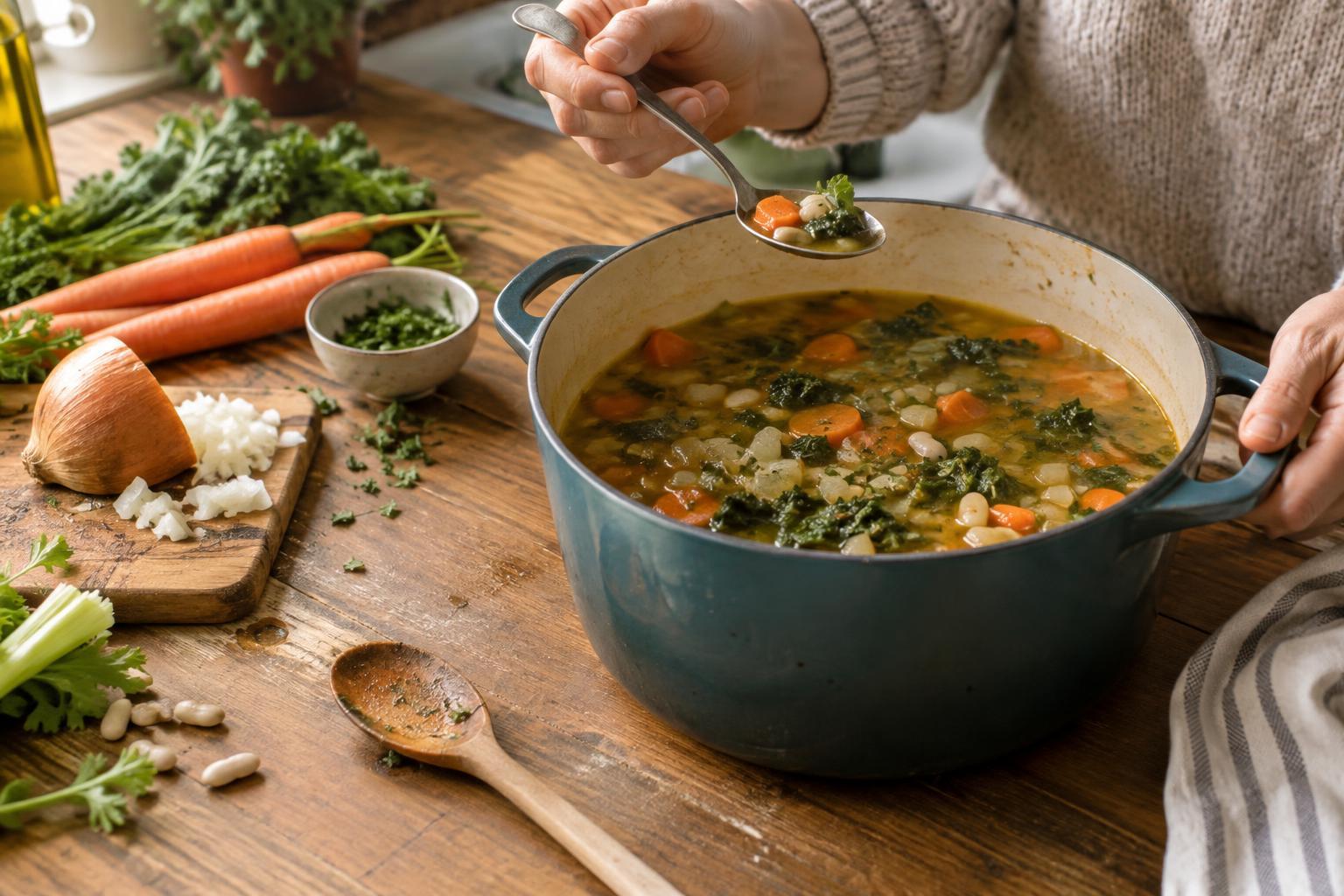
After making soup this way once, remember the sequence rather than the quantities: soften a flavor base, add liquid and sturdy ingredients, simmer, add quick-cooking ingredients, then taste and adjust. For an easy variation, try onion, carrots, cooked white beans and greens in broth. Another day, start with tomato paste and spices, then add potatoes and peas. The method stays the same even when the contents of the fridge change.
If you have only a short window to cook, chop the firm vegetables first and prepare the quick-cooking additions while the pot simmers. Set out a container for leftovers before serving so the remaining soup is easy to put away promptly. A flexible method is not about guessing perfectly; it is about knowing what to check as you go. That makes a warm, satisfying meal possible without turning a quiet weekend into a complicated cooking project.