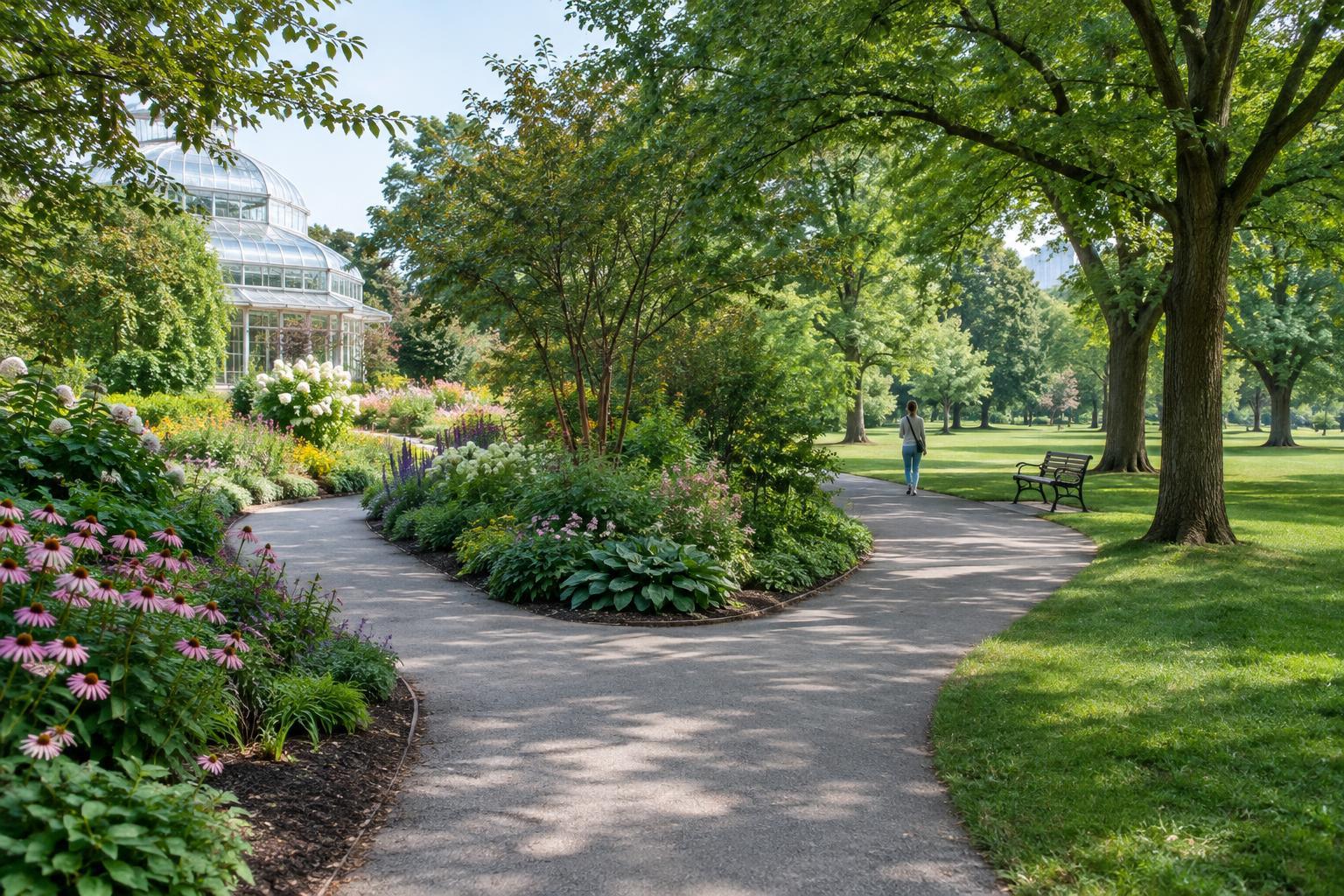
Start with the kind of break you want
A restorative outing does not have to be a full day away. Sometimes it is an hour spent looking at something other than a screen, walking without an errand to complete, or sitting somewhere pleasant with a drink. Both botanical gardens and city parks can offer that pause, but they invite different kinds of visits.
A botanical garden tends to give your walk a gentle focus: planted collections, labeled trees, seasonal displays or paths designed for close looking. A city park is usually less structured. You might follow a loop, find an open lawn or stop at the first bench that appeals to you. Neither setting is automatically quieter or more relaxing. Think about whether you would welcome a little direction or would rather have space to do nothing in particular.
Choose a botanical garden for a change of scene
A botanical garden can make a short trip feel distinct from your usual neighborhood walk. Even if you know little about plants, you can pick one simple theme for the visit: notice leaf shapes, look for shade-loving plants, or photograph colors you might use in a home project. The point is not to learn everything on the signs. It is to let the details hold your attention for a while.
The trade-off is that a garden may require more planning. Some charge admission, use timed entry or have limited hours, and getting there may take longer than expected. Paths and facilities vary, too. Before leaving, check the garden’s current visitor information for hours, fees, accessibility and any rules about food. If the logistics feel like work, save the garden for a weekend when the journey itself sounds enjoyable.
Choose a city park for freedom and ease
A nearby park is often the easier choice when your free time is uncertain. You can arrive without an itinerary, stay for twenty minutes or linger much longer. Open areas can suit a conversation with a friend, while a quieter side path or bench may be better for a solo break. If you want a little movement, a familiar loop takes the pressure out of deciding where to go next.
Parks come with their own variables. Playgrounds, sports areas, traffic noise and busy paths can change the mood from one corner to another. Rather than judging the whole park by its entrance, try moving a short distance before settling in. If you need a reliably calm spot, consider when the park is likely to be busy and whether it has seating, shade or a route that works for you. A small park you can reach easily may be more useful than a grand one that takes half the afternoon to visit.
Use a quick decision test
When both options sound good, decide by the constraint that matters most today. Short on time or unsure how much energy you have? Pick the closer place with an easy route home. Want to feel as though you have gone somewhere special? A garden may be worth the extra preparation. Watching your spending? Compare admission and transport costs rather than assuming one outing is free. Going with someone else? Choose a setting that suits your shared pace, whether that means benches for frequent stops or plenty of room to walk and talk.
You can also decide by what you do not want. If crowds make it hard to unwind, look for a less busy area or choose another time. If following signs feels too much like a task, skip the garden map and wander where permitted, or go to a park. A good outing is not the one with the most to see; it is the one you can enjoy without rushing.
Keep the visit small enough to enjoy
Set a modest plan before you leave: one loop, one planted area or one comfortable place to sit. Check the weather, bring water if you will be out for a while, and wear shoes suited to the paths. For a garden, confirm entry details; for a park, decide where you will enter and how you will get home. That is enough preparation for most casual visits.
Once there, give yourself permission to change the plan. You might walk less than expected, spend ten minutes watching the light through a tree, or head home when you have had enough. Follow posted guidance and leave plants and shared spaces as you found them. The garden may be the better outing this weekend and the park the better one next time. What matters is making room for a break that fits your actual day.