Start with the time you actually have
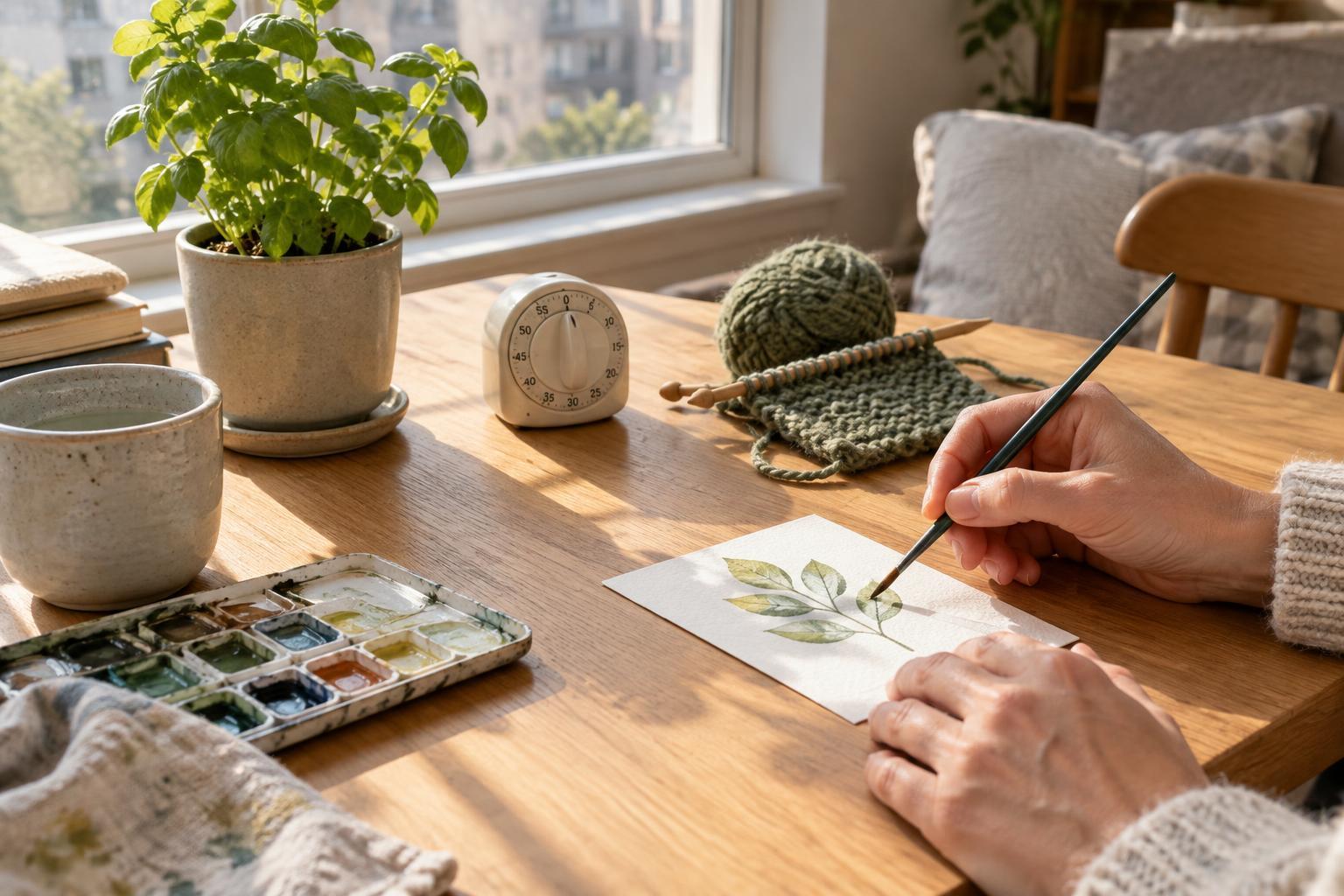
It is easy to picture a new hobby as a long, peaceful stretch of uninterrupted time. A real weekend may offer only 25 minutes between errands or an hour before dinner. Start there. Look at a typical weekend and identify one or two windows you could use without giving up the rest you need. A hobby that fits those windows is more likely to feel like a pleasure than another obligation.
Consider your energy as well as the clock. If Saturday mornings tend to be lively, you might enjoy sketching outdoors or practicing a dance step. If Sunday evenings are slower, hand sewing, a puzzle or a language lesson may be a better match. The goal is not to fill every spare minute. It is to find an activity you would welcome doing again.
Choose a small action, not a big identity
“Learn photography” is an exciting idea, but it is too broad to test in one short session. “Take five pictures of interesting light on my street” is something you can actually do. As you consider hobbies, translate each one into a repeatable action: play one song slowly, make one page of collage, identify three plants on a walk or cook one unfamiliar vegetable. Small actions make it easier to begin and easier to notice what you enjoy.
Look for activities with a natural stopping point. A single row of knitting, a ten-minute drawing study or one practice conversation can end without feeling abandoned. Some hobbies have longer setup or cleanup times, and that does not rule them out. It does mean you should count those minutes when deciding whether the activity fits your available window.
Compare the friction before you buy anything
Make a short list of two or three hobbies that appeal to you, then ask practical questions about each. Can you begin at home or nearby? Do you already have the basic supplies? How much space will you need, and where will you put everything afterward? Will you need quiet, good daylight or a willing partner? These details matter more than how appealing an activity looks in someone else’s finished project.
For a first try, use what you own where possible. A phone camera can help you explore composition; scrap paper is enough to test lettering or drawing. If a hobby requires special equipment, see whether you can borrow it or take an introductory class before committing to a purchase. You can always upgrade later, once you know what part of the activity you want to keep practicing.
Give your favorite idea a three-session trial
Pick one promising hobby and plan three modest weekend sessions. Use the first to learn the basics and make the activity easy to access. In the second, repeat the same skill rather than rushing to a harder project. In the third, try a small variation. For example, you could learn a simple chord change, practice it again with a familiar song, then try a new rhythm. Repetition helps you find out whether you like the process, not just the novelty of starting.
Keep each session simple enough to finish within your chosen time window. Set out supplies beforehand if that helps, and leave a few minutes for cleanup. Afterward, jot down what felt engaging, what felt awkward and whether you want another session. You do not need a scorecard or a finished object; a brief impression is enough to guide your next choice.
Make room for a hobby to change
The best short-session hobby is not necessarily the one that produces the most visible progress. You might enjoy watercolor because mixing colors is calming, even if you never frame a painting. You might discover that you prefer browsing recipes to cooking them, or that a neighborhood bird walk is more satisfying than studying a guidebook at home. Let what you notice shape the next session.
If an activity begins to feel like homework, lower the difficulty, change the format or try another idea. Keep your supplies easy to reach, but give yourself permission to skip a weekend. A hobby should have a place in your life without needing to take over it. The useful question is not “Am I good at this yet?” but “Would I like to spend a little more time doing this?”


