Stock for meals, not for an imaginary perfect pantry
A small pantry works best when it reflects what you actually cook. Before buying anything, think of three quick meals you would be glad to eat on a busy evening: perhaps pasta with beans and vegetables, rice with eggs, or soup with toast. Write down the shelf-stable ingredients those meals share. That overlap is the beginning of your pantry, not a long checklist of foods you might never use.
Choose a modest amount of each staple to start. A partly used bag of rice and a can of beans are more useful than crowded shelves that hide what you have. If storage is tight, favor ingredients that earn their space in several dishes. Oats, for example, can become breakfast, a baking ingredient or a crunchy topping. Buy a larger package only after you know you will use it and have a place to keep it.
Build a small set of dependable staples
Pick one or two quick-cooking bases you like, such as pasta, couscous, rice or tortillas. Add a few convenient proteins: canned beans, lentils, tinned fish or shelf-stable tofu, depending on your tastes. Choose vegetables and fruit in forms you will use. Canned tomatoes, corn or peas can fill out a meal; dried fruit can brighten oats or a simple grain bowl. Your freezer can help, too, if you have room for a bag of vegetables.
Next, keep a short flavor kit. Cooking oil, salt, pepper and one versatile acid, such as vinegar or bottled lemon juice, give you a foundation. Then choose two or three seasonings you reach for regularly. Garlic powder, chili flakes and a favorite spice blend offer different directions without taking much room. A jar of mustard or a small bottle of soy sauce can turn those basics into a quick dressing or pan sauce.
Think of these as roles rather than required products: a base, a filling ingredient, produce and flavor. Substitutions keep the system flexible. If you run out of pasta, use rice; if there are no beans, try an egg or a tin of fish. You do not need to stock every option at once.
Keep a few meal formulas in your back pocket
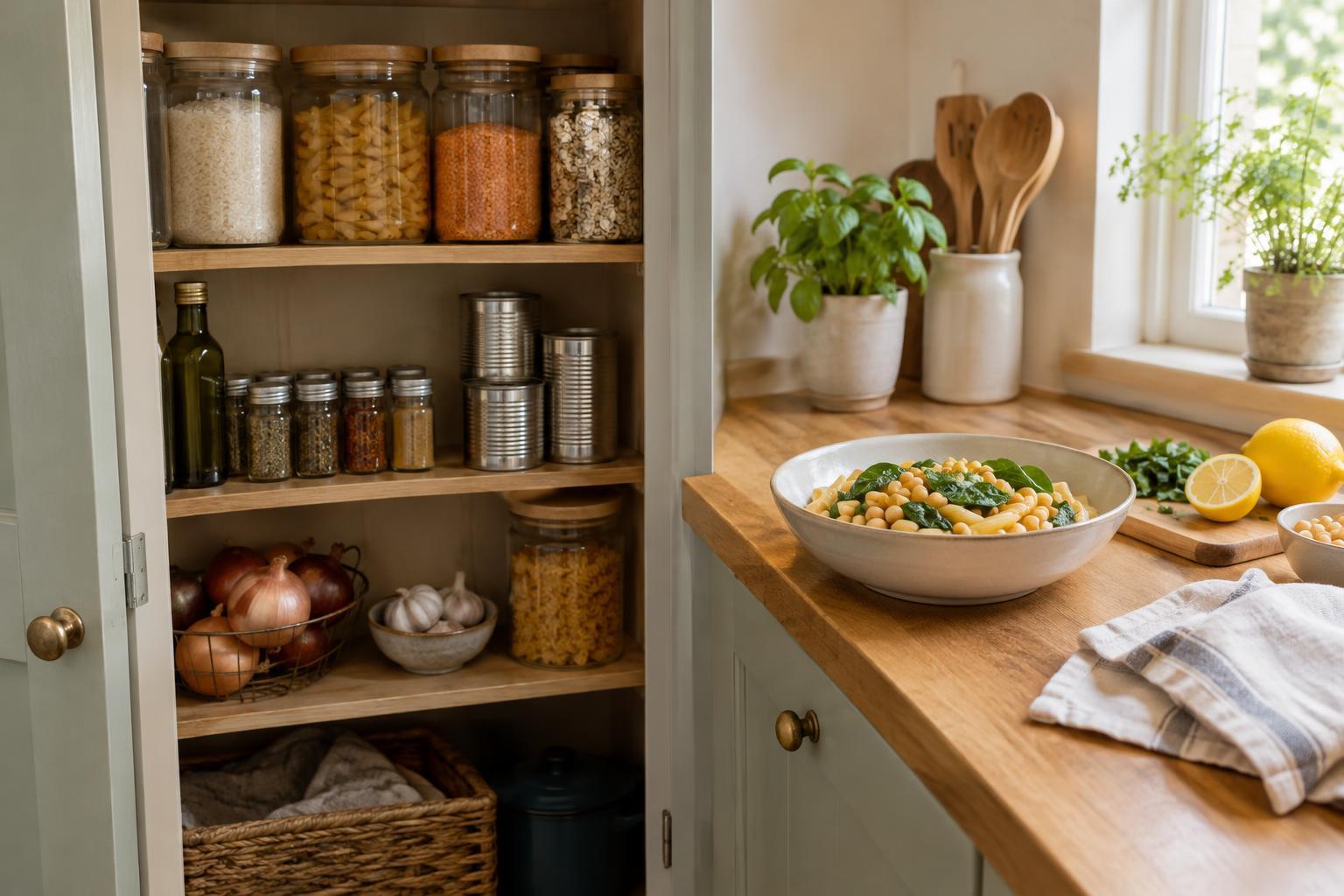
A pantry becomes useful when you can see meals in its contents. For a fast bowl, combine a cooked grain with warmed beans and vegetables, then finish with oil, vinegar and seasoning. For a simple pasta, toss noodles with canned tomatoes, chickpeas and a pinch of chili flakes. For soup, simmer canned tomatoes or broth with lentils and vegetables, adding water as needed until the texture suits you.
Use fresh ingredients as welcome extras, not requirements for the plan to work. A handful of greens, a leftover roasted vegetable, grated cheese or a squeeze of fresh lemon can make a familiar formula feel different. If you shop for one or two fresh additions each weekend, let them guide your meals before they fade in the refrigerator. This gives you variety without asking you to plan every plate in advance.
For an especially rushed day, decide on a “minimum-effort” meal now. It might be beans on toast with a spoonful of mustard, or noodles with peas and an egg. Knowing what you can make in minutes is often more helpful than having a complicated recipe saved for later.
Arrange your shelves so ingredients stay visible
Give the foods you use most a place you can reach without moving other things. Group similar items together, and keep an open package at the front so you finish it before opening another. A small bin can hold packets and loose bags; a label on an opaque container helps you identify its contents at a glance. The goal is not a picture-perfect shelf. It is being able to answer “What can I make?” quickly.
Check package storage directions and use-by guidance, especially after opening. Keep dry goods sealed and away from heat and moisture, and refrigerate items when the label calls for it. During a regular tidy-up, look for damaged packaging or anything that smells or looks unusual; when in doubt about whether food is safe, discard it.
Restock with a short, repeatable routine
Once a week or before your usual shopping trip, scan the pantry and jot down only what is low. Ask whether you still enjoy each staple and whether it helped make a meal recently. If not, skip the automatic replacement. A small pantry has little room for ingredients kept out of obligation.
Try keeping a note of two or three meals your current supplies can make. When you use the last can of tomatoes or the last serving of rice, add it to your shopping list then, rather than relying on memory at the store. Over time, this simple routine reveals the handful of ingredients that do the most work for you. The result is less searching, less last-minute planning and more time to enjoy the meal.