Start with the outing, not the distance
Before choosing a route, ask what people want from the day. One person may be eager to explore every side path, while another wants a relaxed walk followed by coffee. A destination gives the group something to share without making a particular distance or speed the measure of success. A park café, waterfront viewpoint, garden, or neighborhood market can all work as an anchor.
Check in privately if someone might appreciate an easier option. Ask practical questions rather than asking people to explain their pace: Would a mostly level route be better? Is there a comfortable amount of time to be on foot? Would frequent places to sit help? Share what you learn as a plan for the whole group, without singling anyone out.
Choose a route with options
Look for a route that is easy to describe and easy to shorten. A loop with a central meeting spot, a promenade with several turn-back points, or a park with connected paths offers more flexibility than a long out-and-back walk with no convenient stops. Consider surfaces, crossings, steps, shade, restrooms, seating, and how people will get to and from the starting point. If you cannot confirm a detail in advance, say so rather than promising that the route will suit everyone.
Build the plan around a modest core walk and treat extra distance as optional. For example, everyone can walk to a garden entrance together; those who want more steps can take an additional loop while others browse nearby or settle at the agreed meeting spot. Nobody has to choose between keeping up and ending their outing early.
Agree on time and regrouping points
A vague invitation to “walk for a bit” can create pressure once the group is moving. Give people a simple outline beforehand: where to meet, when you expect to finish, the main stop, and which portion is optional. Allow more time than the walk itself seems to require so there is room for photos, conversations, breaks, and small delays.
Pick clear regrouping points before setting off, such as a named entrance or a particular bench near the main path. Avoid relying on “we’ll catch up somewhere ahead,” which can leave slower walkers feeling hurried and faster walkers unsure whether to wait. If the group splits, decide who is going where and agree on a meeting time. A quick message can help, but the plan should still make sense if someone misses a notification.
Make different paces feel normal
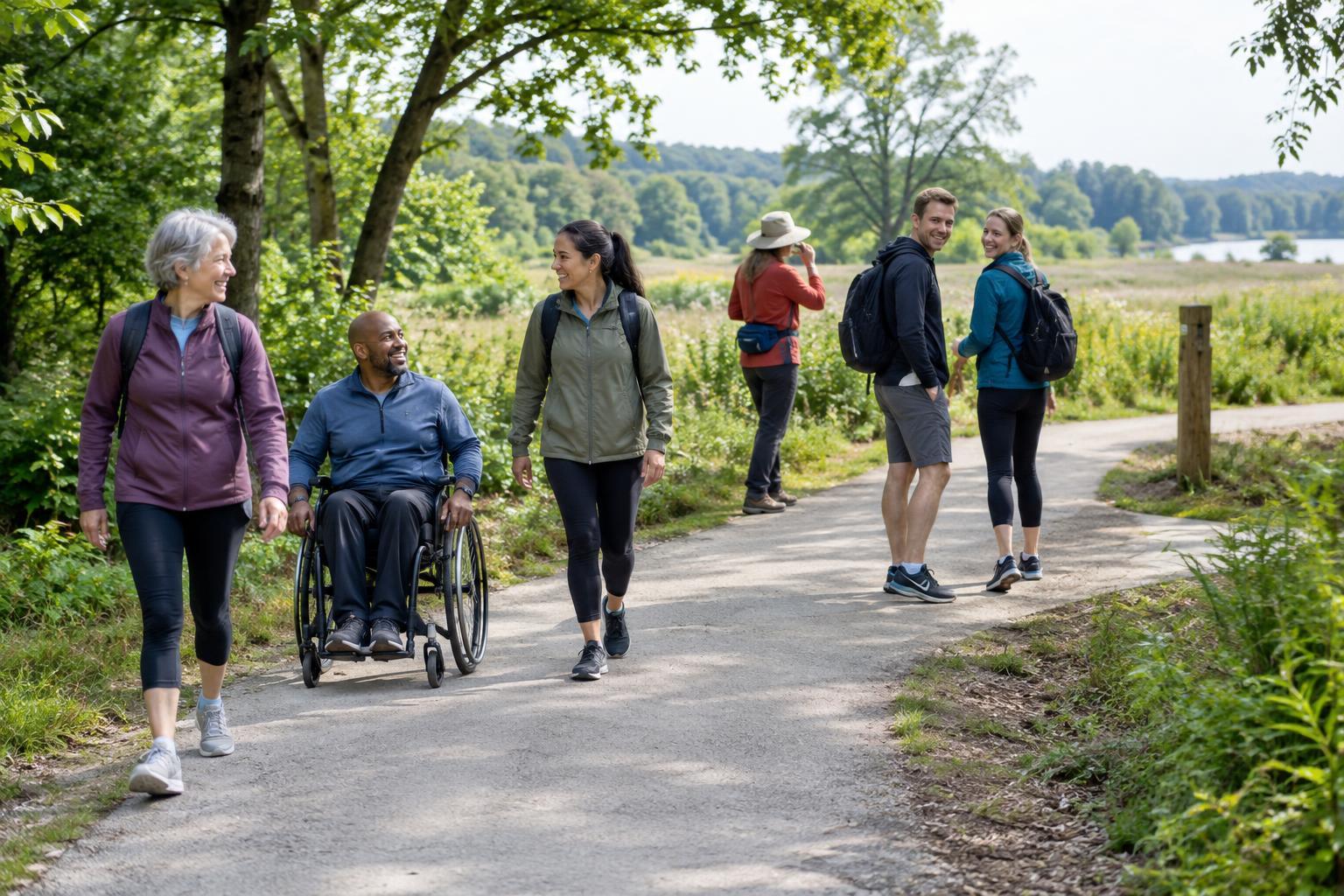
At the start, say plainly that it is fine to walk at different speeds and meet at the next stop. This small permission can remove the awkwardness of being first, last, or ready for a break. People can pair up by the conversation they want to have rather than by a fixed “fast” or “slow” label, and they can switch companions along the way.
If everyone wants to stay together, let the group settle into a pace at which people can talk comfortably. Resist the temptation to rush between stops to make up time. A group outing is usually more enjoyable when the schedule adjusts to the people, not the other way around. Anyone keen to move faster can take an optional loop instead of setting the pace for everyone else.
Leave room for an easy finish
Check how the group is feeling at the first planned stop. If people have energy, continue with the optional part of the route. If they are ready to sit down, the outing has already achieved its purpose: time together somewhere different from home. Making the shorter version a complete outing from the start keeps that choice from feeling like a failed plan.
Finish somewhere people can comfortably pause, eat, or head home separately. Before everyone disperses, confirm that each person knows their way back to their transport or starting point. The best plan is not the one that covers the most ground; it is the one that gives everyone enough freedom to enjoy the time they have.