Start with how you want clothes to feel
Finding the right fit is less about reaching a particular size and more about choosing clothes that work for your body and your plans. A shirt for a relaxed morning at home may fit differently from one you want to wear tucked into jeans. Before shopping, think about where you’ll wear an item, whether you prefer room to move, and which parts of an outfit you tend to adjust during the day.
Choose one or two outfits you already enjoy wearing and notice what makes them comfortable. Is there space across the shoulders? Do your pants stay put when you sit? You can use those pieces as references without trying to make every new purchase fit exactly the same way. Fabrics, cuts and personal preferences vary; the goal is to find a fit you’ll be happy to wear again.
Check movement, not just the mirror
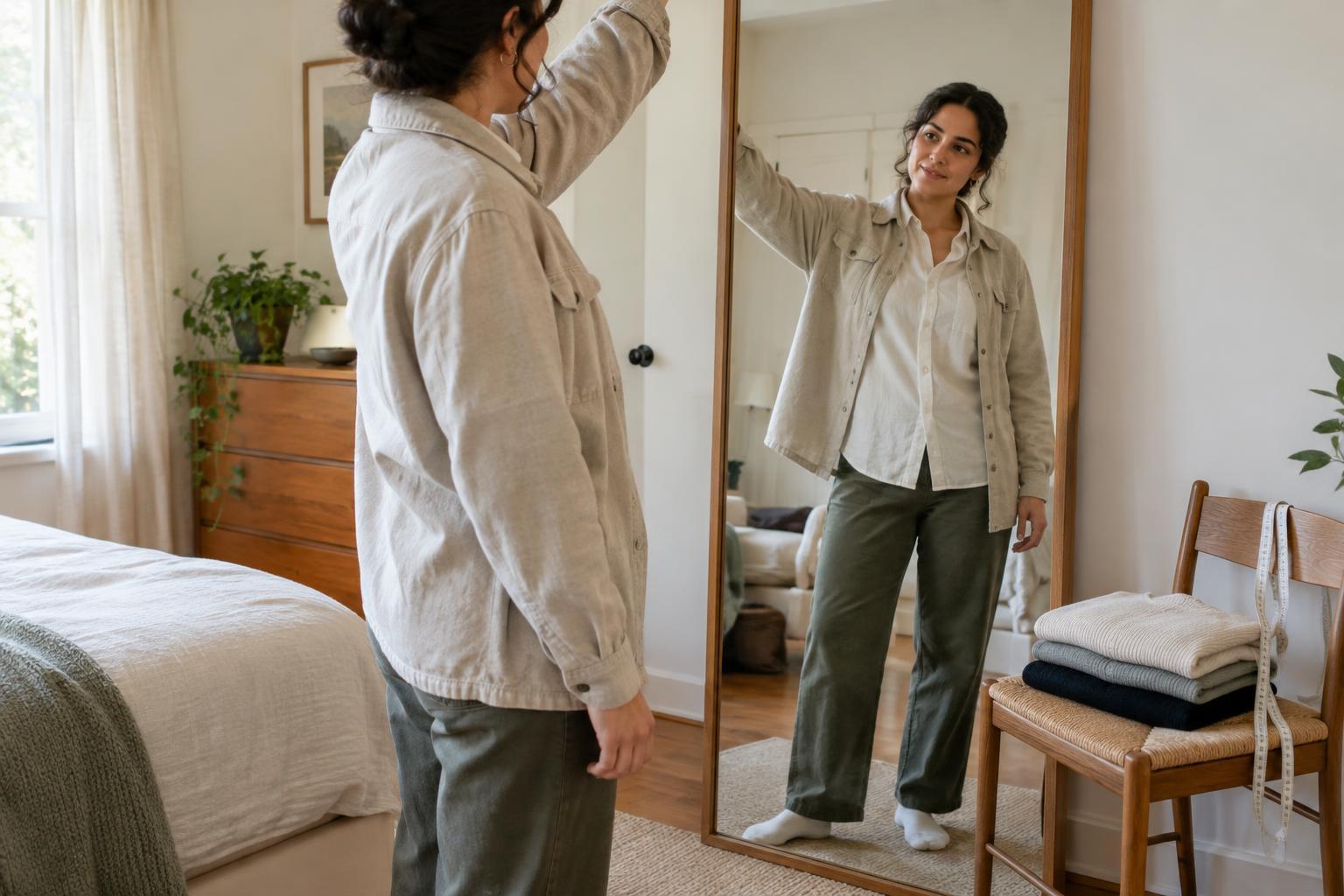
A quick try-on is more useful when you move as you would on a normal weekend. Sit down, stand up, reach forward and lift your arms. A garment can look fine while you’re standing still yet pull, twist or need repeated tugging once you move. Notice whether seams stay roughly where they belong and whether closures feel secure without straining.
For tops, check the shoulders, chest and length. A shoulder seam does not have to land in one exact spot, especially on intentionally loose styles, but the sleeves and upper body should move comfortably. Bend or reach to see whether the hem stays at a length you like. For pants, try sitting and walking. Check the waistband, seat, thigh and rise before worrying about the hem: length is often easier to adjust than tightness through the body.
Use size labels as a starting point
Casual clothing sizes can vary between brands and even between styles from the same brand. If you’re shopping in person, bring two nearby sizes into the fitting room when possible. Compare how each feels and hangs rather than assuming the label you usually buy must be right. If neither works, the cut may simply be a poor match; trying a different shape can help more than changing sizes again.
For online shopping, compare the item’s measurements with a similar piece you own and like. Lay your reference garment flat and measure areas that matter for that item, such as the chest width of a shirt or the waist and inseam of pants. Read the product’s measurement instructions so you know whether its numbers describe the garment or the wearer. Fabric content can also offer a clue: a stiff woven fabric may feel less forgiving than a stretchy knit, even when the listed measurements look similar.
Look at the whole outfit
Fit is partly about how pieces work together. A roomy overshirt might feel balanced over a closer-fitting T-shirt, while a wide pair of pants may be easier to wear with a top whose hem ends where you want it. These are options, not rules. Try on layers together when you can, especially if you expect to wear them together often. Check that sleeves do not bunch uncomfortably and that you can button or zip an outer layer without pulling.
Pay attention to fabric as well as shape. A soft material may drape close to the body, while a heavier one may hold a boxier silhouette. Neither is automatically a better fit. Take a few steps away from the mirror and ask whether the outfit looks and feels the way you intended, rather than judging each piece in isolation.
Make a small plan before buying more
If your closet contains clothes you rarely wear, give a few of them the same movement test. You may notice a pattern: waistbands that shift, sleeves that restrict your reach or tops that feel too short when seated. Write down one or two observations to guide your next shopping trip. A short list is more useful than a vague goal to find clothes that “fit better.”
Some fit issues are worth a simple alteration. Shortening a hem or adjusting a sleeve may make a piece easier to wear, provided the rest of it already feels good. If the shoulders, chest or seat are uncomfortable, it may be simpler to choose a different cut. Take your time with purchases when possible, and keep only pieces you can picture wearing through an ordinary day—not just for a moment in front of the mirror.