Start with the meal you want to eat
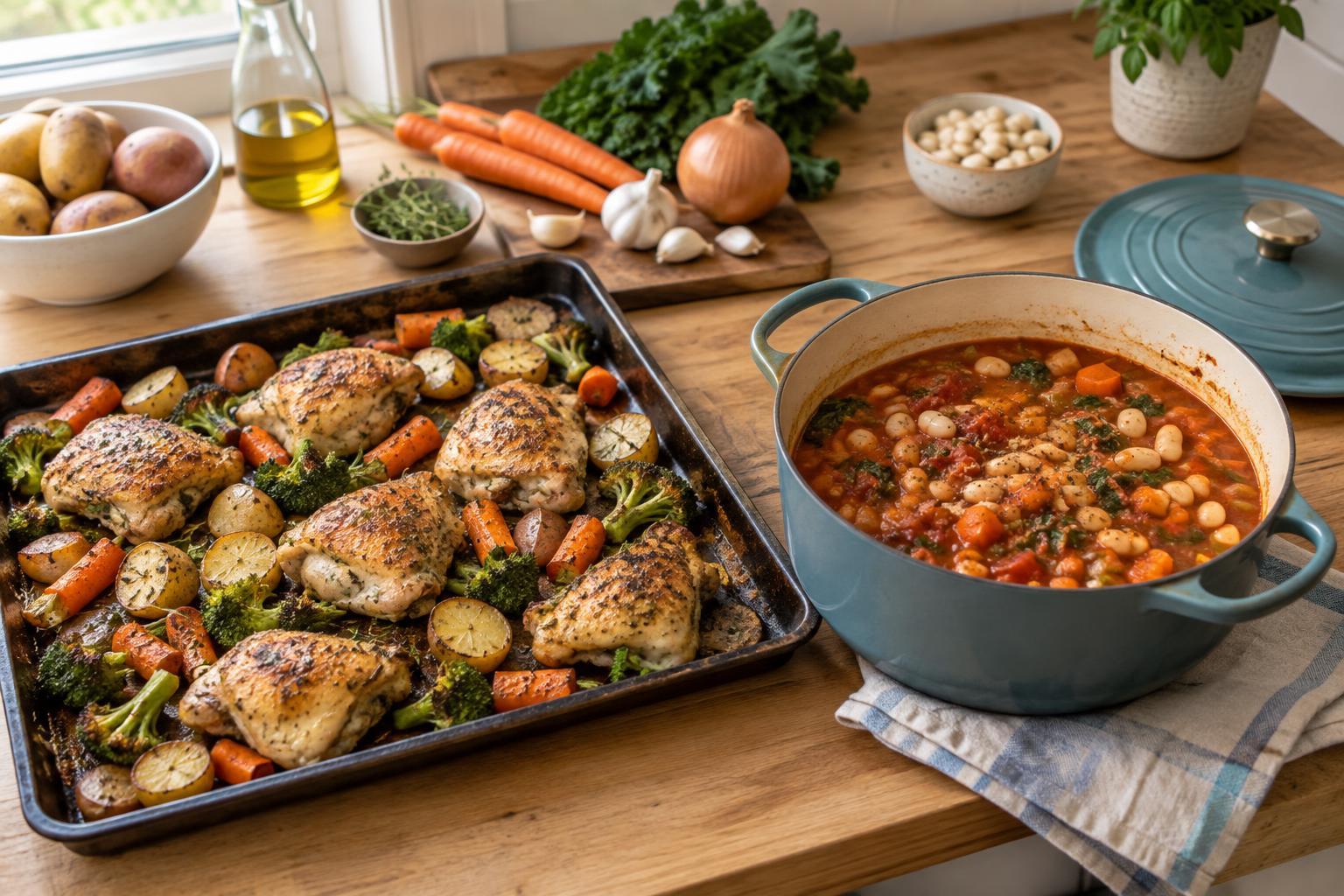
“One-pan” often describes a meal cooked in a skillet or on a sheet pan. “One-pot” usually means ingredients cook in a deeper vessel, such as a saucepan or Dutch oven. The labels are flexible: a skillet with a lid can behave much like a pot. What matters is how the food cooks. A broad, open surface helps ingredients brown or roast; a deep vessel holds liquid and gives ingredients room to simmer.
If you want crisp edges on potatoes, browned vegetables or a seared protein, start with a pan. If you want a brothy soup, saucy pasta or soft beans and vegetables, reach for a pot. Choosing by texture first can save you from trying to make one piece of cookware do a job it does not do comfortably.
Compare the work before and during cooking
A sheet-pan meal can have a particularly easy start: cut the ingredients, season them, spread them out and put the pan in the oven. The important step is grouping foods by cooking time. Dense vegetables may need a head start, while quicker-cooking ingredients can go on later. Leave space between pieces where possible; a crowded pan tends to steam rather than brown.
A stovetop one-pan meal may need more attention. You might brown one ingredient, move it to a plate, cook the vegetables and then bring everything together. A one-pot meal can also involve stages, but many rely on adding liquid and letting the ingredients simmer. That can be convenient if you can check and stir occasionally. Neither method is automatically hands-off: the easiest choice depends on how many steps the particular recipe requires.
Let your kitchen decide part of the answer
Consider the space you have, not just the cookware you own. A sheet pan needs oven space and a clear place to set a hot tray. A wide skillet needs burner space and enough room to keep ingredients in a single layer. A pot can be a better fit when the oven is occupied or your ingredients would crowd a pan, though it may be awkward to lift and wash when full.
Cleanup has its own tradeoffs. A sheet pan can be simple to wash if food has not baked onto it, but oil and browned bits may need soaking. A pot may collect starch or a sauce around its sides, yet it contains splatters better than an open skillet. Also count the cutting board, utensils, lid and any plate used to hold ingredients between stages. “One vessel” rarely means “one thing to wash.”
Use a flexible formula, then adjust the timing
For a sheet-pan dinner, pair a sturdy vegetable with a protein or another filling ingredient, then add a simple seasoning and a little oil. Cut pieces to sizes that suit their cooking times, and check each component before serving. For a skillet dinner, cook ingredients in stages if the pan looks crowded, then finish with a small splash of liquid or a quick sauce to bring them together.
For a one-pot dinner, start with a flavorful base, add ingredients that can simmer together and use enough liquid for the dish you want. Pasta, rice and other grains absorb liquid as they cook, so follow a tested recipe until you know how your pot and stove behave. Whatever method you choose, check that meat, seafood and other perishable ingredients are cooked appropriately rather than relying only on the time listed in a recipe.
Choose the easier option for this weekend
Pick one-pan cooking when you want roasted or browned food, have space to spread it out and would rather let the oven do much of the work. Pick one-pot cooking when you want a spoonable, saucy meal or need to feed several people without cooking in batches. If your schedule is tight, favor familiar ingredients over an ambitious recipe, whichever vessel you use.
Before you begin, read the full method, set out what you need and identify any ingredient that must go in later. That small bit of preparation is often more helpful than the “one-pan” or “one-pot” label. The easiest meal is the one whose steps, texture and cleanup fit the kitchen—and the energy—you have today.