Start with your real packing list
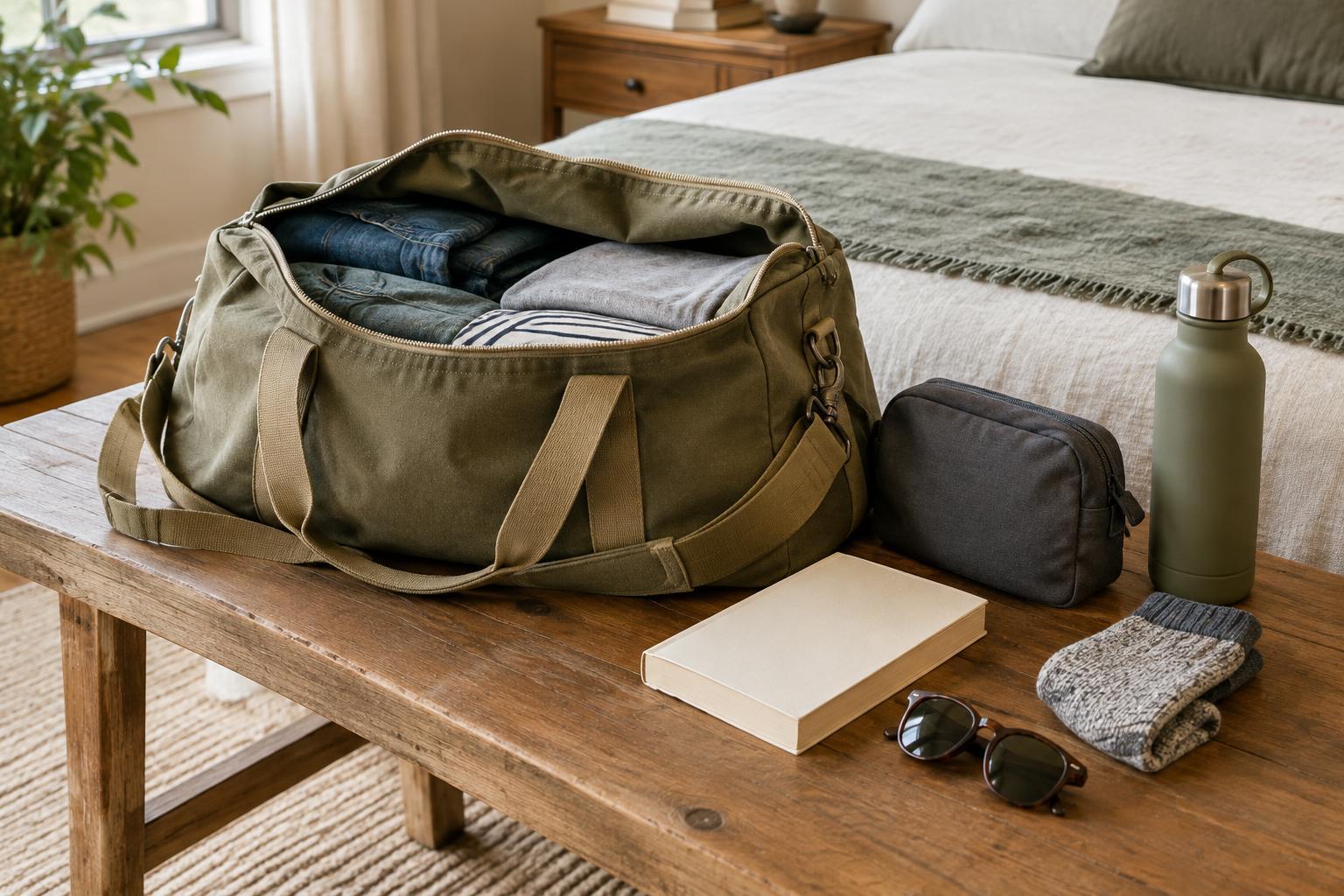
A weekend bag should fit your plans, not an imagined version of them. Before comparing styles, put out what you would take on a typical overnight trip: clothes, sleepwear, toiletries, shoes, a charger and any activity-specific items. If your weekends often involve a book, a camera or gym clothes, include those too. This small exercise is more useful than guessing a bag’s size from a product photo.
Notice which items take up the most space and which you need to reach during the journey. Shoes and a bulky layer can change the size you need more than a few extra shirts. Keep essentials such as keys, tickets and medication separate from the main pile; they may need a pocket or a smaller pouch. Pack for the trips you take most often rather than buying extra capacity for a rare exception.
Match the bag shape to your plans
A duffel has a wide opening that makes it easy to see and arrange clothes. A backpack leaves your hands free and can feel simpler when you expect to walk between stops. A structured tote offers quick access for a light overnight stay, but its open top or narrow base may be awkward for shoes and a full change of clothes. If you regularly pack wrinkle-prone outfits, a flatter bag or one that opens like a suitcase may help you keep them neatly folded.
Think about where the bag will spend its time. Will you carry it across town, place it beside you on a train or set it down at a friend’s home? A bag that looks compact when empty may become unwieldy when filled. If you also want to use it for day outings, check whether it remains comfortable and easy to manage with only a few items inside.
Check comfort before clever features
A bag can hold everything and still be the wrong choice if it is unpleasant to carry. Look at the handles and straps: are they long enough for the way you want to hold it, and do they feel secure with weight inside? If a shoulder strap matters to you, check whether it is adjustable and where the bag rests against your body. Wider straps may feel more comfortable with a heavier load, but the only reliable test is to try the bag with something close to what you normally pack.
The empty bag’s weight also counts. Stiff fabric, thick hardware and added compartments may be useful, yet they add to what you carry before you pack a thing. If you can, walk around with the filled bag and try picking it up from the floor. Pay attention to whether the load shifts or the handles pull at an awkward angle. Those details are easy to miss when a bag is sitting on a shelf.
Choose pockets you will actually use
More pockets do not automatically mean better organization. A roomy main compartment plus one easy-to-find pocket may be enough if you already use packing pouches. If you often reach for a water bottle, headphones or a travel card, an accessible outer pocket can save you from opening the whole bag. A separate section for shoes or damp items may be helpful, provided it does not take too much room from the rest of your packing.
Check the opening as carefully as the pockets. Can you remove a sweater without emptying the bag? Can you see into the corners? A closure that feels secure but takes effort to open may become irritating on a short trip with frequent stops. Also consider how you will care for the bag. A material you can wipe clean may suit trips involving food, parks or changing weather better than one that needs careful handling.
Do a trial pack before deciding
If you are choosing between bags, pack the same items into each one. Leave enough space to close the bag without forcing the zip or stretching the seams. Then lift it, carry it for a few minutes and find your keys or charger. This reveals whether the size, shape and pocket layout work together in practice. If you are shopping without your belongings, note the dimensions of a bag you already own and compare its usable space and opening with the options you are considering.
The goal is not to find a bag for every possible weekend. It is to make an ordinary trip easier to pack for and more comfortable to carry. Choose the smallest bag that comfortably fits your usual list, with a little flexibility for a different layer or an extra item. A bag that suits your real routine is more likely to be the one you reach for when Friday arrives.