Start with the morning you actually have
An early train, a timed reservation, or a group waiting at the door can make breakfast feel like one task too many. Instead of planning an elaborate weekend meal, decide how much time you will have between waking up and leaving. If the answer is ten minutes, choose something that needs only assembly. If you have half an hour, you might cook eggs or warm leftovers. The best breakfast for an outing is one you can make, eat, and clean up without putting the rest of the morning behind schedule.
Think about when you will eat again, too. A short walk followed by brunch calls for less than a long drive with an uncertain lunch stop. You do not need to predict the whole day; just avoid relying on a pastry or a cup of coffee if you know you will be away from food for several hours. Water belongs in the plan as well, especially if packing a bottle now means you will not have to hunt for one later.
Use a flexible breakfast formula
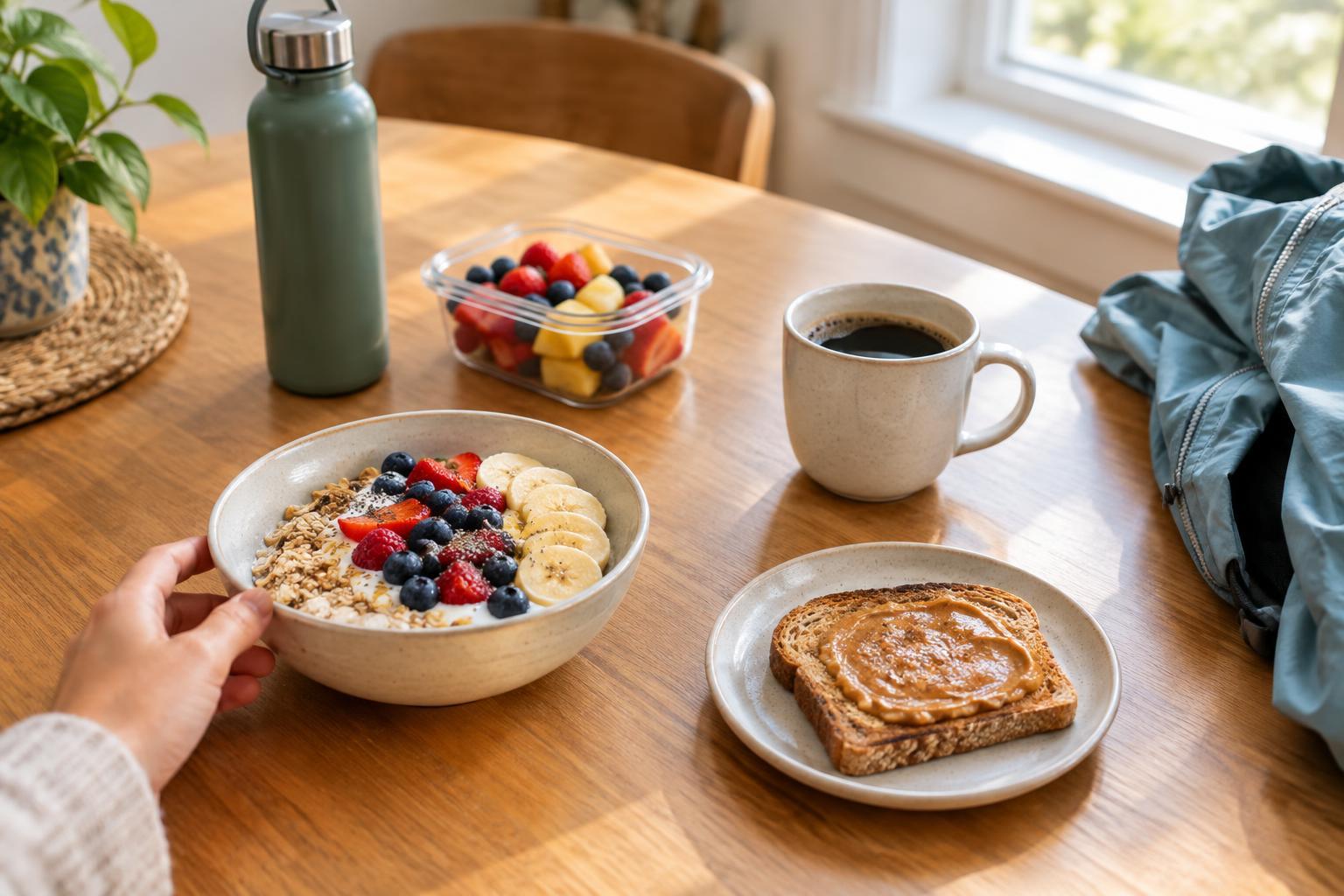
Build breakfast around three simple parts: a filling base, something with staying power, and a fruit or vegetable you enjoy. Toast, oats, tortillas, and leftover rice all work as bases. Eggs, yogurt, beans, nut butter, cheese, or tofu can make the meal feel more substantial. A banana, berries, sliced tomato, or handful of greens adds freshness without creating another cooking project. This is a guide for choosing from what you have, not a rule that every plate must follow.
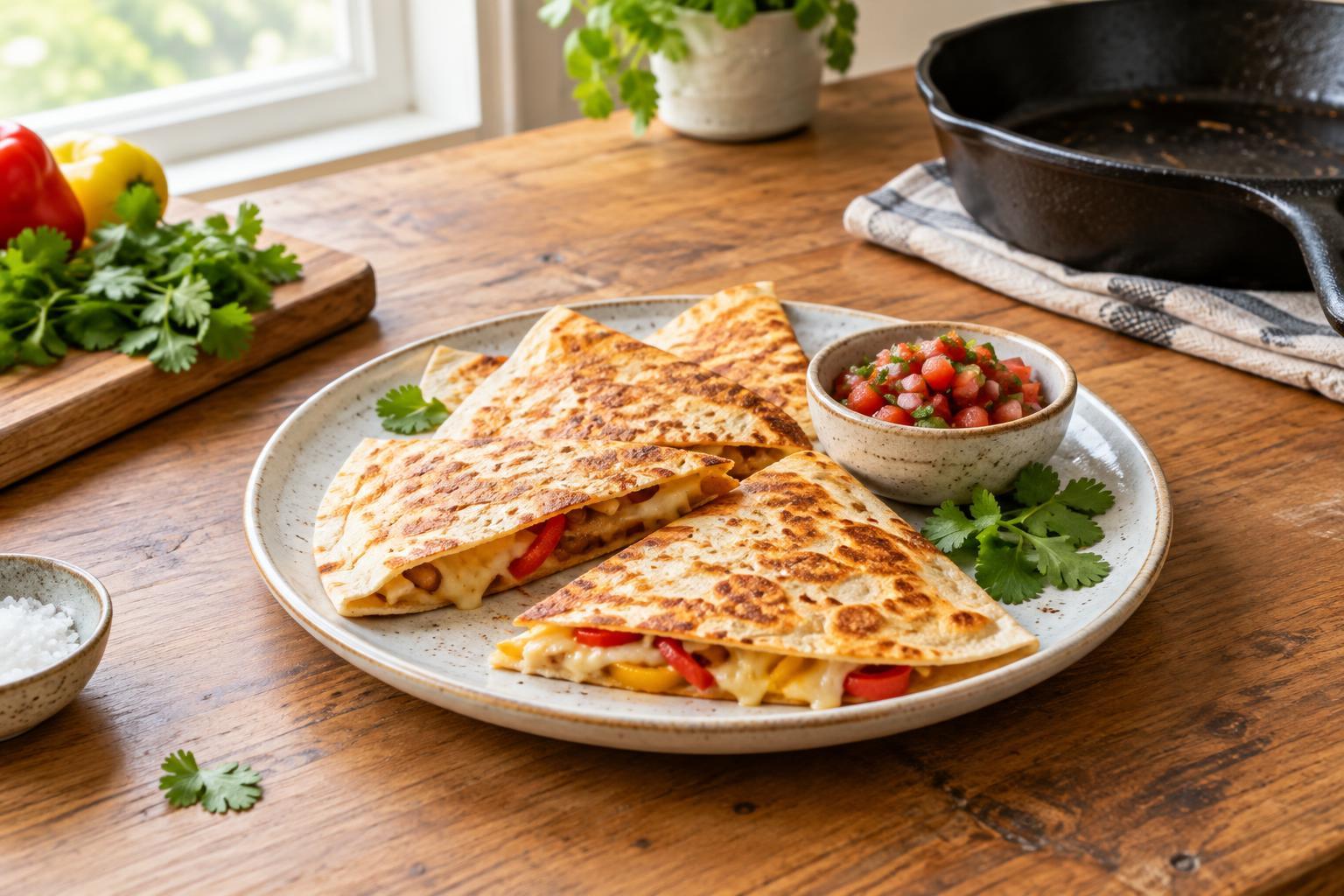
For a no-cook option, spoon yogurt into a bowl and add oats or granola, fruit, and a few nuts or seeds. For something warm, make toast with an egg and sliced tomato, or fold scrambled eggs and beans into a tortilla. If savory leftovers sound better at breakfast, warm a small serving of rice with vegetables and top it with an egg or tofu. Pick one combination rather than setting out a buffet of choices; fewer decisions help the morning move along.
Give tomorrow morning a five-minute head start
Before bed, choose the meal and put its shelf-stable ingredients together on the counter. Set out bowls, spoons, a pan, or a travel mug if you will need them. Wash fruit, check that the bread is available, and move anything frozen that needs thawing into the refrigerator. You can also fill a water bottle and place it beside your bag. These small steps are especially useful when several people are trying to use the kitchen at once.
If the morning is likely to be tight, do more of the food preparation in advance. Mix overnight oats and refrigerate them, make a batch of hard-boiled eggs, or wash and chop vegetables for a quick tortilla filling. Keep prepared foods chilled until you are ready to eat or pack them. There is no need to prep every component: doing the one job most likely to slow you down is often enough.
Make the last few minutes easy
On the morning itself, start with the item that takes longest, such as heating a pan or boiling water. While it cooks, put away the ingredients you are finished with. Serve breakfast on ordinary dishes if you have time to sit; eating from a container while looking for your keys rarely feels like a break. Even a brief pause at the table can make a busy departure feel less frantic.
For days when sitting down is not realistic, choose food that travels neatly: a wrapped egg-and-bean tortilla, a banana with a small container of yogurt, or toast with nut butter packed alongside fruit. If you are taking perishable food for later, carry it in an insulated bag with a cold pack rather than leaving it in a warm car. Keep a napkin and a small bag for wrappers handy, and make sure anything you plan to eat on the way can be handled safely without distracting from travel.
Finally, let breakfast be simple. A familiar meal made from ingredients already in your kitchen is more useful than a new recipe that leaves dishes everywhere. Choose one dependable combination for this weekend, notice what took extra time, and adjust it for the next outing. The goal is to leave fed and ready to enjoy the day, not to perfect the morning.