Start with the project, not the shopping list
A weekend project feels more manageable when your tools match a specific job. Before buying anything, choose a small task such as assembling a shelf, tightening cabinet hardware or putting up a lightweight hook. Read the product instructions, check what came in the box and write down what is missing. You may already own more of the essentials than you think, and borrowing an occasional-use tool can be more useful than buying it.
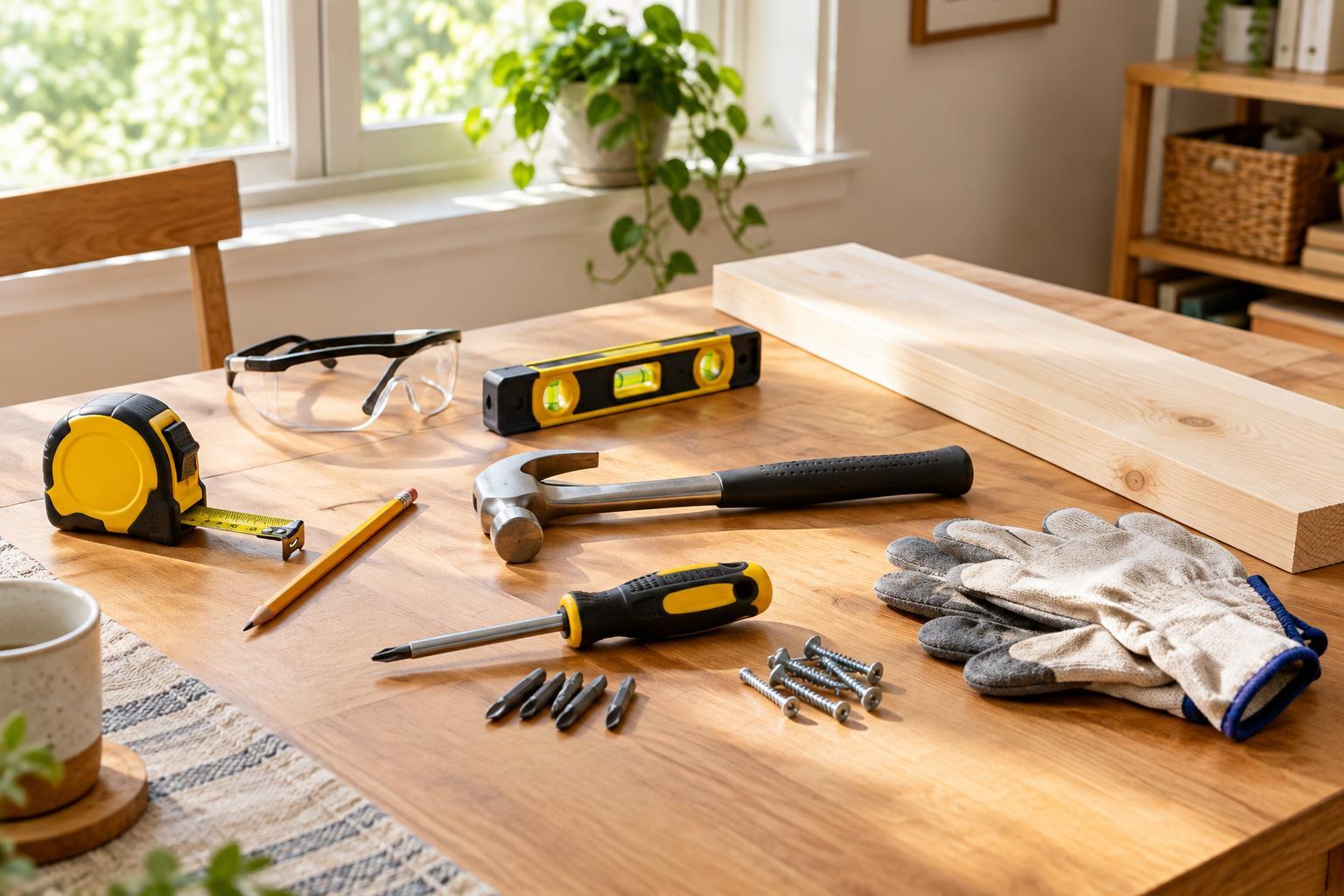
For a starter kit, aim for tools that work across several simple jobs: a tape measure, a screwdriver with interchangeable bits, a hammer, pliers, a utility knife and a small level. Choose versions that feel comfortable in your hand rather than assuming the largest set is the best value. If storage space is tight, a compact bag or box with room for a few future additions is enough.
Measure, mark and check before making a change
Measuring tools earn their place even on projects that seem straightforward. A tape measure helps you check whether a shelf fits, center a handle or confirm that furniture will clear a doorway. A pencil makes marks you can usually revise, while painter’s tape can help you visualize placement without immediately leaving a permanent mark. Keep a scrap of paper nearby for measurements so you do not have to trust your memory halfway through the task.
A small level helps you check shelves, hooks and frames before you fasten them. Measure twice when a cut or hole will be difficult to undo, and check placement from a normal viewing distance as well as up close. If a project involves a wall, identify the wall material and what may be behind it before drilling. When you cannot confidently locate wiring or plumbing, pause rather than guess.
Choose fastening tools that fit the job
A screwdriver with a few common bit types can handle flat-pack furniture, loose hinges and many household adjustments. Bits should fit screw heads snugly; a poor fit can slip and damage the screw. A hammer is useful for appropriate nails and light tapping, while pliers can grip small pieces or help remove a stubborn fastener. A utility knife can open packaging and trim suitable materials, provided you use a stable cutting surface and keep your other hand out of its path.
A cordless drill can save time if you plan to assemble furniture or install hardware regularly, but it does not need to be your first purchase. Learn how to select the right bit and control the speed before working on a visible surface. Match screws and anchors to the surface and the item being supported; the fastener included in a package is not necessarily right for every wall. For heavy items or uncertain mounting conditions, get experienced help.
Make room for safety and cleanup
Basic protective gear deserves space beside the tools. Safety glasses help protect your eyes from dust or flying fragments during suitable tasks. Work gloves may improve grip when handling rough materials, though they should not be worn around equipment where they could catch. Follow the instructions for each tool and material, use adequate lighting and keep children and pets away from the work area.
A few ordinary supplies can make a short project less frustrating: a drop cloth or old sheet, a small container for screws, paper towels and a brush or vacuum for cleanup. Set these out before you begin. Clear enough floor or table space to lay parts in order, and avoid working from an unstable chair when you need extra height. If a job calls for electrical, gas, structural or other specialized work, treat that as a reason to stop and seek qualified help.
Build your kit one weekend at a time
For a first project, choose something you can finish without rushing: adjust a loose handle, assemble a small piece of furniture or organize an existing shelf. Allow time to read instructions, gather supplies and put everything away. Completing one modest task will teach you more about what you actually need than buying a large kit in advance.
Afterward, wipe down your tools, return bits to their case and note any supply you wished you had. Keep sharp items covered and store the kit somewhere dry and accessible to you but secure from children. Add a new tool when a real project calls for it, along with the time to learn how to use it. That approach keeps your collection useful and your weekends focused on making things better, not merely accumulating equipment.