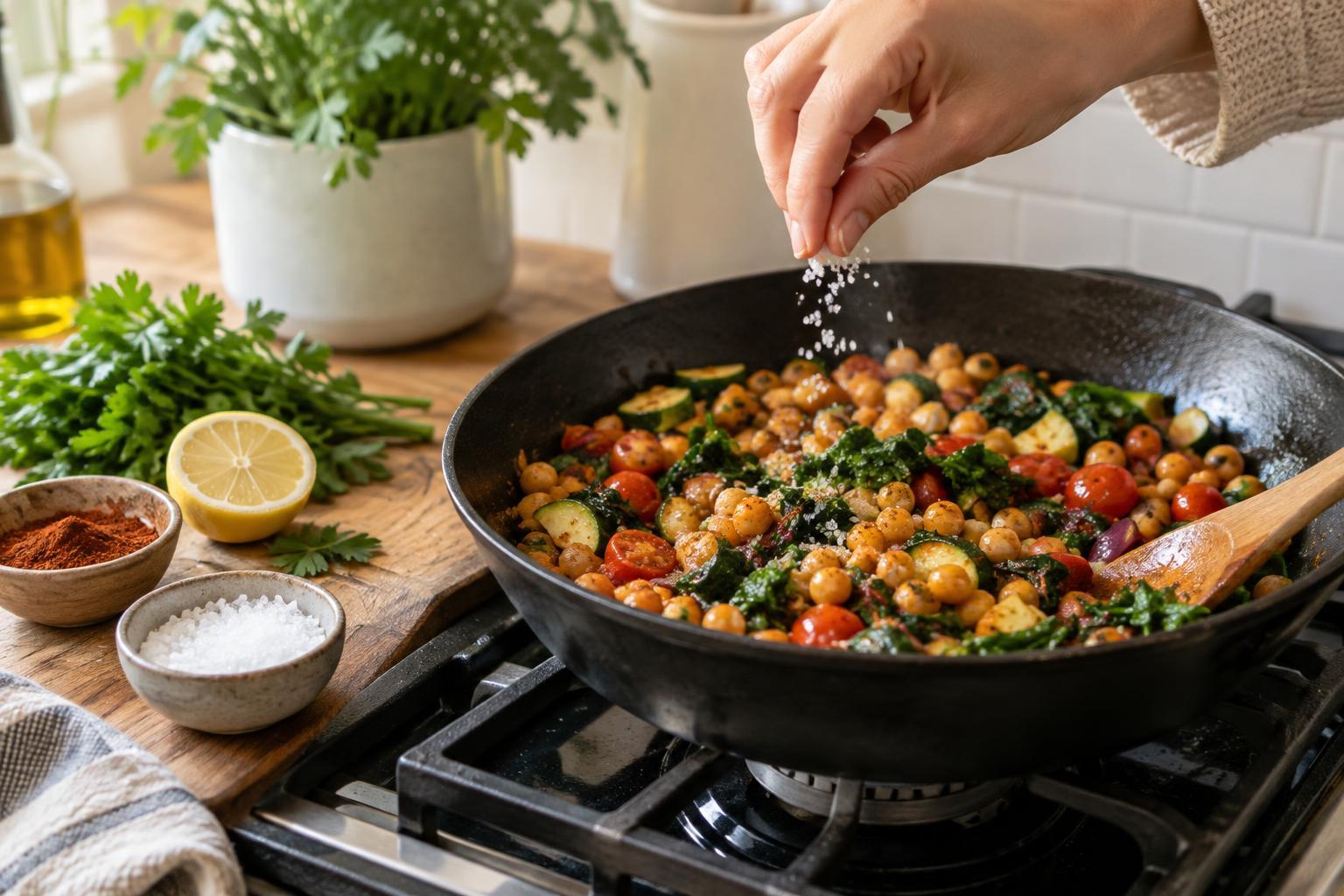
Think of seasoning as a series of small decisions
When a meal tastes flat, it is tempting to shake in several seasonings just before serving. That can help, but it may leave a salty surface and a bland center. Seasoning in stages means adding modest amounts at points when they can shape the food: while vegetables soften, as liquid goes in, and just before the dish reaches the table.
You do not need to measure every pinch or follow a complicated schedule. Keep your main ingredients in mind and ask what each stage needs. Early seasoning can build a base; a middle check keeps a simmering dish on track; a final taste brings everything into balance. Start lightly, especially if the recipe includes salty ingredients such as broth, cheese, olives or a prepared sauce.
Build the base while ingredients cook
For a soup, bean skillet or quick tomato sauce, begin with the ingredients that need time in the pan. A little salt as onions or other vegetables soften helps you season the base rather than only the liquid you add later. If you are cooking vegetables in batches, give each batch a light touch instead of saving all the salt for the end.
Dried spices often benefit from brief contact with warm oil before a lot of liquid is added. After the vegetables have started to soften, stir in spices such as cumin, paprika or curry powder for a short moment, watching and stirring so they do not scorch. Garlic also cooks quickly, so add it when the pan is ready for a brief stir rather than leaving it alone over high heat.
This stage is about building a direction, not making the pan taste fully finished. If you are using a salty seasoning blend, hold back on separate salt until you have tasted the dish later.
Check again when the meal comes together
Adding pasta, beans, grains or cooking liquid changes how a dish tastes. A sauce that seemed well seasoned in the pan may seem mild once it coats pasta. A soup may taste different after it has simmered and reduced. Once the main ingredients are together, stir thoroughly, let them warm through, then taste a spoonful that represents the whole dish.
Make one small adjustment at a time. If the food tastes dull throughout, try a little salt and taste again. If it has enough salt but still feels heavy or muted, wait until the final stage to try a small amount of lemon juice or vinegar. For a simple grain bowl, you might season the warm grains lightly, then taste the assembled bowl after adding beans and vegetables. That is more reliable than seasoning any one component heavily.
Use a clean tasting spoon, and do not taste mixtures containing raw meat or poultry. For those meals, make your adjustments after the food has cooked.
Save bright flavors for the finish
Some ingredients are most noticeable when added near the end. Fresh herbs, citrus juice and a splash of vinegar can make a cooked dish feel lively without requiring a new sauce. Stir in a little, taste, and add more only if needed. A squeeze of lemon over cooked vegetables, for example, does a different job from salt: it adds brightness rather than simply making the vegetables saltier.
Finishing ingredients can also add contrast. Try a spoonful of yogurt on a warmly spiced bowl, a drizzle of olive oil on soup, or chopped herbs over eggs. If the meal already tastes sharp, skip extra acid. If it tastes too salty, adding more spices rarely solves the problem; serving it with an unsalted grain or vegetable may be a better option.
Practice with one familiar meal
The easiest way to learn this approach is to repeat it with a meal you already make. For a quick bean-and-vegetable skillet, lightly salt the vegetables as they soften. Stir in a chosen dried spice before adding the beans. Once everything is hot, taste a bite with both beans and vegetables, then adjust the salt. Finish with lemon or herbs only if they improve the dish.
The sequence is flexible. A short-cooking meal may offer only two useful moments to season, while a pot of soup offers several. What matters is pausing to taste between additions. Small, separate choices give you more control—and let a few ordinary ingredients taste like a complete meal.