Start with noticing, not naming
You do not need to identify a plant to pay close attention to it. A journal entry about “the small plant beside the bus stop” can be just as useful as one with a precise name. Its leaf shape, color, position, and changes over time give you plenty to record. If you learn its name later, you can add it. If you never do, the entry still holds a memory of what you saw.
Keep the first outing short. Choose a familiar place you can reach easily, such as a yard, park path, or tree-lined street, and plan to observe just one or two plants. A notebook and pencil are enough. Add a phone camera if photographs help you remember details, but try spending a minute looking before you take a picture.
Give each mystery plant a working name
A temporary nickname makes an unfamiliar plant easy to find in your notes. “Fence vine with heart-shaped leaves” or “yellow flowers near the east gate” tells you more than “unknown plant 1.” Begin the entry with that nickname, the general location, and the date. You can also note whether the plant is growing in shade or sun, alone or among others.
Then describe a few details you could check again. Are the leaves smooth, fuzzy, narrow, rounded, or jagged at the edges? Do they grow opposite each other on the stem or appear at different points? Are there buds, flowers, seed heads, or fallen leaves nearby? You do not have to use botanical vocabulary. Everyday comparisons, such as “leaf about as long as my thumb,” can be easier to understand when you reread the page.
Sketch to help yourself look longer
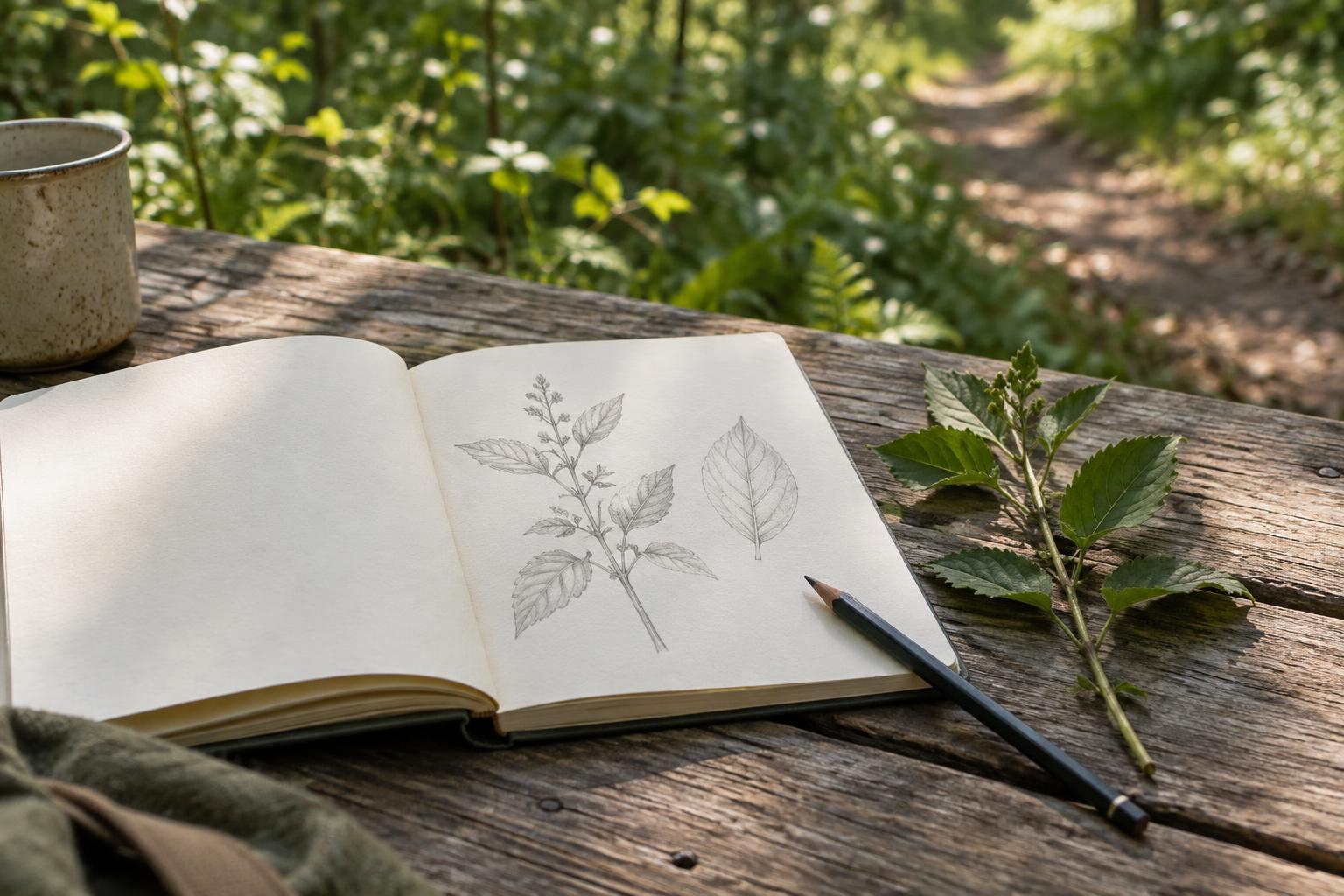
A journal sketch is not a drawing test. Its job is to make you notice structure. Draw the outline of one leaf, the way a branch divides, or the arrangement of flowers on a stem. Add arrows and plain-language notes where a drawing falls short: “paler underneath,” “tiny hairs,” or “stem bends toward path.” A quick diagram can preserve details that a photograph does not show clearly.
If drawing feels awkward, use boxes and labels. Make one box for the whole plant, one for a leaf, and one for the most distinctive feature. Leave space for a later observation. You can also describe the plant entirely in words. The best format is the one you will actually use during a short walk, not the one that produces the prettiest page.
Let questions guide your next visit
End an entry with one question you could answer by returning. Does the bud open into a flower? Do the leaves change color? Is the plant still visible after nearby plants grow taller? These questions turn a familiar route into a small, ongoing project. You may notice more by visiting one plant three times than by trying to catalogue everything you pass on a single outing.
When you want to investigate a name, compare several visible features rather than relying on one photograph or a quick guess. A field guide or identification app can suggest possibilities, but it is fine to write “possibly” and leave the question open. Avoid tasting or using an unfamiliar plant based on a tentative identification. For journaling, uncertainty is not a problem to solve immediately; it is part of what brings you back.
Make the habit fit your weekend
A useful routine can take ten minutes. Spend a few minutes observing, jot down a handful of details, and leave yourself one question for next time. If you are heading out with friends or family, make the journal a small part of the outing rather than its whole purpose. A few notes written on a bench or after you get home are enough to keep the thread going.
Consider reserving the last pages of your notebook for an index of working names and locations. That way, you can find “fence vine” when you see it again without flipping through every entry. Stay on permitted paths, respect private spaces, and leave plants in place unless collecting is allowed. Over time, your journal will become less a list of correct answers and more a record of how your attention has grown.