Start with a formula, not a complete look
A weekend outfit does not need to be assembled from scratch every time you leave the house. A formula is simply a combination you know feels good: a familiar bottom, an easy top, a layer and shoes suited to your plans. The pieces can change while the basic structure stays the same. That makes it easier to get dressed when your free time is short or your plans are still taking shape.
Before choosing anything, check three things: how much you will walk, whether you will be indoors or outdoors, and how much you may need to carry. Then pick the least flexible part first. If the day calls for comfortable walking shoes, build around those. If the weather calls for a warm coat, make sure the layers underneath work with it. Practical choices made early leave more room for the details you enjoy.
For errands: comfortable bottoms, a simple top and a useful layer
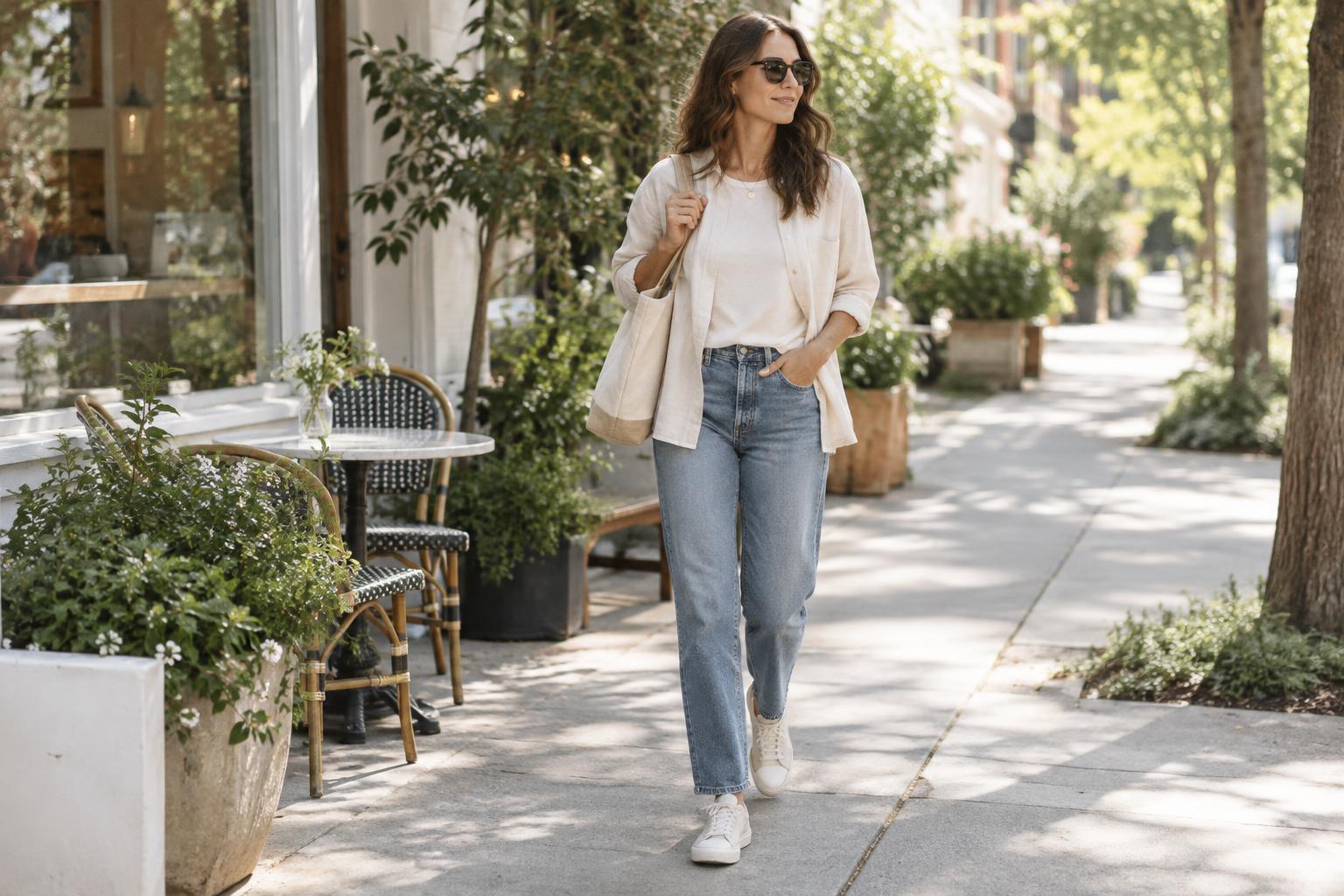
For a morning of groceries, returns or stops around the neighborhood, try jeans or relaxed trousers with a plain T-shirt, a sweatshirt or an unfussy knit. Add a jacket, overshirt or cardigan that is easy to take off when you step indoors. Finish with shoes you can walk in comfortably. This combination works because each piece has a clear job: movement, comfort or protection from the weather.
Small choices can make an errand outfit feel considered without slowing you down. Tuck just the front of a loose top if you prefer a bit of shape, or repeat one color in your shoes and outer layer. Choose a bag that leaves your hands free if you expect to carry purchases. If you often head out at short notice, keep this formula together mentally rather than reserving particular clothes for it.
For brunch: keep the base and change one piece
Brunch rarely requires a complicated outfit. Start with the same comfortable jeans or trousers you would wear for errands, then swap in a shirt, a textured knit or a top with a shape you like. Alternatively, keep your everyday top and add a more structured jacket. Changing one element gives the outfit a different feel while letting you stay comfortable through a meal, a walk or an unplanned stop afterward.
Shoes can set the tone, but they should still match the day ahead. Clean sneakers, loafers or comfortable boots can each work with this formula, depending on your wardrobe and the setting. If you want an accessory, choose one you will not have to manage all afternoon, such as a watch, scarf or favorite earrings. The goal is not to look dressed up for its own sake; it is to feel ready to sit down and linger.
For relaxed plans: use soft pieces with a little shape
A visit with friends, a casual movie or an afternoon spent browsing can call for clothes that feel almost as easy as staying home. Try soft trousers or well-fitting leggings with a longer shirt, sweatshirt or sweater. Another option is a casual dress with a cardigan and walkable shoes. Pick whichever version lets you sit, move and adjust to the temperature without thinking about your outfit.
When several pieces are loose, a small contrast can help the combination feel intentional. You might pair wide trousers with a shorter top, wear an open layer over a closer-fitting base, or roll the sleeves of a roomy shirt. These are options, not rules. If a head-to-toe relaxed fit is what you enjoy, keep it. Comfort is most useful when it reflects how you actually spend the day.
Make your formulas easier to repeat
Notice which outfits you reach for and what makes them work. Perhaps one pair of shoes suits most outings, or a particular layer goes over nearly everything. Those observations are more useful than building a long list of hypothetical outfits. You can keep two or three reliable combinations in mind and vary their colors, textures or accessories as you like.
A brief reset can also make the next weekend simpler. Put the shoes you wear often where you can find them, check that a favorite layer is ready, and keep a suitable bag nearby. If an outfit repeatedly needs adjusting, treat that as information: try a different fit or pairing next time. A good formula should save attention for the plans themselves, not become another task to manage.