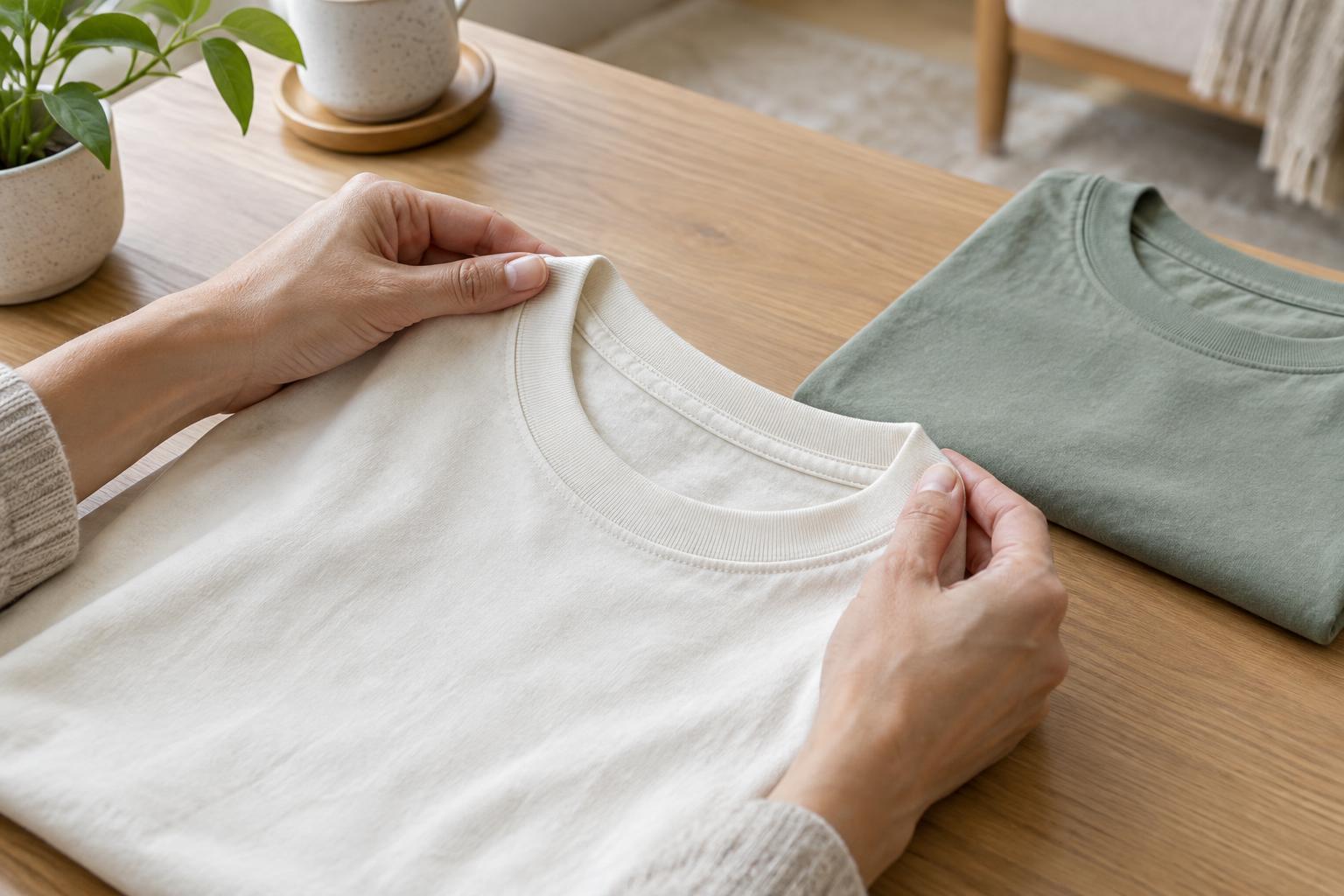
Start with the fabric, not the size tag
Two T-shirts labeled the same size can feel and hang quite differently. Before judging the fit, pick up the fabric. Does it feel substantial enough for the way you plan to wear it? Hold it up to the light if you want to check how sheer it is, especially in pale colors. A heavier shirt is not automatically better: a light knit may be ideal for warm days or layering. The useful question is whether the fabric has enough body to drape the way you like.
Give the material a gentle stretch across its width and let it go. A knit that returns close to its original shape is a promising choice for a shirt you will wear often. If it stays visibly stretched after a light tug, the collar, sleeves or hem may be more likely to look loose with wear. Look at the fiber label, too, but treat it as one clue rather than a guarantee. Cotton can feel soft and breathable, while blends may add stretch or change how the shirt drapes. Construction and care matter just as much as the fiber name.
Check the neckline and seams
The neckline is one of the first places a T-shirt shows wear. Lay the shirt flat and see whether the collar sits evenly, without ripples or a stretched-looking front. A ribbed neckband that feels secure and lies smoothly is a good sign. Try the shirt on and move your head and shoulders naturally; the neck should not pull uncomfortably or feel so loose that it shifts every time you bend.
Next, look down the side seams. They should appear reasonably straight when the shirt is flat and when you wear it. Twisting can become especially noticeable after washing, although you cannot predict every garment’s behavior in a fitting room. Check that the stitching at the shoulder, underarm and hem looks even and secure. Small variations are normal, but puckering, skipped stitches or a hem that already waves may make the shirt harder to keep looking neat.
Find a fit you can move in
A T-shirt fits well when it suits both your preferred silhouette and what you will do in it. Stand normally before assessing it; pulling the fabric into place can hide a poor fit. For a closer shape, look for fabric that follows your body without horizontal strain lines. For a relaxed shape, check that the extra room falls comfortably rather than bunching under your arms or at your waist. Neither style has to be the default.
Raise your arms, sit down and reach forward. Notice whether the shirt rides up farther than you want, grips your upper arms or pulls across the back. Look at the shoulder seam as a reference, not a strict rule: a classic fit often places it near the edge of your shoulder, while a deliberately relaxed cut may place it lower. The sleeve opening should feel comfortable when your arms are at rest and in motion.
Length is easiest to judge with the bottoms you expect to wear most. An untucked shirt should land where you like without requiring constant adjustment; a shirt you plan to tuck needs enough length to stay put. If you are between sizes, compare both rather than assuming the larger one will solve every issue. Sometimes a different cut gives you the room you need without adding unwanted length.
Make a quick comparison before buying
If you have a favorite T-shirt at home, use it as a guide. Note its chest width, shoulder feel, sleeve length and where the hem falls. Those details are more useful than relying on a size letter alone. When shopping online, compare your measurements with the garment measurements if they are provided, and check whether the stated length is measured from the shoulder or another point. If the listing does not explain the fit clearly, allow for some uncertainty.
When you have several options, choose the one that feels good without tugging, folding or careful posing. A shirt that only looks right while you stand still is less likely to become an easy weekend staple. Consider when you will actually wear it: under an open overshirt, on its own for an outing or at home while working on a project. That context can help you decide whether you want a trim, roomy or midweight option.
Help it keep its shape at home
Even a well-made T-shirt benefits from gentle care. Follow its care label, avoid overloading the washer and use a cycle suited to the fabric. High heat can affect some fibers and finishes, so check the label before using a hot wash or dryer setting. Smooth the shirt back into shape while it is damp, paying attention to the collar and hem, and let it dry as directed.
Fold T-shirts that tend to stretch on hangers, and avoid pulling them off by the neck. None of these habits can turn a poorly constructed shirt into a durable one, but they can help a good choice stay comfortable and familiar. The aim is not a perfect T-shirt that never changes; it is one whose fabric, fit and care needs work for your everyday life.