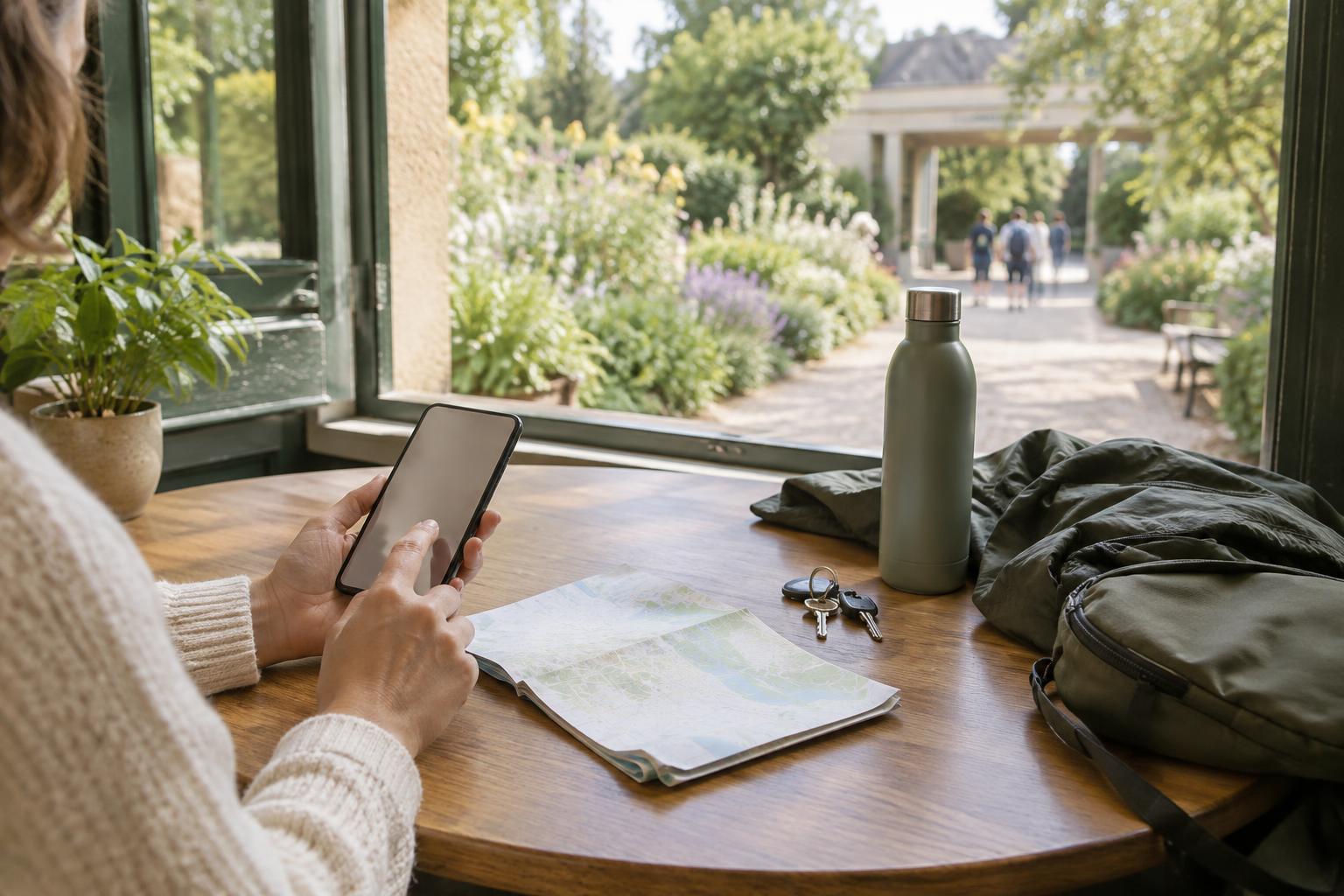
Start with the visit you actually want
Before looking up every detail about a new place, decide what would make the outing worthwhile. Perhaps you want a quiet hour in a gallery, an easy walk with a friend or a relaxed meal after exploring a market. Your goal helps you spot the details that matter most. A quick café visit needs different preparation from an afternoon at a large outdoor site.
Set a rough time budget that includes travel, the visit and a little breathing room. If the journey takes most of your available time, consider a closer option or a shorter route through the place. This is not about scheduling every minute. It is about making sure the outing fits the day you have, rather than the day you wish you had.
Confirm hours for the specific day
Opening hours are the first detail to verify, but a general weekly schedule may not tell the whole story. Check the hours for your intended date and look for separate times for admission, last entry, tours, cafés or other areas you hope to use. A venue may be open while the part you came to see is unavailable. For outdoor places, check whether access is limited by gates, seasonal schedules or booked activities.
Use the place’s own visitor information when possible, and check again shortly before leaving if the outing depends on being admitted at a particular time. If the information is unclear, a brief call or message may save an unnecessary trip. Aim to arrive with enough time to enjoy the visit rather than treating the closing time as the moment you need to get through the door.
Read the entry rules before packing
Find out whether you can walk in or need to reserve a time slot. Check admission costs, accepted payment methods and any conditions attached to discounted tickets. If you are visiting with children, a dog or a group, look for rules that apply to them. Also note whether an exhibition, activity or guided visit requires a separate booking even when the main site does not.
A quick look at the visitor rules can prevent awkward surprises at the entrance. Some places limit large bags, outside food, photography or the items you can bring into a particular area. If you plan to sketch, picnic or use a camera, confirm that your activity is welcome. Save any booking confirmation somewhere you can access without relying on a strong mobile signal.
Check the facilities that will shape your comfort
Facilities can determine whether an outing feels restorative or tiring. Look for toilets, drinking water, places to sit, shelter and food options, especially if you expect to stay for more than an hour. Do not assume a café will be open whenever the main venue is open. A small bottle of water or snack can be useful if permitted, but check the rules before bringing a full picnic.
If you or someone in your group has specific access needs, review the details rather than relying on a single accessibility label. Entrances, paths, lifts, seating and accessible toilets may each have different conditions. For a visit that depends on a particular feature, contact the place directly to clarify what will be available. The same applies to stroller access or a quiet space: a few targeted questions are often more helpful than a long list of assumptions.
Make the journey easy, with a small backup plan
Check the entrance you should use, not just the place’s name on a map. Then consider your route both ways: travel time, parking or transit options, and how far you will need to walk after arriving. If you are heading outdoors, look at the forecast and choose shoes and layers suited to the route. A little preparation is particularly helpful when daylight, energy or free time is limited.
Finally, choose one simple fallback. It might be a nearby café if rain changes your plans, a shorter loop if you arrive late or another destination if entry is unavailable. Keep the essentials together in a note: hours, address, booking details and the one facility you most need. Once those points are settled, stop planning. Leave room for the small discoveries that make a new place worth visiting.


