Start with the balcony you have
Before buying plants, spend a few minutes observing your balcony at different times of day. Notice where direct sun falls, which corners stay shaded and whether wind dries out exposed spots. A balcony that looks bright from indoors may receive little direct sun, so choose plants for the light they will actually get rather than the garden you imagined.
Check any building rules before placing containers outdoors. Keep doorways and walkways clear, and avoid hanging pots over a railing unless they are permitted and securely fitted. Soil, water and heavy planters add weight; if you are unsure what the balcony can safely support, keep the setup modest and ask the building manager before adding large containers. Decide, too, where excess water will go. Saucers can protect the surface and the space below, but they should be emptied after watering.
Choose a small first set of plants
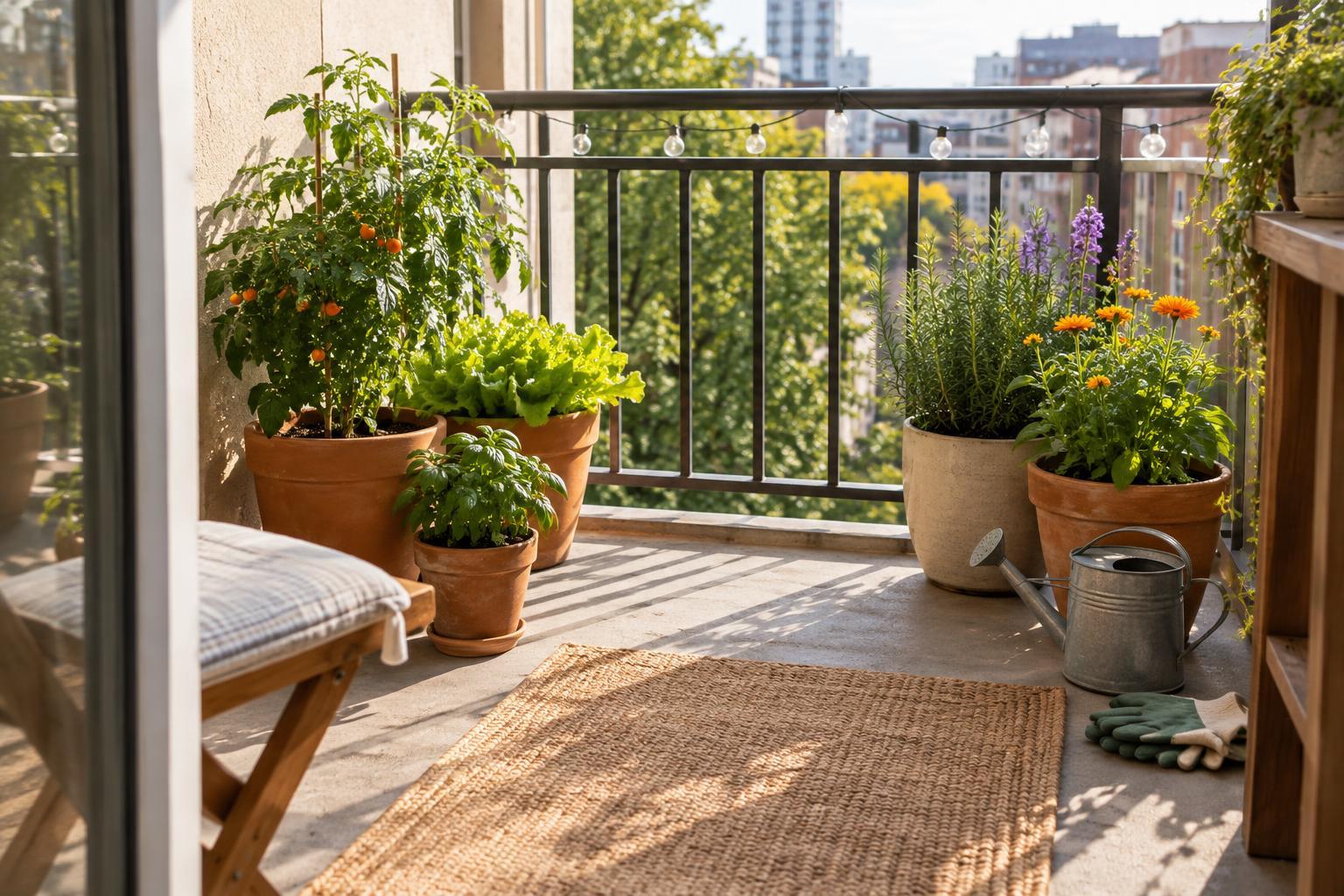
For a first weekend, two or three containers are enough. A small selection is easier to position, water and learn from than a crowded collection. Look at plant labels for light and mature size, then choose varieties that suit your conditions. Many flowering annuals need substantial sun, while some leafy plants tolerate partial shade. Wind can be as important as light: delicate stems may struggle in an exposed corner even when they get enough sunshine.
If you want to grow something for the kitchen, start with an herb you already use. Give each plant enough room to grow, and avoid assuming that different herbs need the same care just because they look good together. You can place separate pots side by side for a collected look while adjusting water for each one. Leave yourself room to reach every pot without moving the whole garden.
Build the setup without overcomplicating it
Choose containers with drainage holes and use a potting mix intended for containers rather than soil dug from the ground. Container mix is generally easier to manage in a pot, while drainage holes let excess water escape. Pick pots large enough for the plants you choose; very small pots can dry quickly, especially on a warm or windy balcony. Lightweight containers may be easier to move, but they still need to be stable in the wind.
Arrange the empty pots before filling them. Put taller plants where they will not block light from shorter ones, and keep containers away from the edge. Once you like the layout, add potting mix, settle each plant at about the same depth it occupied in its original pot and water gently. Do not pack the mix down hard. A tray for supplies, a small watering can and a place to store leftover mix will make the setup easier to live with.
Make care fit into a busy week
Containers need regular attention because their limited soil can dry out faster than a garden bed. Rather than watering on a rigid schedule, check the mix with a finger. If it feels dry below the surface, water slowly until moisture reaches the root area and excess begins to drain. If it still feels damp, check again later. Empty collected water from saucers so roots are not left sitting in it.
Tie this check to something you already do, such as opening the balcony door in the morning. Take a moment to look for drooping leaves, damaged stems or a pot that has shifted in the wind. Hot, sunny weather may call for more frequent checks; cooler or cloudy days may not. Follow plant-label guidance on feeding, and remove spent flowers or tired leaves when you notice them. A few minutes of observation is often more useful than a long, occasional rescue session.
Let the garden grow at its own pace
Your first arrangement does not have to be permanent. After a couple of weeks, you may find that one spot is sunnier than expected or that a plant needs more room. Move pots when you can do so safely, and adjust your choices as you learn what works on your balcony. If a plant struggles, check its light, water and exposure before replacing it with the same variety.
Keep one comfortable place to stand or sit, even if that means growing fewer plants. A balcony garden is most rewarding when you can enjoy it as well as tend it. Starting small gives you a manageable weekend project now and room to add another pot later, once you know what your space and schedule can support.