Start by deciding what matters
A strong composition helps someone understand where to look. Before lifting your phone or camera, choose one subject: a person at a café table, a houseplant, a colorful doorway or a dog resting in a patch of light. Then notice everything around it. Which details support the subject, and which compete with it? This quick pause can do more for a photo than changing a setting.
Framing and negative space are two ways to make that choice visible. Framing uses something in the scene to surround or point toward the subject. Negative space leaves a relatively quiet area around the subject. They can work together, but neither is a rule for every picture. The aim is to guide attention while keeping the mood you want.
Use the surroundings as a frame
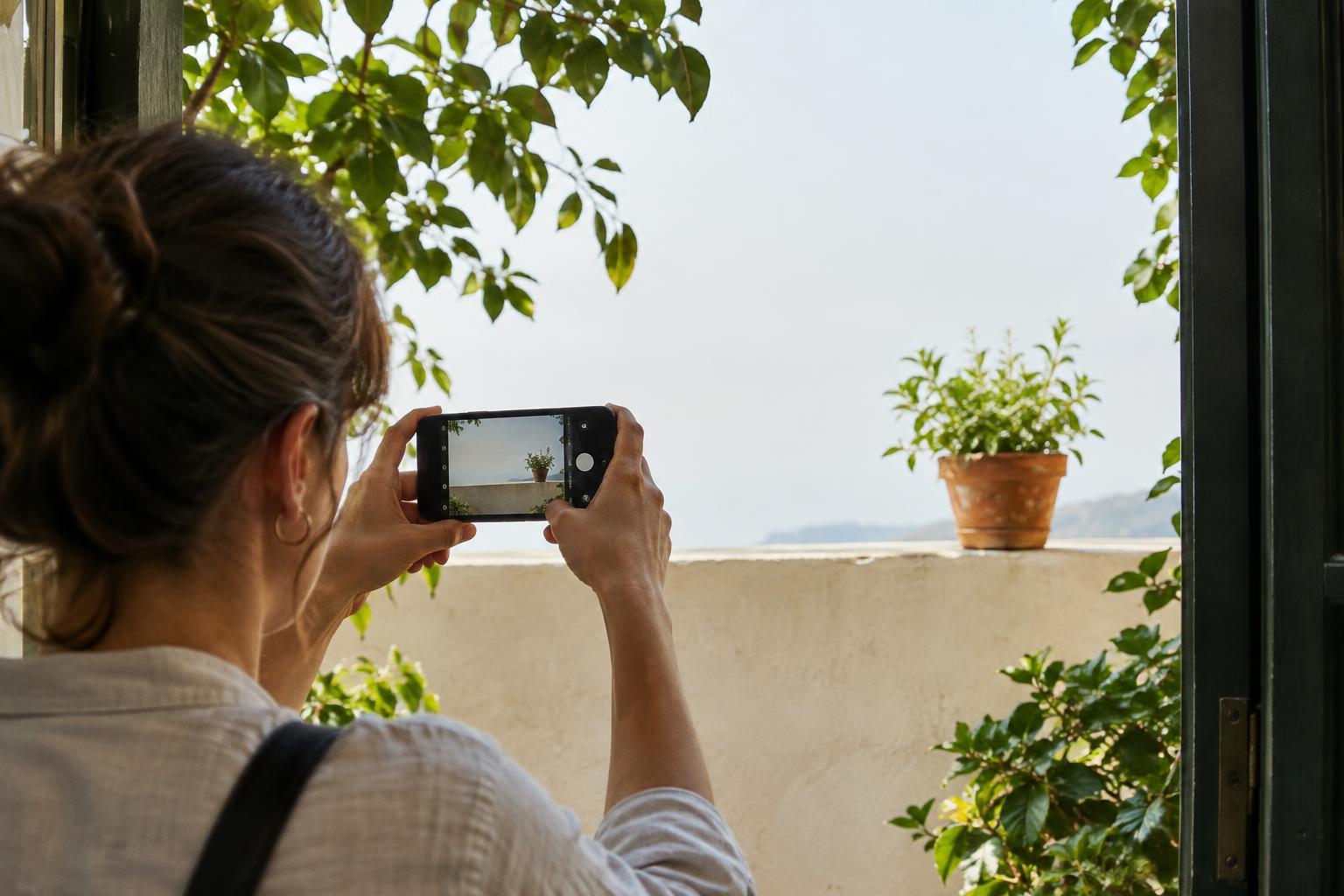
A frame within a photo might be a doorway, an arch, a window, two tree branches or the gap between buildings. Place your subject inside that opening and check whether its edges lead the eye inward. The frame need not form a complete border. A branch across the top and a wall along one side can give the picture enough structure.
Try moving your feet before reaching for zoom. A step to the left may separate your subject from a busy sign; crouching may bring a nearby railing into the foreground. If you shoot through an opening, look at all four edges of the screen. A frame that nearly touches someone’s head or cuts across a face can feel accidental. Give important parts of the subject a little room unless a close crop is your deliberate choice.
Also consider how prominent the frame should be. A dark doorway around a sunlit room can create contrast, while a bright, patterned window surround may draw attention away from the person inside it. If the surroundings become the first thing you notice, simplify the frame or change your position.
Let empty space do a job
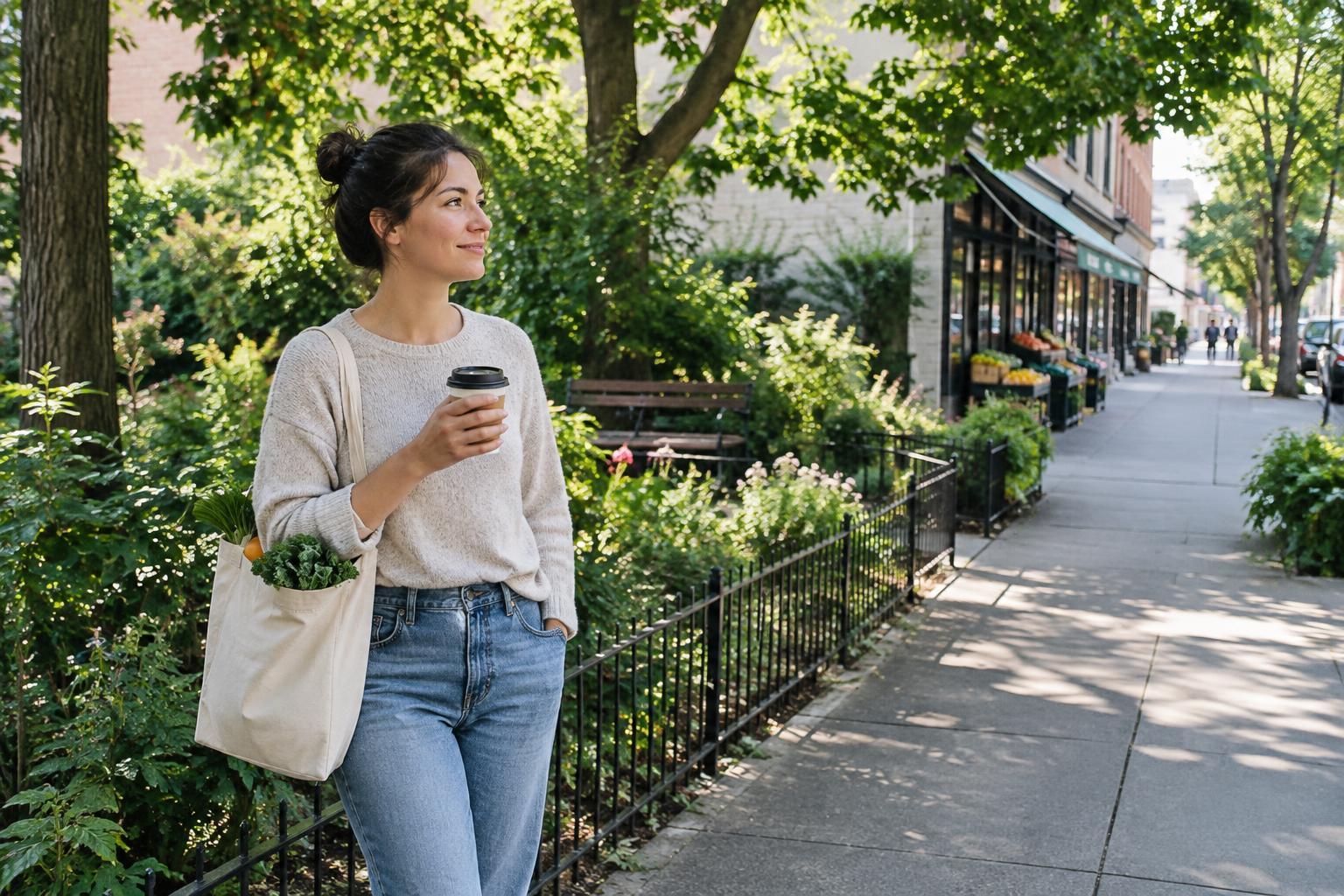
Negative space is the part of an image that is relatively calm: a plain wall, open sky, still water, an uncluttered tabletop or an area of soft shadow. It gives the subject room to stand out. The space does not have to be completely blank; a gentle texture or consistent color can work just as well.
To try it, photograph a single object against a simple background. Take one version with the object in the center and another with it off to one side. Ask what the open area adds. Space in front of a walking person can suggest direction. A wide stretch of sky above a small building can make the scene feel quiet. Too much unrelated space, though, may leave the viewer searching for the subject.
Watch the background for small interruptions. A bright patch, a stray cup or a line appearing to grow from someone’s head can pull attention even when it occupies little room. Shifting your angle or waiting a moment is often enough to restore the calm.
Practice both ideas in one short outing
Set aside twenty minutes during a walk, a visit to a park or a quiet moment at home. Pick one subject and make six photos without changing it. First, take a straightforward reference shot. Next, make two versions using different natural frames. Then make two versions with more negative space, changing where the subject sits in the picture. For the last shot, combine the approaches: perhaps place a person in a doorway with a clear wall beside them.
Keep the exercise manageable by changing one thing at a time. Move closer, lower the camera or turn slightly, then compare. If you are photographing a person, give them time to settle rather than asking for a complicated pose. If the light or location does not suit your first idea, choose another subject nearby. The purpose is to notice options, not to come home with a perfect image.
Choose the photo that says it best
When you look through your images, resist judging only sharpness or brightness. Which photo makes the subject easiest to find? Does the frame add context, or merely decoration? Does the open space create a feeling, or just make the subject look lost? Compare similar shots side by side; small changes in position are often easier to see that way.
You can crop to remove a distracting edge, but leave enough of the scene for the composition to make sense. Save a favorite version and note what worked, such as “the branches pointed toward the bench” or “the plain wall made the flowers stand out.” That observation is a useful starting point for your next weekend photo, wherever you happen to take it.