Start with the reason you wanted to go out
An indoor backup is easier to choose when it preserves the feeling of the original outing. If you planned a park walk to talk with a friend, you may want a quiet place where conversation is easy. If you planned a market visit for inspiration, a library, gallery, or shop you enjoy browsing might serve a similar purpose. You do not need to reproduce every part of the day; keep the part you were most looking forward to.
Before looking at the forecast, write down the outing’s main ingredients: how much time you have, how far you are willing to travel, what you hope to do, and what you are comfortable spending. These limits help you avoid replacing a simple afternoon with a complicated trip. For a short weekend window, one appealing stop and an optional snack may be plenty.
Pick one indoor option and one stay-home option
Choose an indoor destination you can reach without much extra planning. Possibilities include a museum, community center, bookstore, café, or indoor garden, depending on what is available nearby. Check the practical details before you commit: opening hours, admission or purchase expectations, accessibility needs, and whether you should reserve a place. A promising venue is not much of a backup if it will be closed when you arrive.
It also helps to have a stay-home version for weather that makes travel unappealing. A picnic lunch can become a meal on a blanket in the living room. A photography walk can become a small photo project using objects by a window. If your original plan was to catch up with someone, you could invite them over for tea or arrange a call. This second option gives you room to change course without having to invent a new weekend on the spot.
Decide when and how you will switch
Set a decision time before the outing, such as the evening before or a couple of hours before leaving. Agree on it with anyone joining you. That prevents a long string of messages while everyone waits to see whether the weather improves. You can still adjust if conditions change, but you will have a default plan.
Make the switch based on what the outing requires, not just the word “rain” in a forecast. Light drizzle may be fine for a covered market but unpleasant for a picnic; strong wind may matter more for a waterfront walk. Consider the journey as well as the destination. If conditions would make getting there uncomfortable or unsafe, the stay-home option is a worthwhile part of the plan, not a consolation prize.
Pack for flexibility, not for every possibility
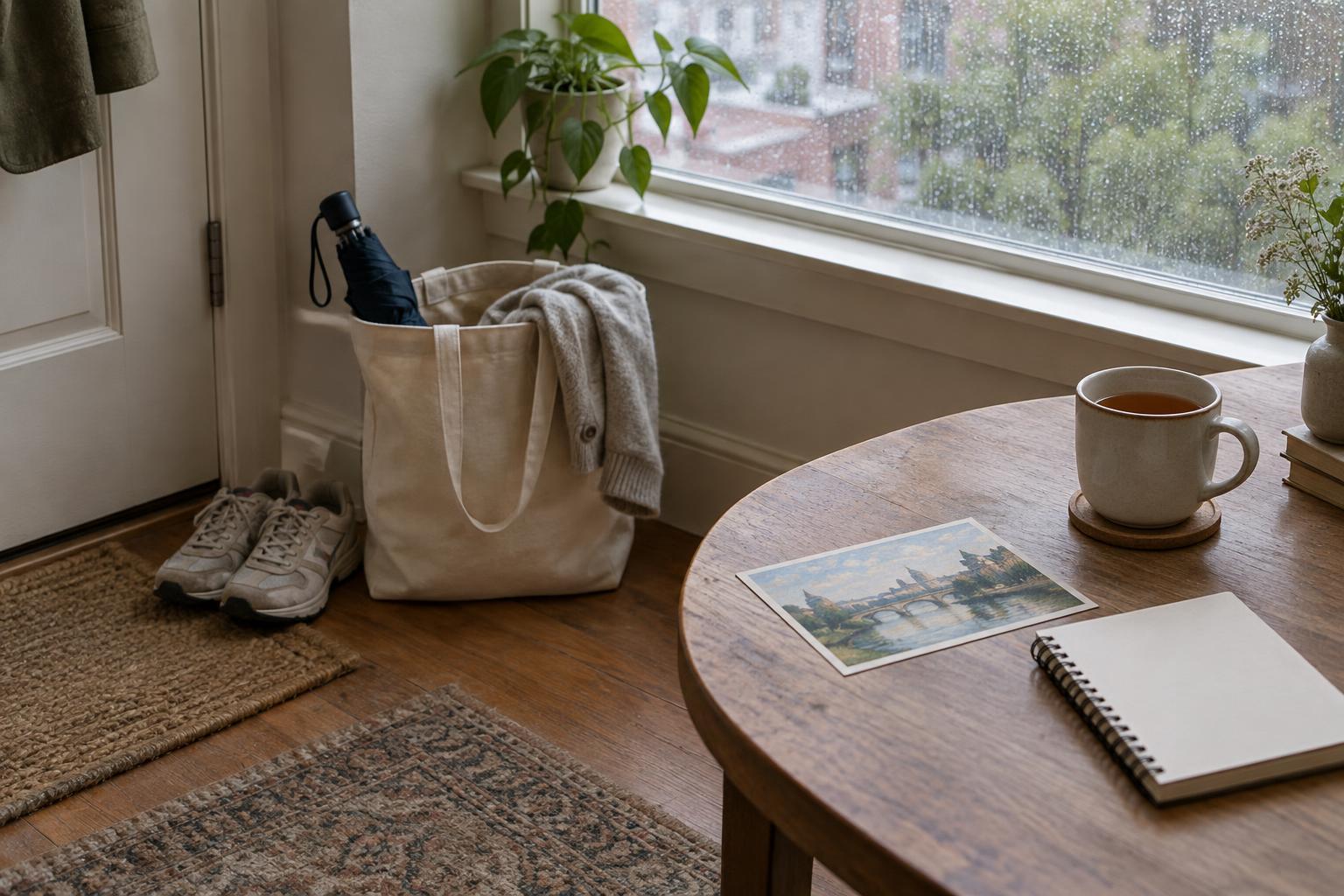
A small ready-to-go bag can support either version of the day. Put in the essentials you would normally take, plus a light layer, a reusable water bottle, and any tickets or booking details you might need. If the outdoor plan still seems possible, keep weather-appropriate items near the door rather than packing a bag so full that it becomes a chore to carry.
Do the same for food and timing. If you were counting on eating outdoors, decide whether your meal can travel indoors or whether you would rather eat at home first. Tell companions which parts of the plan are fixed, such as a meeting time, and which may change, such as the location. A short message with both addresses or meeting points can spare everyone a last-minute search.
Leave space for the outing to feel like a break
The best backup plan is one you would genuinely enjoy, even if it is smaller than the original idea. Resist the urge to fill every freed-up minute. A slow browse followed by a drink, or an hour spent trying a creative project at home, can provide the change of pace you wanted from going out.
Afterward, notice what made the switch easy or awkward. Perhaps your indoor choice was too far away, or your stay-home activity needed supplies you did not have. Keep the options that worked as a short list for another weekend. The next time the forecast is uncertain, you will be choosing between two good ways to spend your time rather than deciding whether the day is ruined.


