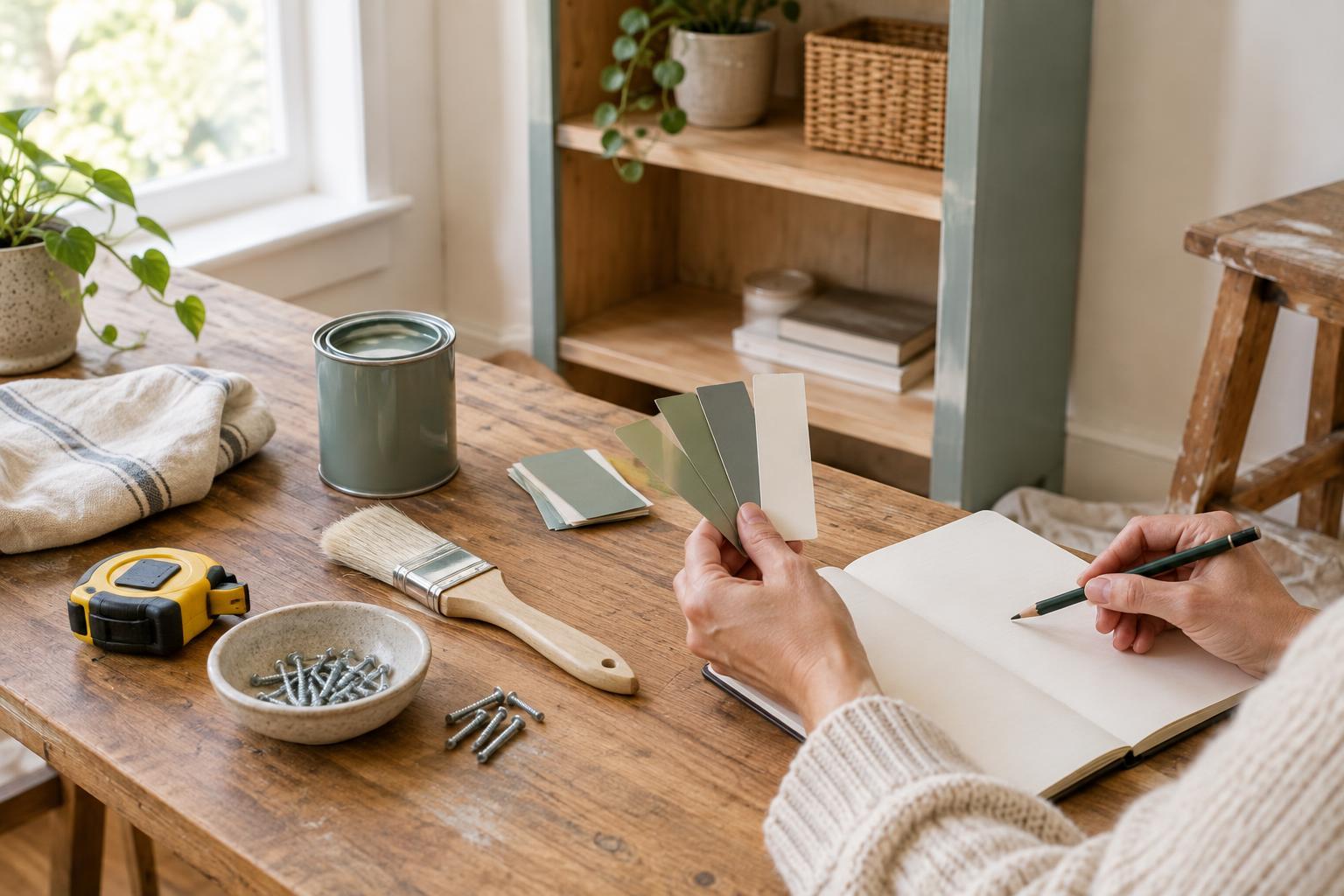
Start with the smallest useful result
A small home project can grow quickly in your imagination. Painting one wall becomes repainting the room; organizing a shelf becomes replacing the whole unit. Before you shop, write down the result you actually need. “Make the entryway easier to use” is a good starting goal. Then describe the smallest finished version: perhaps adding hooks, clearing one shelf and placing a tray for keys. That gives you something specific to price and a clear point at which the project is done.
Make two short lists: what must happen and what would be nice to add. Include preparation and cleanup in the must-do list if they are necessary to finish the job. Decorative extras can stay on the second list until you know what the essentials cost. If the project involves electrical work, plumbing, structural changes or anything you are unsure how to do safely, pause and consider whether it belongs in a simple weekend plan at all.
Check what you already have
Shop your home before you shop anywhere else. Look for leftover paint, usable fasteners, brushes, storage containers or tools you can borrow with permission. Check that materials are in good condition and suitable for the task; finding half a tin of paint is only helpful if it is still usable and matches your plan. Taking a few measurements now can also prevent a purchase that does not fit.
Next, build a supply list based on the steps of the job, not just the finished look. A wall-painting plan, for example, may call for surface preparation, tape, a drop cloth, a roller cover and a way to clean up. Separate items you will use up from tools you could reuse, borrow or rent. This makes it easier to see whether a seemingly inexpensive idea requires several one-time purchases.
Price the full job, not the headline item
Give each item on your list an estimated price, using the sizes and quantities you actually need. Remember to include less exciting costs such as delivery, disposal supplies or a replacement part for something you need to remove. If you are comparing options, compare the total you would pay to complete the project rather than the price of one appealing product.
It helps to choose a spending ceiling before you settle on a design. You can then make a first-pass estimate and see whether it fits. If it does not, change the plan while changes are still easy: use an existing container, cover a smaller area or postpone the optional finishing touches. Avoid treating a low estimate as a challenge to spend the difference. Keeping that space in your budget gives you more flexibility once work begins.
Leave room for ordinary surprises
Even a modest project can reveal a missing screw, an uneven surface or a second trip for supplies. Set aside a small portion of your spending ceiling for those ordinary surprises, rather than assigning every bit of it to planned purchases. The right amount depends on how familiar the task is and what you can see before starting. If a surprise would make the project unaffordable, consider narrowing its scope or waiting until you have more room in the budget.
Money is only one limit. Estimate how long buying supplies, moving furniture, doing the work and cleaning up will take. A plan that uses every available hour leaves little space for a delayed delivery or a slower-than-expected first attempt. For a restorative weekend, it may be better to complete one useful part well than to begin several improvements you cannot finish.
Decide when to stop
Before the first purchase, write down three numbers: your spending ceiling, your estimated cost and the amount you are holding back for surprises. Keep the supply list nearby while shopping so that an attractive extra does not quietly become part of the plan. If you change your mind about a material, update the estimate before buying it.
Finally, choose a stopping rule. You might stop shopping when the estimate reaches your ceiling, or pause the work if a newly discovered problem changes the job. A budget is not a promise to finish at any cost; it is a way to make the next decision with your eyes open. When the essential work is complete, tidy up and enjoy the improvement before deciding whether the optional additions are still worth another weekend.


