Choose the spot for the project
Start with what you plan to make, not with the room that looks most like a workshop. Folding paper, painting a small object and sanding wood create different kinds of mess. List the supplies you will use, the space you need to move them around and anything the activity might release, such as dust or strong odors. For a short project, a sturdy table near storage may be more useful than a dedicated corner far from the materials you need.
Keep doorways, walkways and access to switches clear. Place your work where you can see edges and small pieces without straining; a movable lamp can help if it does not crowd the surface. Before using a product or tool, read its instructions for location, ventilation and protective equipment. Some materials are not suitable for an indoor table, even if you put a cover underneath. If you cannot meet the instructions in the space available, save that project for another setting.
Build a work surface in layers
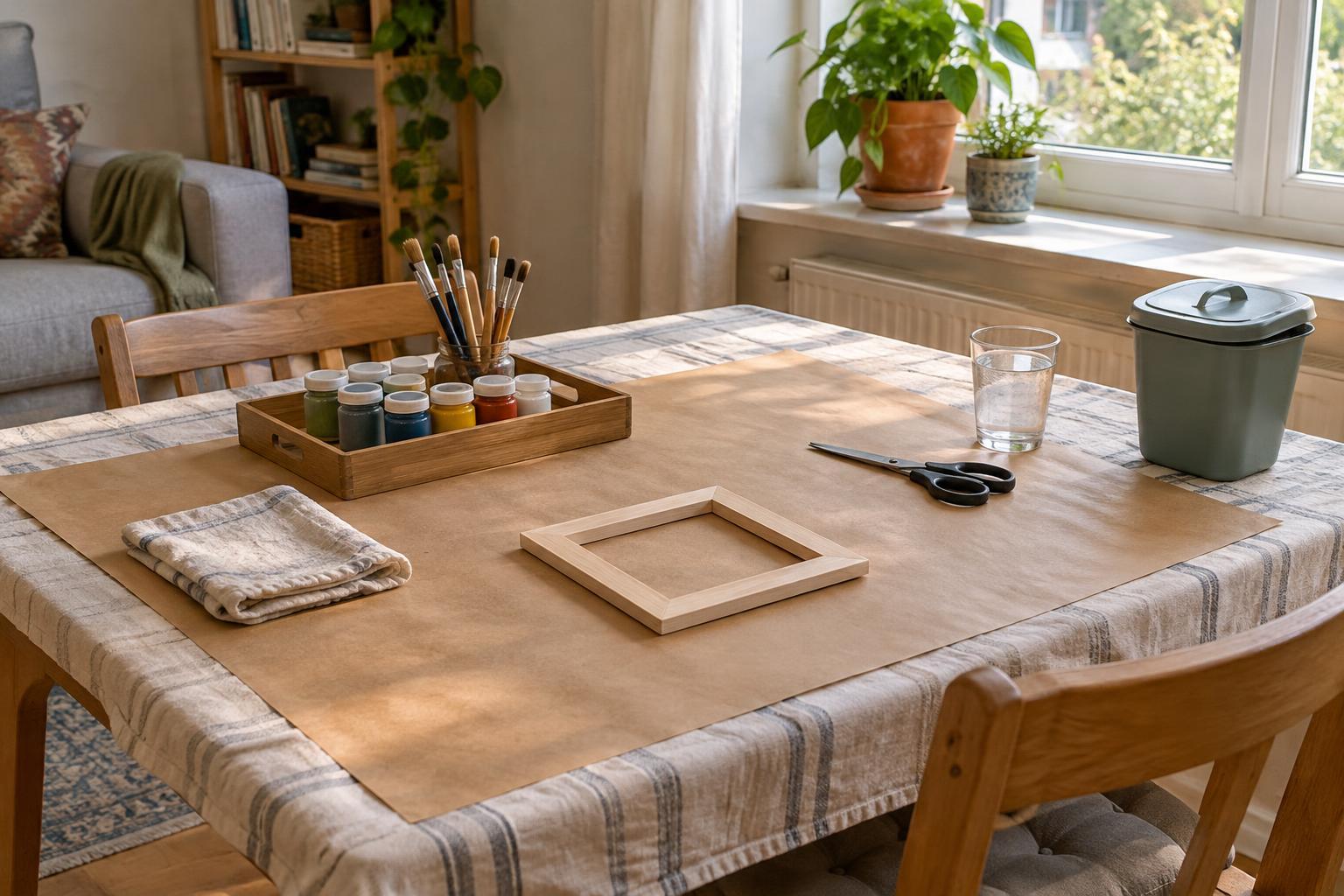
A low-mess setup does not require a new desk. Use a stable surface at a comfortable height and remove food, drinks and unrelated belongings before laying anything down. Add a protective layer suited to the task: scrap paper for dry sorting, a washable mat for glue or a sturdy drop cloth beneath a painting area. Check that the covering will not slide or let spills reach a surface it is meant to protect. A tray can give tiny parts a clear boundary.
Keep the project itself smaller than the protected area, leaving space to set down tools without balancing them on an edge. If the task involves cutting, use an appropriate cutting mat rather than a household tabletop or a soft cover. Put a bin and a clean cloth within reach before opening supplies. That simple step makes it easier to deal with scraps or a small spill immediately instead of carrying them through the house.
Give every supply a place to land
Arrange the workspace in three zones: materials waiting to be used, the active work area and a spot for finished or drying pieces. Shallow containers, jars or reused boxes can keep loose items from rolling across the table. Keep lids with their containers, and open only what you need for the current step. If a project needs time to dry, decide where it can sit undisturbed before you begin; the middle of a shared dining table may not be the best choice.
Place sharp tools, cords and any supplies that need extra care away from the front edge. Follow product directions for handling, storage and disposal, and keep materials out of reach of children or pets when you step away. Do not leave a heated tool running while you take a break. For powered tools, give cords a route that does not cross a walkway, and unplug them before changing attachments or putting them away, as directed by the manufacturer.
Match the setup to the mess
Think about where debris will travel, not just where it will fall. Cutting fabric may leave threads you can gather with a lint roller; dry sanding can spread fine dust beyond a tray. For dusty or strong-smelling work, follow the material and tool instructions rather than assuming an open window is enough. If your space cannot contain the by-products comfortably, consider a less messy technique or break the project into parts you can do in a more suitable location.
Wear the protective equipment specified for the task, and tie back loose hair or clothing near moving parts. Keep hands dry around electrical equipment and liquids away from plugs. A small, uncluttered workspace is easier to monitor than one covered in every supply you own. When you finish a step, close containers and clear offcuts before starting the next one.
Make the reset part of the project
Leave a few minutes for cleanup in your plan, especially if the workspace serves another purpose. Start by putting away tools and closing products, then sort reusable materials from waste. Clean the surface in a way that suits both the material used and the surface underneath. Check the floor and chair for dropped pieces before anyone else uses the space. Store unfinished work in a labeled box or tray so you can return to it without reconstructing the whole setup.
Before calling the session done, ask one simple question: could someone use this room normally now? That final check may catch a trailing cord, a damp item or a container left open. A workspace that is easy to reset makes it more inviting to try another small project next weekend.


