Read the whole recipe once without doing anything
When you have limited time to make dinner, it is tempting to start chopping as soon as you see the ingredient list. Give yourself a few minutes to read the recipe from beginning to end instead. Notice where each ingredient goes, which tasks happen at the same time, and whether anything needs to rest, chill or marinate. That short preview helps you decide whether this is a good recipe for tonight or one to save for a slower weekend.
Look beyond the headline time estimate. A recipe might describe a quick cooking stage but also ask you to preheat the oven, bring water to a boil or let a sauce simmer. Read the final steps, too. If the dish needs to cool before serving or requires a last-minute topping, you will want to know before you plan when to eat.
Check the ingredients and amounts carefully
Scan the ingredient list against what you have in the kitchen. Check quantities as well as names: having a little rice is different from having enough rice for the recipe. Pay attention to details such as “divided,” which means an ingredient is used in more than one step, or “softened,” which tells you it needs preparation before mixing. If you plan to make more or less than the stated yield, think through the amounts before you begin.
Decide on substitutions before cooking, not while a pan is getting hot. A different vegetable may work well in a flexible stir-fry, while swapping a main ingredient in a baked dish can change its texture or cooking time. If you are unsure, choose a recipe built around the ingredients you have. Also note small finishing items, such as lemon juice or fresh herbs. They may look optional at first glance but can be important to the intended flavor.
Match the method to your kitchen
Read the instructions again, this time looking for equipment and space. Do you need a large skillet, a baking tray, a blender or a lid that fits your pot? “Cook in batches” suggests the food should not all go into the pan at once. “Spread in a single layer” means you need enough tray space for the ingredients to sit without piling up. Spotting these details early gives you time to choose another pan or simplify the meal.
Next, mark any action that may be unfamiliar, such as folding, reducing or broiling. You do not need to memorize every cooking term. You do need a basic idea of what the step asks you to do before you reach it. For example, if the recipe says to reduce a sauce, it generally means simmering it so some liquid evaporates. When a step is unclear, pause and clarify it before starting.
Turn the instructions into a small plan
Separate the work into what can happen ahead of time and what needs your attention at the stove. Washing produce, measuring seasonings and opening cans are often easy to do first. If the recipe moves quickly once cooking starts, putting prepared ingredients in separate bowls can help you follow the order without rushing. You do not have to arrange everything perfectly; the goal is simply to keep the next step within reach.
Look for built-in waiting time you can use. While the oven preheats, you might chop vegetables. While pasta water comes to a boil, you might mix a dressing. Be realistic about tasks that need close attention, though. If you are new to a recipe, it is fine to do less at once and finish a little later. A calmer pace is often more useful than trying to make every minute efficient.
Keep the recipe nearby, but use your senses too
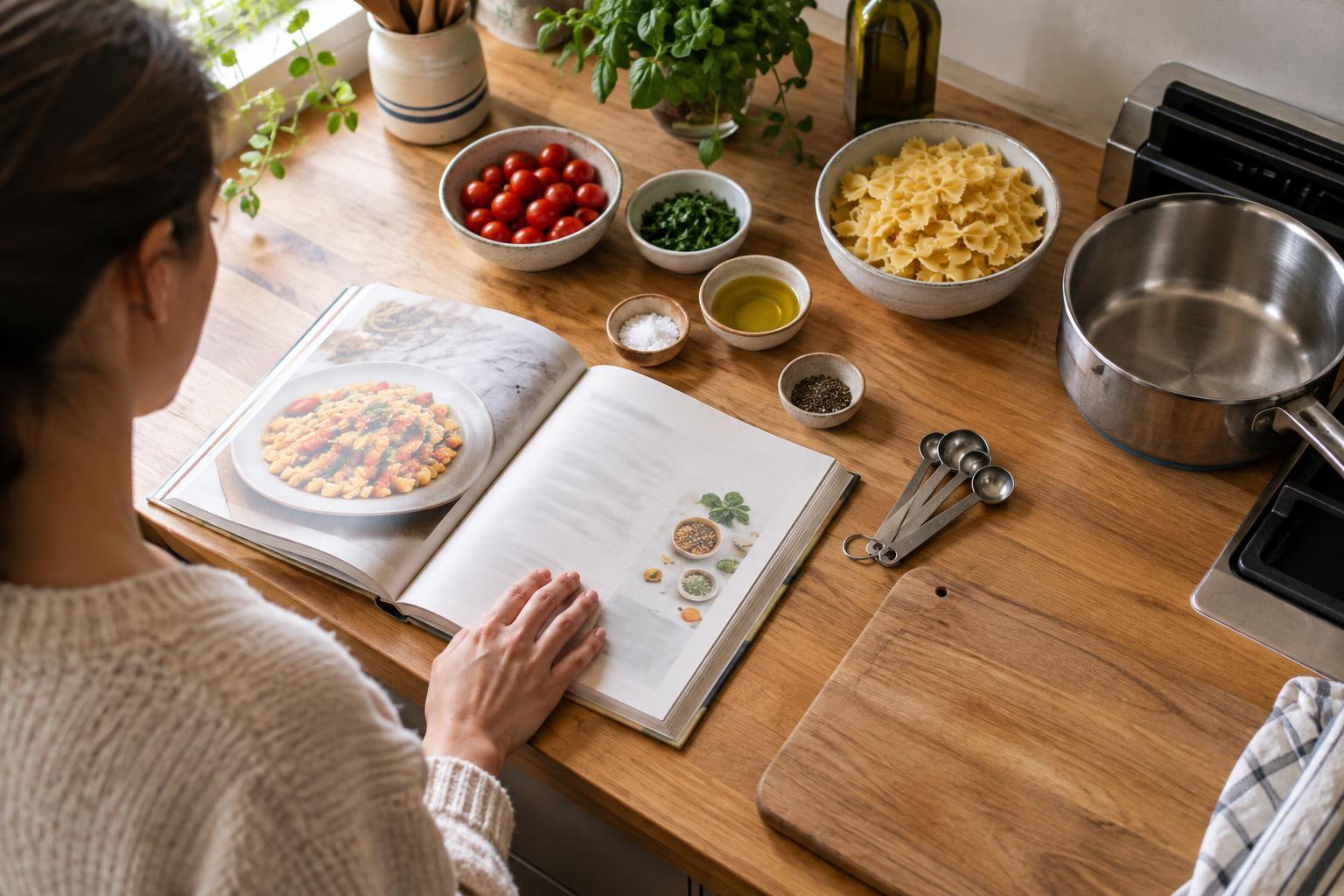
Before cooking, place the recipe where you can read it without touching your phone or cookbook with messy hands. As you work, follow the sequence, but treat times as guides rather than promises. Stove settings, pan sizes and ingredient thickness can affect how quickly food cooks. Check the recipe’s descriptions of color and texture alongside its timings. If a step calls for golden onions, for instance, the visual cue tells you more than the clock alone.
For a first attempt, resist the urge to change several things at once. Making the recipe mostly as written lets you learn how it works. After eating, note anything you would do differently next time: a larger pan, an earlier start on the rice or a little less seasoning. That tiny review turns one meal into useful experience—and makes the next weekend recipe easier to begin.