Start with the rice you saved
A container of cooked rice can make a meal feel halfway finished. Before choosing a recipe, though, think about what happened after the rice was cooked. Rice can contain spores that survive cooking, so a batch left sitting at room temperature is not made safe simply by frying or microwaving it later. If you cannot remember whether it was refrigerated promptly, or you know it sat out overnight, discard it. Smell and appearance are not reliable safety checks.
For future leftovers, spread freshly cooked rice in a shallow container so it cools quickly, then cover and refrigerate it promptly rather than leaving a warm pot on the stove. Keep it cold until you are ready to use it, and aim to eat it within a day or two. If your plans change, freeze a portion soon after cooking instead. Labeling the container with the day you cooked it makes the next meal easier to plan.
Choose one filling ingredient and one fresh contrast
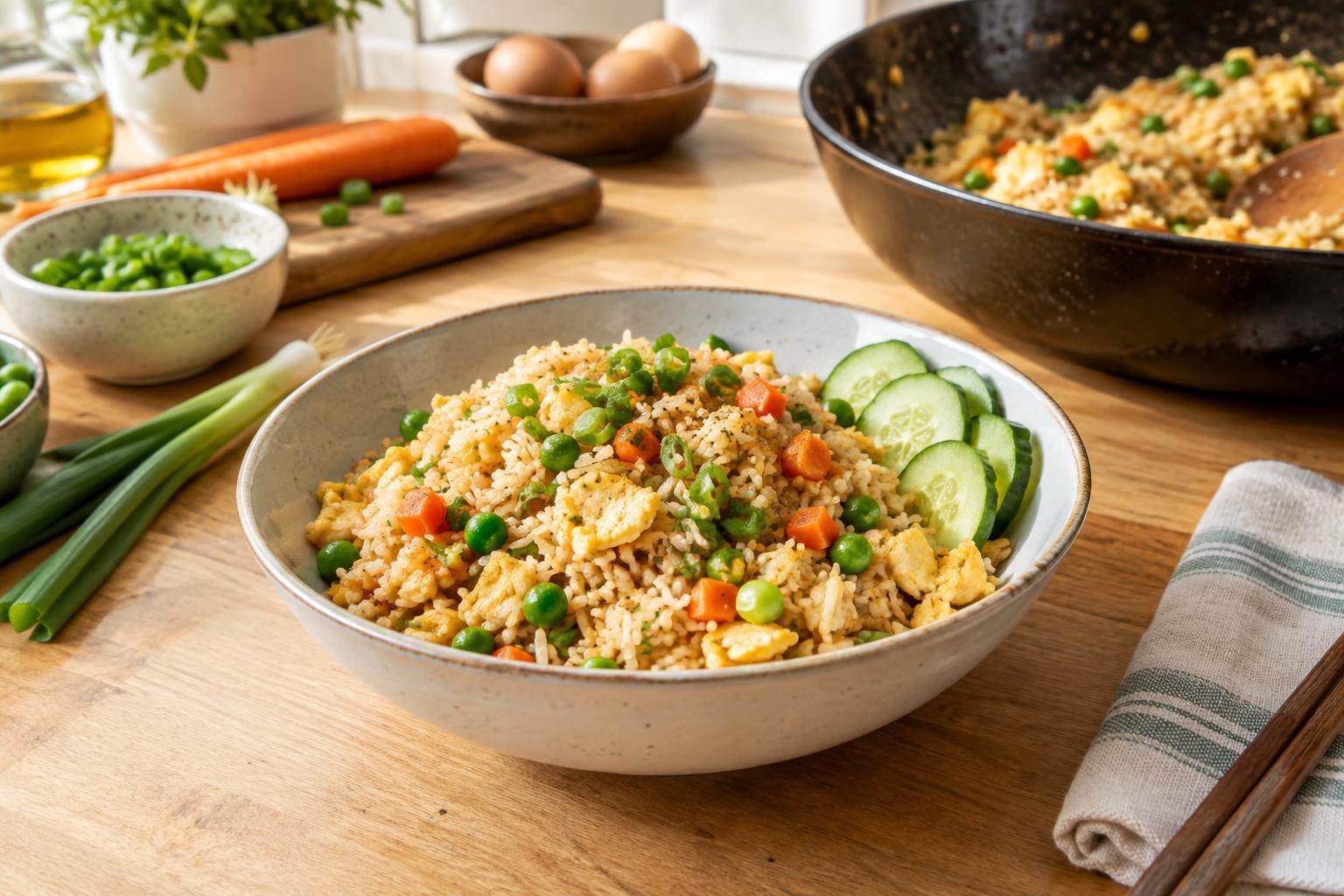
Rice is most satisfying when it has company. Start with a filling ingredient you can prepare quickly: an egg, canned beans, tofu, leftover cooked chicken or a handful of edamame. Add a vegetable for color and texture. Frozen peas, shredded cabbage and carrots work well in a skillet; sliced cucumber or a handful of greens can go on top after cooking. Check that any other leftovers you use were also stored safely.
Then pick one flavor direction instead of pulling out every condiment. Soy sauce, ginger and a little sesame oil make a savory skillet. Beans, cumin and salsa turn the same rice into a simple bowl. Lemon, herbs and yogurt offer a brighter finish. A small crunchy topping, such as toasted seeds or chopped nuts, can make an improvised meal feel complete without adding much work.
Use a hot skillet for a quick rice meal
For an easy skillet meal, put your vegetables and chosen protein within reach before heating the pan. Cook raw ingredients fully first. Add cold, refrigerated rice, breaking up clumps with a spoon, and stir until the rice is steaming hot throughout. If it seems dry, add a splash of water and cover the pan briefly; this helps heat the center of any stubborn clumps. Finish with your chosen seasoning, then serve right away.
A microwave works when you want an even simpler bowl. Put the rice in a microwave-safe dish with a small splash of water, cover it loosely and heat it until steaming hot all the way through. Stir partway through heating to reduce cool spots. Warm beans or other cooked toppings separately if that makes it easier to check that everything is thoroughly heated.
Make the next batch easier to use
If you often cook more rice than you need, portion it as soon as you put it away. A shallow container cools efficiently in the refrigerator, while small freezer portions let you take out only what a meal needs. Frozen rice can be reheated from frozen until steaming hot throughout, or thawed in the refrigerator first; avoid leaving it on the counter to thaw.
You do not need a fixed recipe to make the habit useful. Think of each portion as a base, then keep a short list of combinations you enjoy: egg and peas with soy sauce, black beans and cabbage with salsa, or tofu and greens with a lemony dressing. Reheat only the portion you plan to eat rather than warming the same rice repeatedly. With safe storage handled first, the rest can be relaxed and creative.