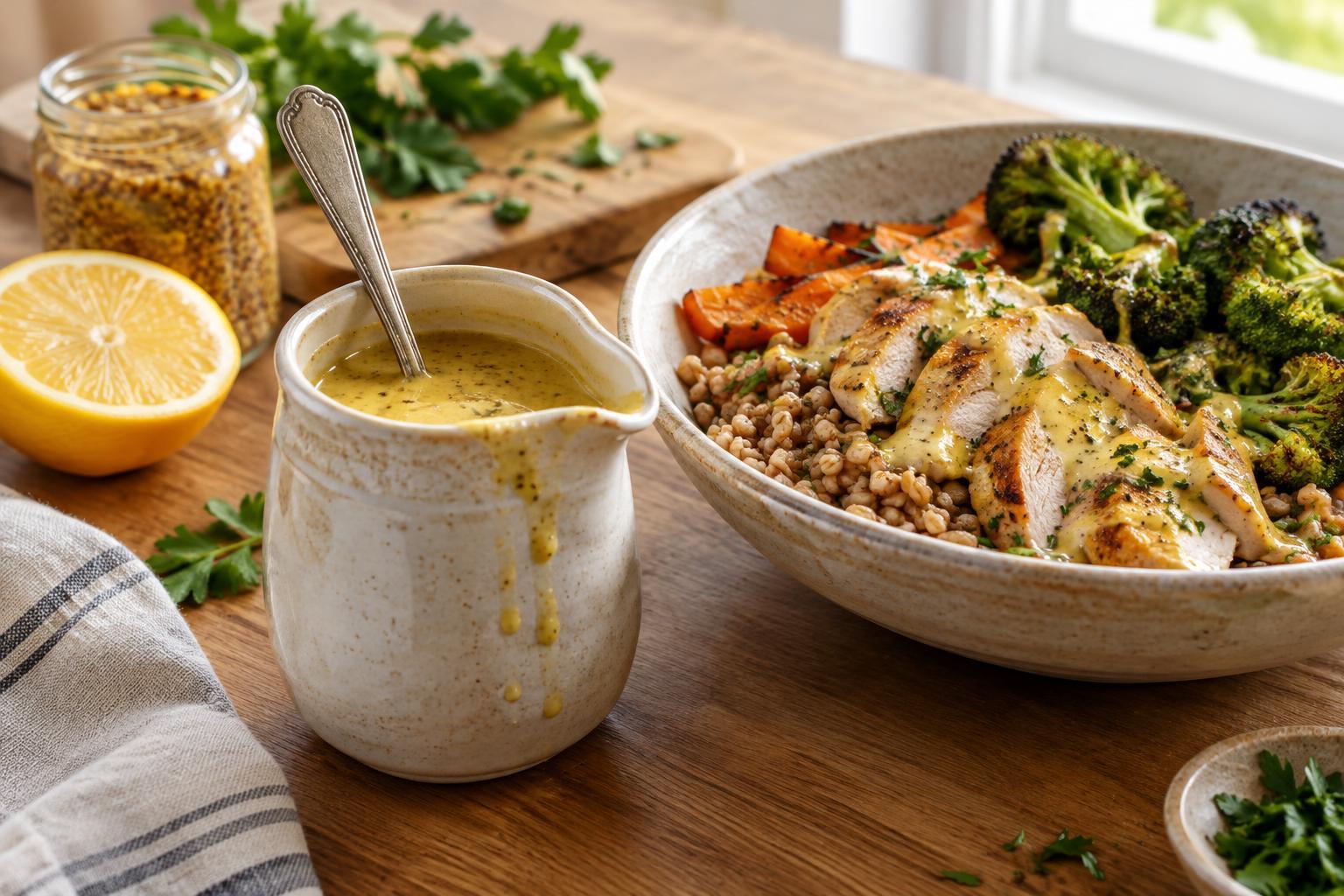
Start with one flexible formula
A useful weekend sauce does not need a blender or a long ingredient list. For a small batch of lemon-mustard sauce, whisk together 3 tablespoons olive oil, 2 tablespoons lemon juice, 1 teaspoon mustard and a small pinch of salt. Add 1 to 2 tablespoons water if you want it thin enough to drizzle. Taste it before adding anything else: a little more lemon makes it brighter, while a little more oil softens a sharp edge.
Mustard helps the oil and lemon come together, but the sauce may separate as it sits. A quick stir fixes that. If you like a hint of sweetness, whisk in a small amount of honey or maple syrup. If lemon is not on hand, a mild vinegar can fill the same role. The goal is not an exact recipe so much as a balance you enjoy: richness from oil, brightness from acid and enough seasoning to wake up the food underneath.
Match the sauce to what is on your plate
For grains such as rice, couscous or quinoa, stir in a spoonful while the grains are still warm. They absorb flavor more readily than a cold bowl does. Start with less sauce than you think you need, toss, then taste. You can add more at the table without turning the grains soggy. A handful of chopped herbs or sliced scallions can add freshness, but the sauce works without them.
For vegetables, use the sauce after cooking rather than before. Drizzle it over roasted carrots, broccoli or potatoes just before serving, or toss it with steamed green beans. The acidity gives cooked vegetables a lift, especially when their edges have browned. On raw vegetables, try it as a dressing for sliced cucumber or shredded cabbage; add water a teaspoon at a time if it needs to coat everything more evenly.
For cooked protein, think of the sauce as a finishing touch. Spoon it over eggs, beans, tofu, fish or chicken once they are ready to eat. This keeps the lemon flavor clear and lets you serve the same meal to people who prefer different amounts of sauce. If you are handling raw meat, keep the serving sauce separate from utensils or surfaces that have touched it.
Adjust it without starting over
A sauce that tastes good on a spoon may need a small change once it meets dinner. If a grain bowl tastes flat, add a squeeze of lemon or a pinch of salt to the finished bowl. If the sauce seems too sharp, whisk in more oil or a little sweetness. If it tastes heavy, thin it with water and taste again. Make each adjustment in small steps; it is easier to add than to take away.
You can also change its character with one pantry ingredient. A pinch of dried oregano makes it feel at home with tomatoes and beans. A little grated garlic brings more punch to roasted vegetables. A spoonful of plain yogurt makes it creamier for dipping, though you may need extra water to keep it pourable. Pick one variation at a time so the sauce remains quick to make and easy to recognize.
Make the next meal easier
The most efficient approach is to make the sauce while another part of dinner cooks. Whisk it in the bottom of the bowl you plan to use for serving, then add your grains or vegetables on top. That saves a dish and makes tasting as you go feel natural. Alternatively, shake the ingredients in a clean jar with a tight lid and pour out only what you need.
If you make extra, cover it and refrigerate it promptly. Stir or shake it again before serving, since separation is normal. Add fresh herbs or yogurt to a portion when you need them rather than to the whole batch, and use sensible care with leftovers, especially if you have added perishable ingredients. A small amount of reliable sauce is often more useful than a large batch you feel obliged to finish: it gives you an easy way to make whatever is already in the kitchen feel like a considered meal.