Plan three moments, not every bite
A weekend meal plan does not have to account for every snack, invitation or change of mood. Start by choosing three moments when eating at home would make the weekend easier. They might be Friday dinner after a busy week, Saturday lunch between errands and Sunday dinner before the week begins. Leave the other meals open for leftovers, familiar pantry staples or plans that come up later.
Give each chosen meal a job. The first can be fast and comforting, the second easy to assemble, and the third generous enough to leave a portion for another day. Those descriptions are more useful than a strict timetable: if Saturday’s outing runs long, the assemble-it meal can move to Sunday. You are deciding what food to have ready, not promising to cook at a particular hour.
Build the meals around a few shared ingredients
Pick one or two ingredients you would be happy to use more than once, then give them different roles. For example, a bag of greens can go into a quick pasta, fill a lunch wrap and sit beside a sheet-pan dinner. Bread, rice or potatoes can provide a base without making every meal taste alike. Choose a sauce or finishing ingredient you enjoy, such as yogurt, lemon or a jarred dressing, to keep the assembly simple.
One possible trio is pasta with greens and beans for Friday dinner, wraps with hummus and crunchy vegetables for Saturday lunch, and a Sunday tray of roasted vegetables and chicken or chickpeas served with rice. The meals share produce and a few pantry items, but none depends on the others. If you prefer not to roast anything, make the third meal a rice bowl with warmed beans and vegetables instead.
Before shopping, check what you already have. A usable half-bag of rice, a can of beans or vegetables that need eating can become the starting point. Write a short list for the gaps, grouping it by produce, protein, bases and flavorings. If the list starts growing, simplify one meal rather than buying a special ingredient you will use only once.
Do the smallest useful bit of preparation
Preparation should buy you time, not take over the weekend. Spend a few minutes washing produce, setting out shelf-stable ingredients or mixing a sauce if that will make a meal easier to start. You could also chop sturdy vegetables for roasting while putting groceries away. If you would rather cook everything fresh, skip the chopping and put the three meal ideas where you will see them.
Keep ingredients separate until you need them when that gives you more options. Washed greens can be added to pasta or tucked into wraps; cooked rice can support several different bowls. Store perishable food appropriately, refrigerate cooked food promptly and follow package guidance for storage and reheating. Small containers make it easier to spot what is available without turning the fridge into a puzzle.
A useful test is whether the preparation removes a specific obstacle. If deciding what to cook is the hard part, a three-line note may be enough. If starting dinner is the hard part, prepare the ingredient that usually slows you down. There is no prize for doing every task in advance.
Leave yourself an easy way to change course
Weekends rarely follow a perfect sequence. If friends suggest lunch out, move the wraps to Sunday or use their ingredients for a quick dinner. If you are too tired to make the planned tray meal, warm the chickpeas and vegetables in a pan and serve them over rice. A plan works better when its ingredients can be rearranged than when every meal depends on a precise recipe.
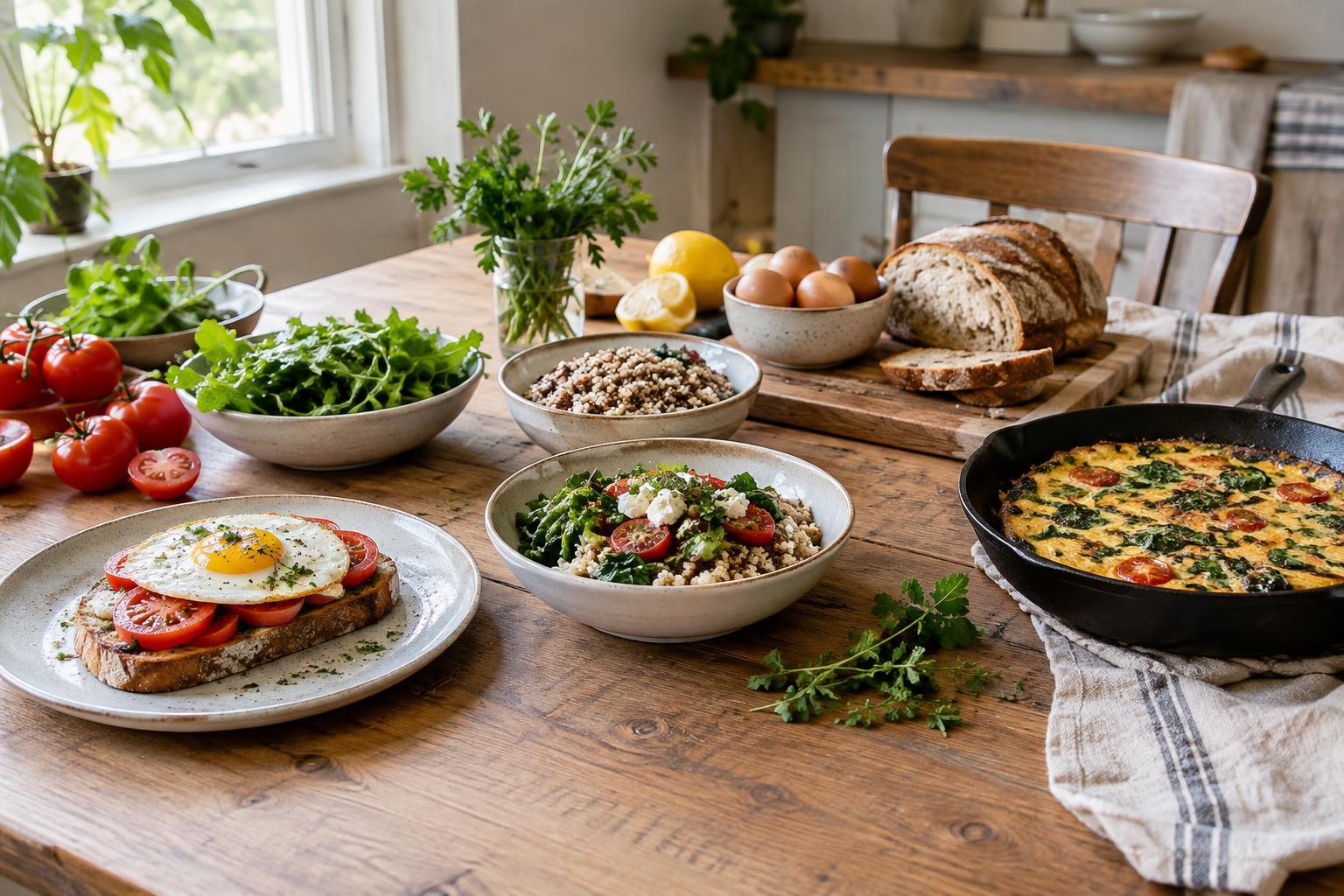
Keep one low-effort fallback in mind, using food you normally stock: toast and eggs, a bean-and-rice bowl, or pasta with a pantry sauce. It is not a fourth meal to shop for; it is permission to make something easier. At the end of the weekend, notice which of the three meals helped most. Next time, repeat that approach and change the parts that felt like work. A small plan should make room for your weekend, not fill it.