Plan for the hardest part of the day
The best shoe for a full day out is not necessarily the one that looks right at the first stop. Think through the whole plan: how far you might walk, whether you will stand in a queue, what the ground will be like, and where you will end up. A pair that feels fine for a short drive and a seated meal may be less appealing after an hour on pavement.
Choose for the most demanding part of the day, then check whether the same pair feels appropriate for the quieter parts. If your plans include a park path and a casual dinner, a tidy walking shoe or simple sneaker may bridge both. If the day is mostly indoors with brief walks between stops, a comfortable loafer or flat might make more sense. You do not need a shoe that is perfect for every setting; you need one whose trade-offs you are happy to live with.
Start with fit, not the label
Put on the shoes with the socks or other layers you intend to wear. Your toes should have room to move, your heel should feel reasonably secure, and no seam or edge should press sharply against your foot. Walk across the room, turn, and go up and down a few steps if you can. Notice whether you grip with your toes to keep the shoes on or change your stride to avoid a sore spot.
A shoe described as supportive or comfortable may still be wrong for your feet. Likewise, a familiar pair can become uncomfortable when paired with thicker socks or worn for longer than usual. If you are choosing between two options, favor the pair you have already worn successfully on a similar outing. A full day is rarely the ideal time to test a stiff new shoe.
Check the sole as well as the fit. You want enough grip for the surfaces on your route and enough cushioning for the amount of walking you expect. Very smooth soles can feel uncertain on wet pavement; very thin soles may leave your feet tired on hard ground. Neither feature has to be extreme, but both deserve a quick look before you leave.
Let the route and weather narrow the choice
A compact plan can still include several kinds of terrain. For a museum and café day, easy walking and a neat appearance may be the priorities. For a market, waterfront path, or neighborhood wander, look more closely at grip, stability, and whether the shoe will still feel good after repeated starts and stops.
Weather changes what is practical. In rain, consider whether the upper will tolerate splashes and whether the sole has useful traction. On a warm day, think about breathability and where straps or edges may rub. Open shoes can be pleasant for a relaxed route, but they may not be your first choice if you expect crowds, uneven ground, or a long walk. Check the likely conditions, then choose for what you will actually encounter rather than an ideal version of the day.
Build the outfit around the shoes
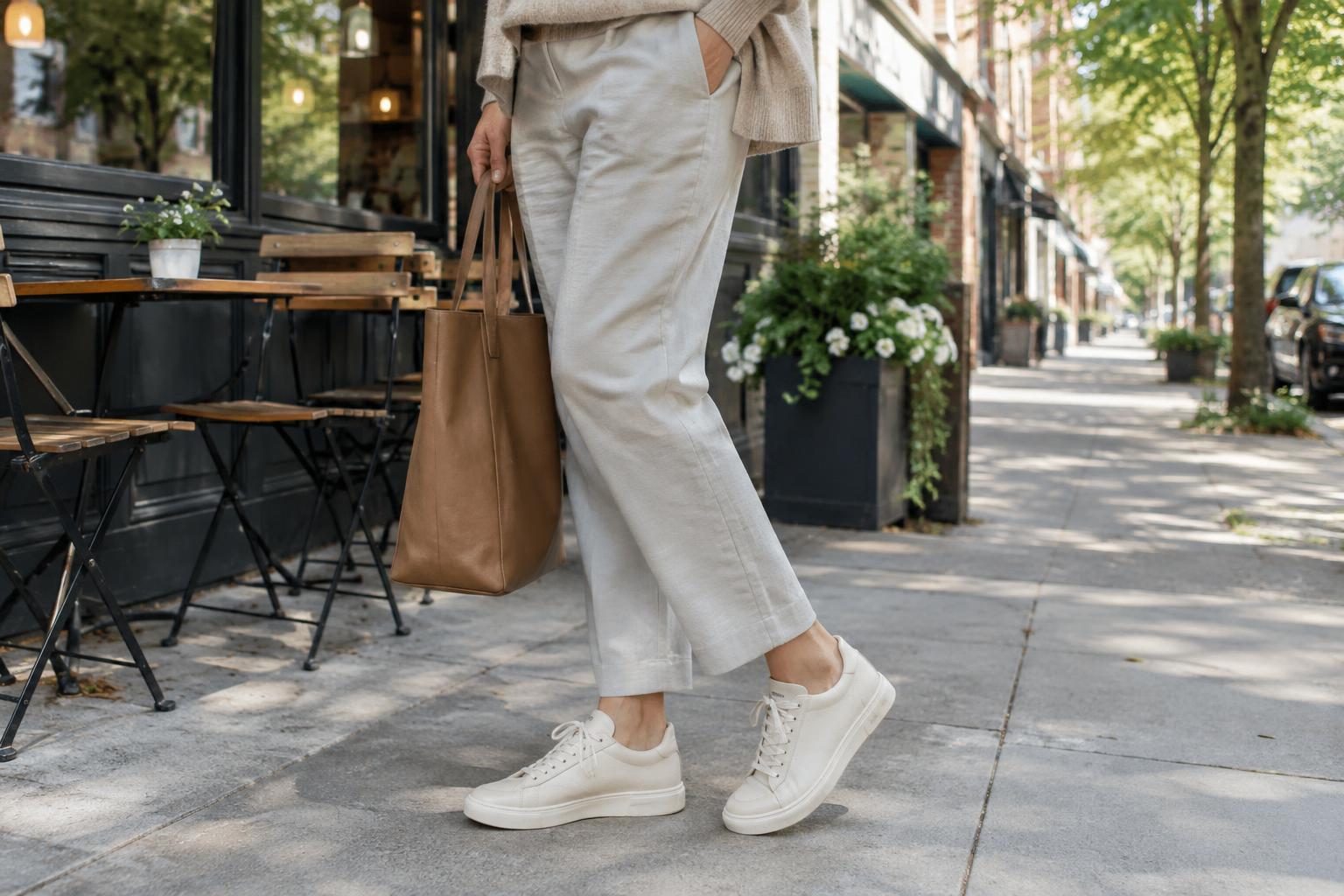
Once you have a comfortable candidate, make it look intentional. Shoes often feel more versatile when their color connects with another part of the outfit, such as a belt, bag, jacket, or the general tone of your clothes. Clean, simple shoes are usually easier to carry from a casual daytime activity to a low-key evening plan than a pair with details you feel obliged to dress around.
Try the complete outfit on before deciding. Check trouser hems, sock visibility, and how the shoes look when you sit as well as stand. If a shoe works only when you keep adjusting your clothes, it may not be the easy choice you need. The aim is not to meet a strict style rule; it is to feel comfortable and reasonably put together without spending the day thinking about your feet.
Do a short test, then pack lightly
If time allows, wear your chosen pair around the house or on a brief errand with the full outfit. Pay attention to slipping, rubbing, and pressure that appears after several minutes. A small concern at home can become distracting when you cannot change shoes. If the pair fails the test, switch to the dependable option rather than hoping it will improve during the outing.
You can still prepare without carrying a second pair. Wear suitable socks, check that laces or straps are secure, and bring a small blister plaster if rubbing is a possibility. Before heading out, give the shoes a quick wipe if they need one. These small steps take less time than managing uncomfortable footwear halfway through the day.
One-pair planning becomes easier as you notice what works. After an outing, remember which shoes felt good on that particular mix of walking, standing, and sitting. The next time you have a full day planned, you can start with that experience instead of starting your decision from scratch.