Start with your actual weekends
Before sorting your closet, think about how you spend a typical weekend. You might walk to a café, run errands, visit friends, work on a home project, or spend a quiet afternoon indoors. Your weekend wardrobe only needs to support the things you really do, not every possible invitation. Jot down two or three common activities and the clothes you feel comfortable wearing for them.
Then give yourself a short closet session rather than a full clean-out. Pull out the pieces you regularly reach for on days off: perhaps a soft shirt, dependable trousers, a casual layer and shoes you can walk in. Set aside anything that fits poorly, needs repair or makes you keep adjusting it. You are not deciding what to discard. You are simply identifying the easiest pieces to wear right now.
Build a small mix-and-match group
Choose a modest group of clothes from your favorites: a few tops, two or three bottoms, one or two layers, and shoes suited to your usual plans. There is no ideal number. The useful test is whether you can make several outfits without relying on one item being freshly washed. If laundry happens once a week, keep that rhythm in mind.
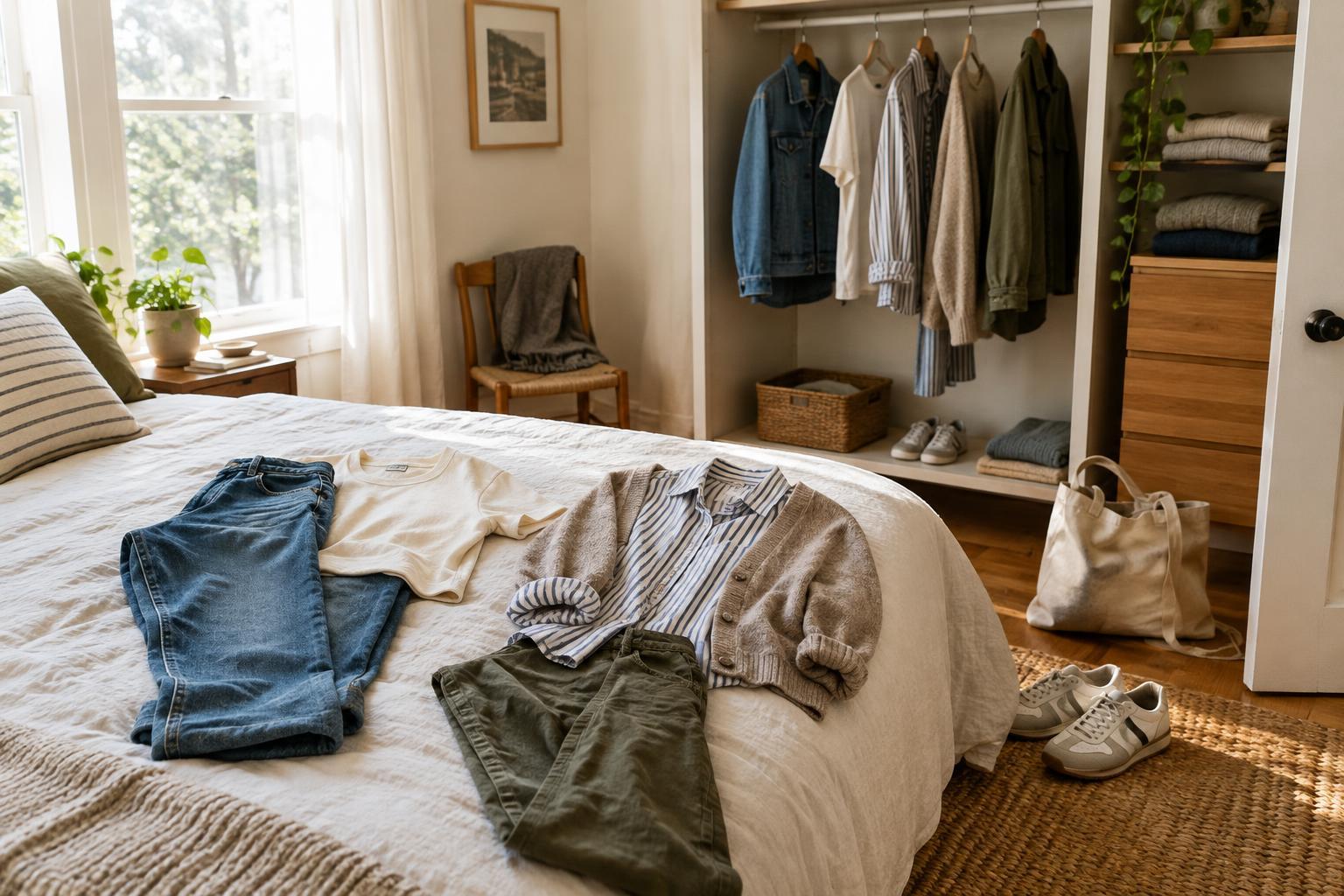
Lay the pieces next to one another and try simple combinations. A top does not need to match every bottom, but each piece should have at least one clear partner. If you discover that a shirt only works with trousers you dislike, leave it out of this small group for now. Notice colors and textures that work together without much thought. Repeating a few familiar combinations is a convenience, not a failure of creativity.
Make outfits for the plans on your calendar
Turn the group into a few ready-to-wear formulas. For a relaxed outing, that might mean your most comfortable jeans, a favorite top and an easy jacket. For a home-project morning, it could be washable trousers and a shirt you do not mind getting dusty. For an informal meal with friends, swap the practical layer for one that feels a little more polished. The change can be small; it only has to feel right to you.
Try each outfit on rather than judging it on a hanger. Sit down, bend, reach and take a few steps. Check whether the shoes suit the distance you expect to walk and whether a layer is easy to carry if you take it off. If an outfit needs repeated fixing, change one piece. A useful weekend wardrobe makes room for movement, weather and the occasional change of plans.
Keep useful extras close, but not in the way
A small wardrobe does not mean wearing exactly the same thing in every season. Keep weather-dependent items, such as a rain layer or a warmer sweater, accessible when you need them. A bag, hat or other accessory you already use can help an outfit serve a different activity. These extras should solve a practical problem or add something you enjoy, rather than create another decision.
Give the core pieces an easy place to live together, whether that is one section of a rail, a drawer or a shelf. Put shoes and frequently used extras nearby if space allows. Before a busy weekend, glance at the weather and your plans, then choose one or two outfits. If a piece needs washing, mending or a stain removed, you will have time to switch it out instead of discovering the problem as you leave.
Let the wardrobe change with you
Use your small selection for a few weekends and notice what happens. Which pieces come back into rotation as soon as they are clean? Which ones stay untouched? A shirt may be comfortable but too warm for your usual outings, while a neglected pair of trousers may work well with a different top. Make small swaps based on experience rather than trying to perfect the wardrobe in one afternoon.
Keep a note of any genuine gap, but look through what you own before buying something to fill it. You may have a suitable layer stored away or a piece that only needs a minor repair. The goal is not a strict uniform or a closet that looks a certain way. It is a dependable set of clothes that leaves more of your weekend for the things you wanted to do.


