Start with a small, workable plan
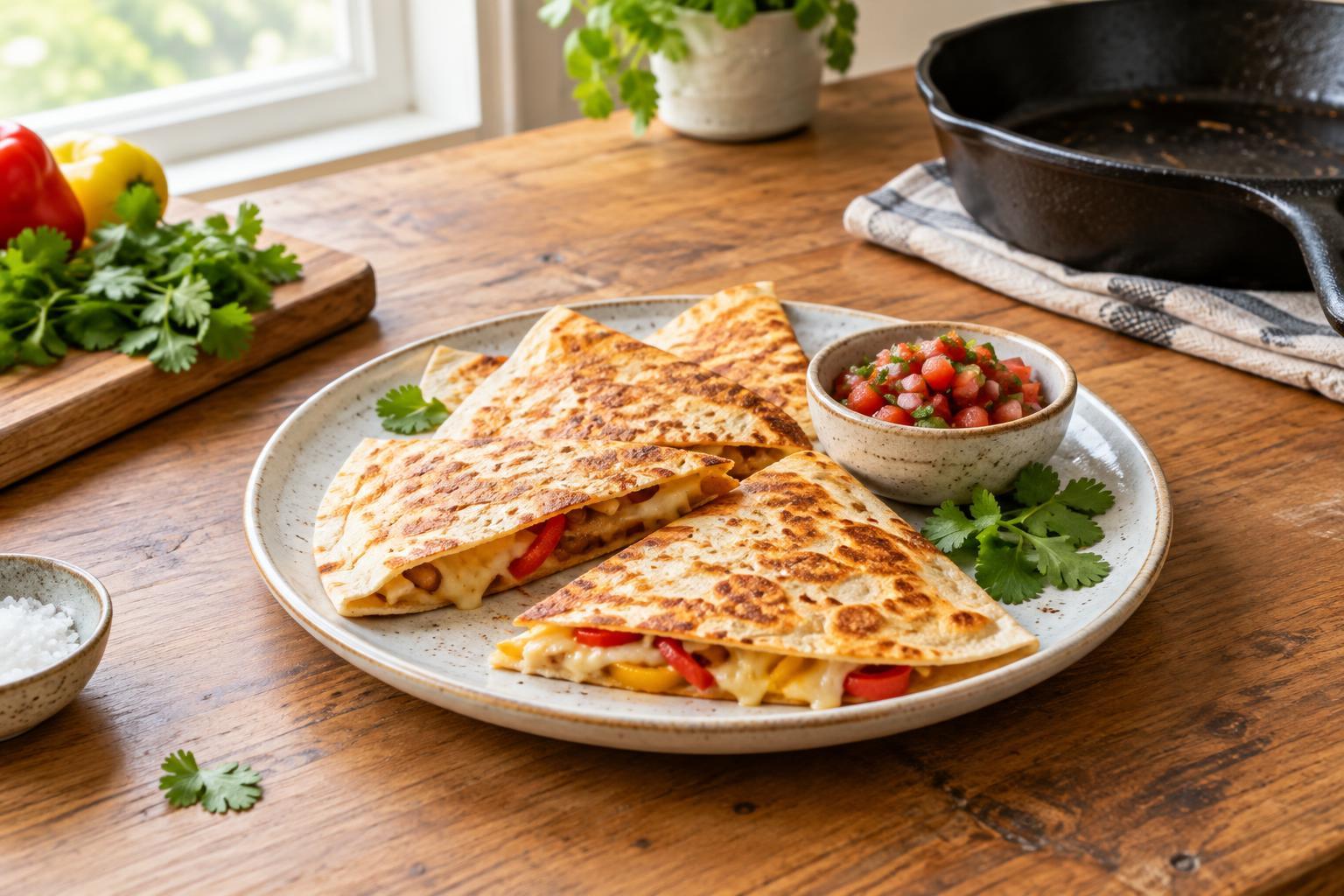
A quesadilla works best when you treat it as a tortilla with a modest filling, not as a place to pack every leftover in the fridge. For one serving, set out a tortilla, a little cheese if you like it, and one or two other ingredients. A bowl of fruit, a few sliced vegetables or a simple salad can round out the plate without making the cooking more complicated.
Before heating the pan, check whether your fillings are ready to eat. Cook raw meat separately and thoroughly; a brief turn inside a tortilla is not a reliable way to cook it. Chop large pieces into small bites so the quesadilla can lie flat. If you are using leftovers, make sure they have been stored appropriately and reheat them thoroughly.
Choose fillings that will not soak the tortilla
The easiest fillings are flavorful without being very wet. Cooked beans, leftover roasted vegetables, sautéed mushrooms and shredded cooked chicken can all work. Drain beans, let hot vegetables release some steam, and spoon off excess liquid from saucy ingredients. If a filling still looks wet, use less of it or serve it alongside the quesadilla instead.
Cheese can help hold the filling together, but it does not need to be the whole meal. Spread a thin layer near the center, add your other ingredients, then leave a clear border around the edge. If you prefer a quesadilla without cheese, keep the filling especially light and use a spatula to support it when you flip. Save salsa, yogurt or other loose toppings for the finished plate.
Cook gently for an even crunch
A skillet and medium heat give you more control than a very hot pan. Place a filled tortilla in the skillet and let the first side turn golden before moving it. If the outside browns while the middle is still cool, lower the heat and give it more time. A light coating of oil can add crunch, but you can also start with a dry skillet if that suits your pan and tortilla.
Folding one tortilla in half is an easy approach for a single serving. For a larger quesadilla, sandwich the filling between two tortillas and flip carefully with a wide spatula. Either way, avoid pressing so hard that the filling spills out. Once cooked, let it rest briefly on a board before cutting; that small pause makes the pieces easier to handle.
Make variations without starting over
Think in combinations rather than strict recipes. Beans and cooked peppers make a hearty filling; mushrooms and a little cheese offer a different texture. A small amount of cooked potato can work if it is cut thin and seasoned before it goes into the tortilla. Taste your filling first, especially if it is a leftover, and add seasoning only if it needs it.
If you are cooking for several people, put the prepared fillings in separate bowls and let each person choose a modest combination. Cook one quesadilla at a time rather than crowding the skillet. Keep the first ones warm while the others cook, and put cold toppings on the table at the end so the tortillas stay crisp.
Keep the meal and cleanup manageable
For a low-effort meal, choose a side that needs no second pan: sliced cucumber, fruit or greens with a simple dressing. Put sauces in small dishes for dipping instead of pouring them over the tortilla. This keeps the crunch you worked for and lets everyone add as much as they want.
Wipe up spilled filling while the pan cools, and put leftover ingredients away promptly rather than leaving a collection of open containers on the counter. For more ideas about keeping cooking spaces easy to use, browse Cleaning and Upkeep · Practical Spaces. If a small kitchen reset sounds like a useful project for another weekend, Practical Spaces offers a place to browse further.