Start with two patterns, not a whole new wardrobe
Pattern mixing is easier when you treat it as a small change to an outfit you already wear. Pick a familiar base, such as jeans and a button-up shirt or a T-shirt and relaxed trousers. Then replace two solid items with patterned versions. A striped top and checked overshirt, for example, can feel as comfortable as your usual layers while adding more visual interest.
Keep the rest of the outfit simple for your first few tries. Plain denim, a solid jacket, or shoes in a color you wear often can give the eye a place to rest. You do not need to buy anything to experiment: lay a few tops, layers, and accessories on the bed, then try combinations you might not have considered when getting dressed in a hurry.
Use a shared color to connect the prints
One reliable way to make two patterns feel intentional is to find a color they have in common. A navy-and-white striped shirt can work with a scarf that includes navy, even if the scarf also has green or rust in it. The matching color acts like a thread between the pieces; the prints themselves do not have to match.
If you prefer a quieter look, choose patterns built around neutrals you already wear, such as cream, brown, gray, or black. For more color, let one print carry the brighter shade and keep the other closer to neutral. A floral blouse with small red details, for instance, can sit comfortably beside a narrow black-and-white stripe. Check the combination in natural light if possible, since similar-looking colors can appear quite different away from the closet.
Change the scale for a clearer look
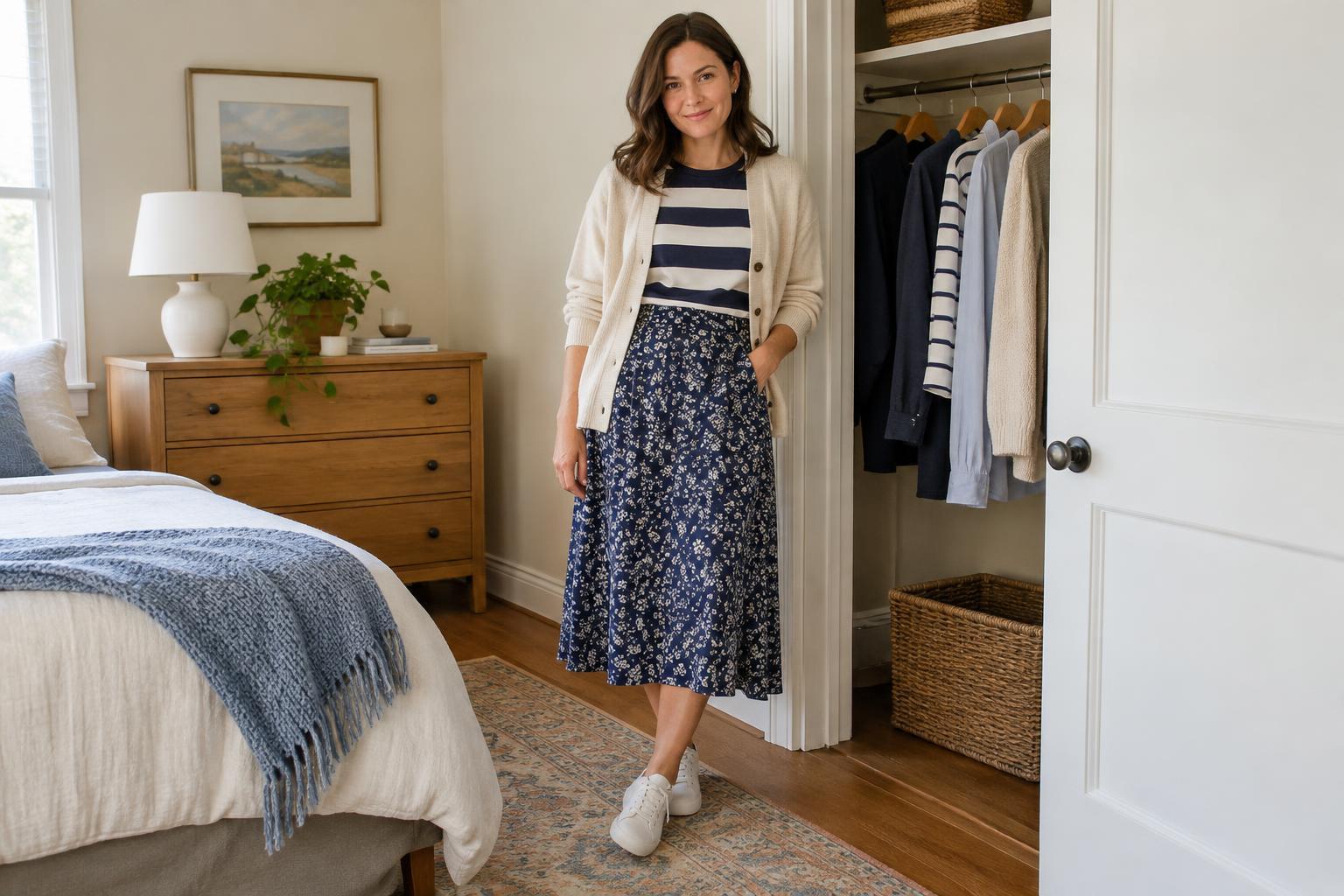
Two patterns of the same size can compete for attention, particularly when both have strong contrast. Try pairing a larger, more open print with a smaller, denser one. Think of a bold checked shirt over a T-shirt with fine stripes, or wide stripes beside a tiny dotted scarf. The difference gives each piece its own role.
Scale is a useful guide, not a rule you have to obey. If two small prints look good together to you, wear them. When an outfit feels too busy, though, changing the size of one pattern is a quick adjustment. You can also reduce how much of a print is visible: leave a patterned shirt open over a plain tee, roll a printed scarf loosely, or let patterned socks show only above your shoes.
Let one piece lead
Choose a main pattern before you add a second. It might be the shirt you want to wear all day or a jacket that suits the weather. Make that piece the focus and give the supporting print a smaller role. A plaid overshirt with subtle striped socks is an easy starting point; so is a printed skirt with a small patterned bag.
Accessories are especially useful when you are unsure about mixing larger garments. A cap, scarf, tote, or pair of socks lets you test a combination without committing your whole outfit to it. For an everyday look, consider what you will actually do in the clothes. Comfortable shoes and a layer you can take off may matter more on a long outing than getting every color perfectly coordinated.
Try a five-minute closet test
The next time you have a few minutes before the weekend, pull out one patterned piece you enjoy wearing and two possible partners. First, look for a shared color. Next, see whether the patterns differ in size or whether one can appear in a smaller amount. Add your usual solid trousers, outer layer, or shoes, and try the complete outfit on rather than judging separate pieces on hangers.
Take a step back from the mirror and notice what draws your eye first. If everything demands attention at once, swap one item for a quieter print or a solid. If the outfit feels like you, there is no need to refine it further. Pattern mixing is less about following a perfect formula than finding combinations that make your familiar clothes enjoyable to wear again.