Choose a destination small enough to reach
“Learn a language” is an exciting idea, but it is too broad to guide a quarter-hour of practice. Pick one situation you would enjoy handling: ordering a snack, introducing yourself, asking for directions or talking about a favorite hobby. This gives your first sessions a purpose without asking you to master everything at once.
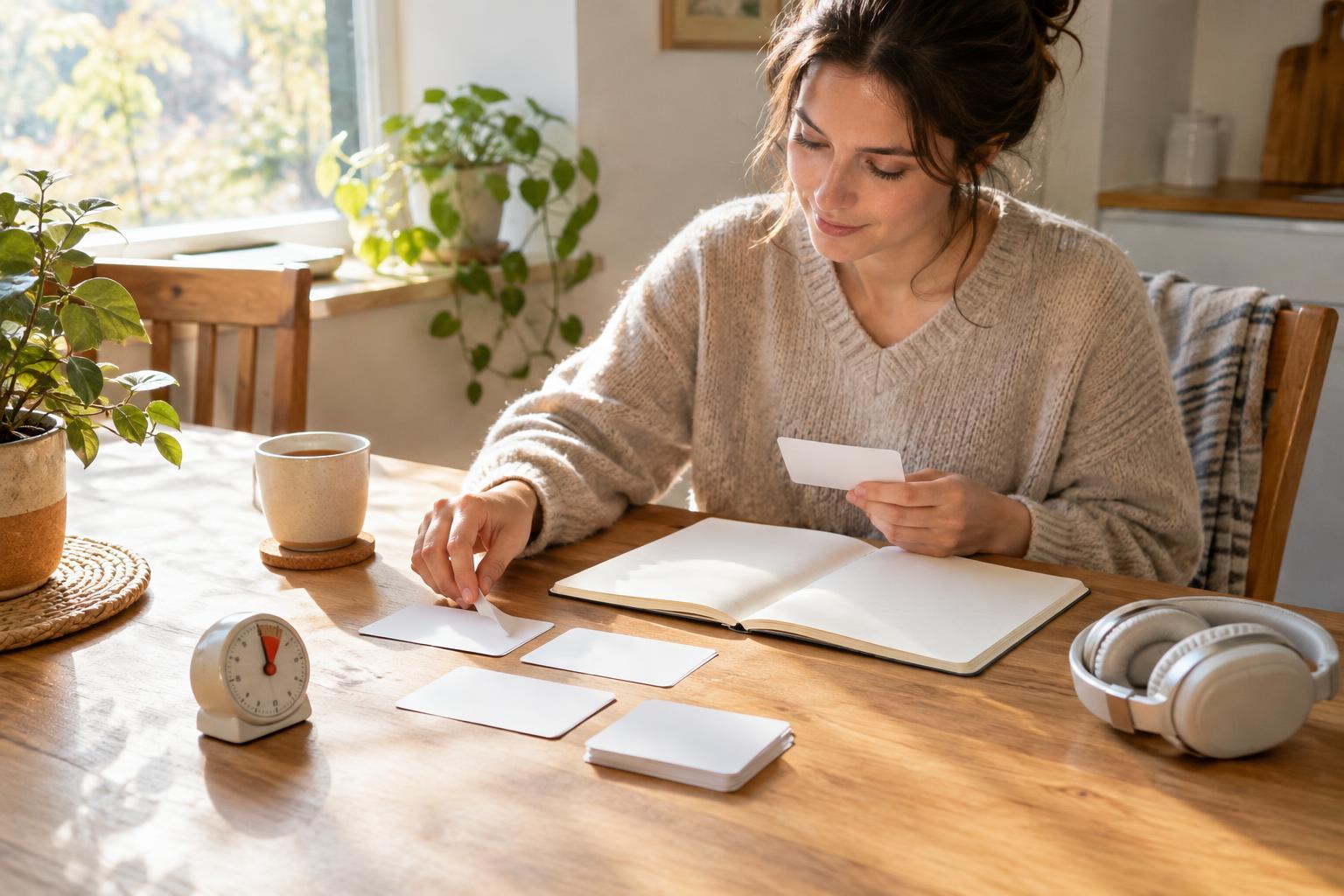
Choose one main beginner resource that offers short lessons or clear audio, then keep a notebook or note on your phone for phrases you want to reuse. You do not need to assemble a perfect collection of apps, books and videos before starting. If you have 15 minutes this weekend, spend the first few choosing your situation and the rest learning two or three phrases you could actually say.
Give each session a familiar shape
A simple structure makes it easier to begin, especially when your free time is limited. Try five minutes reviewing phrases from an earlier session, five minutes learning one small new item, and five minutes using it. That last step might mean saying a sentence aloud, writing a short exchange or answering a question without looking at your notes.
Keep the new material narrow. If you are learning how to introduce yourself, practice a greeting and your name before adding where you live or what you do. Say the words slowly enough to notice sounds you are unsure about. When audio is available, listen and repeat a short segment rather than trying to memorize a long conversation. The aim is to make the material usable, not merely familiar when you see it.
Practice remembering, not just rereading
Rereading notes can feel productive because every phrase looks recognizable. To check what you can recall, cover one side of a short phrase list and try to supply the missing words. Or look at a prompt such as “ask for water” and speak your answer before checking it. If you cannot remember, take a look, say it again and move on. Forgetting something is a useful signal to revisit it, not a reason to restart your plan.
Bring back older material regularly. At the start of a session, choose a few phrases from previous days and use each in a fresh sentence or tiny dialogue. You can also put sticky notes on objects you see often, provided they help you practice rather than become background decoration. A handful of phrases you can retrieve is more useful for a beginner than a long list you have only read once.
Make speaking and listening low-pressure
You do not need a conversation partner for every session. Describe what you are doing while making tea, practice a two-line exchange during a walk or record a brief voice note and listen back. These private exercises help you get comfortable producing sounds instead of waiting until you feel ready to speak perfectly.
For listening practice, choose a short clip or lesson at an appropriate level and listen for one target phrase. Play it again to notice where the words begin and end. Some sounds may be hard to distinguish at first; that is normal when the language is unfamiliar. If you later practice with another person, keep the task modest: try a greeting or one prepared question, and let them know you are learning.
Build a routine you want to return to
Attach your 15 minutes to an existing moment, such as your first cup of coffee on Saturday or the quiet time after a weekday meal. Keep your resource and notes easy to find so setup does not consume the session. On busier days, a brief review still keeps the language in view; you can return to a full session when you have the space.
At the end of each week, note one thing you can now understand or say and one thing you want to practice next. If your chosen situation no longer interests you, switch to another that does. Progress may feel uneven, particularly when new words arrive faster than you can recall them. A small, repeatable practice is not a shortcut to fluency, but it can turn language learning into a welcoming part of your weekend rather than another oversized task.


