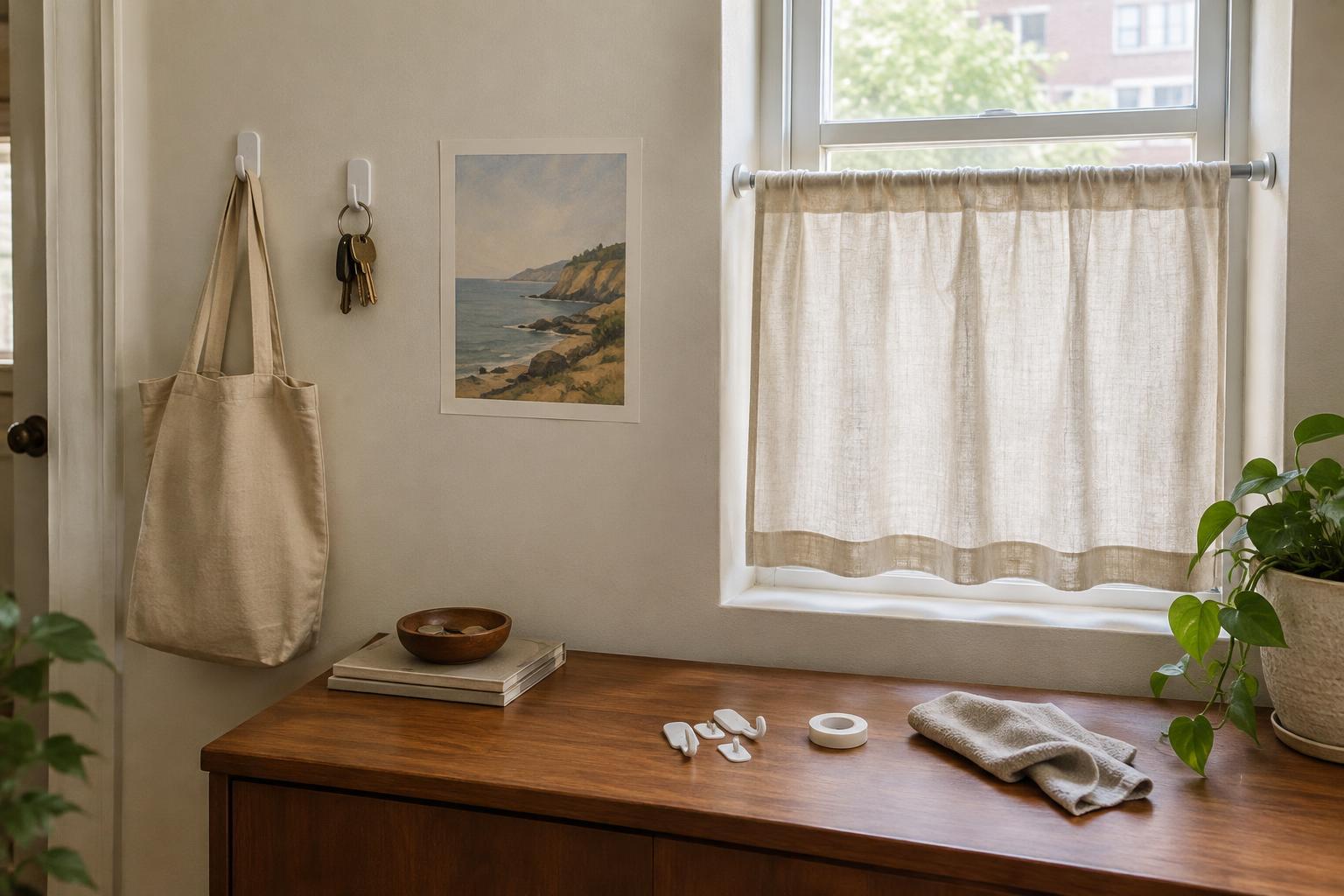
Start with the job, not the product
A bare wall or awkward nook can invite a quick weekend fix. Before buying anything, decide what you want to hold, how often you will touch it and what surface will support it. A lightweight print that stays put presents a different challenge from a bag you grab every day. A curtain needs a span between two surfaces; a small cable clip does not.
Also ask what “removable” needs to mean in your space. An adhesive may release cleanly from one painted wall but pull finish from another. A tension rod avoids glue yet can leave pressure marks. Check your lease and any building rules before changing a space, especially around windows, doors or shared areas. If the finish is already peeling or delicate, even a small project deserves extra caution.
Choose removable hooks for items you lift on and off
Hooks are a practical choice for lightweight accessories such as keys, a hat or a small kitchen towel. They also make it easy to try a new arrangement without committing to hardware. Match the hook and its adhesive strip to the item’s weight, then allow for the way it will be used. A tote that gets tugged sideways or dropped onto a hook puts more strain on it than an item hanging still.
Adhesive hooks generally work best on clean, smooth, sound surfaces. Follow the package directions for cleaning, placement, waiting before use and removal; products differ. Avoid assuming that a hook labeled removable is safe for wallpaper, fresh paint or a textured surface. Keep fragile objects out of the drop zone, and do not rely on an adhesive hook for anything whose fall could hurt someone.
Use tape for flat, light pieces that stay put
Removable mounting tape can suit a small, flat decorative item when you do not want a visible hook. The key is good contact: an uneven backing or rough wall gives the tape less surface to grip. Tape may also be less convenient for objects you plan to take down regularly. Repeated pulling can stress both the adhesive and the finish beneath it.
Check that the tape is intended for your wall material and the item you want to mount. Follow its placement and removal instructions rather than substituting another pulling method. Do not use ordinary household tape as a stand-in for a mounting product; it may not hold securely or come away neatly. For a print you expect to swap often, a lightweight frame on a suitable hook might be easier to live with.
Pick a tension rod when you have two solid opposing surfaces
A tension rod creates a useful horizontal span without adhesive. It can hold a lightweight curtain in a window recess, divide an open shelf or support a few light accessories when paired with suitable clips. Measure the gap before shopping and choose a rod designed for that width. Place it between stable, reasonably flat surfaces rather than relying on loose trim or an uneven edge.
The pressure that holds a rod in place is also its main drawback. Too little, and the rod may slip; too much, and it may dent or mark the surfaces. Test the fit gently, check it again after adding the intended load and move it if you see signs of damage. Avoid hanging breakable items beneath it or treating it as a grab bar. In a damp space, choose a rod and accessories suited to that environment and check them periodically.
Make a small test part of the project
For a low-stakes weekend update, start with one item in a less conspicuous spot. Clean and prepare the surface as directed, install the product, then wait the recommended time before loading it. This short pause is useful: it gives you a chance to confirm that the height and position work before repeating the setup across a room.
Plan the removal before installation, too. Keep the packaging or take a photo of its instructions so you know how the product is meant to come down. When you eventually remove it, work slowly and watch the surface rather than forcing it. The best renter-friendly choice is not simply the one that goes up fastest; it is the one that suits the object, the surface and the way you actually use the space.


