Start with one effect, not a collection
A free afternoon can disappear into watching trick after trick without learning one well enough to share. Instead, choose a single effect you can describe in one sentence: someone picks a card, and you find it. That clear outcome gives you something to work toward. You do not need an elaborate prop, a costume, or a rehearsed stage persona to begin.
Look for a trick with a short sequence and supplies you already have. A deck of cards is useful because you can practice alone and reset it quickly. Read through the entire method before trying to perform it. Then separate what you must do from what the audience should notice. The secret action may be small, while the visible story is simply that you are paying close attention to their choice.
Try a beginner-friendly card discovery
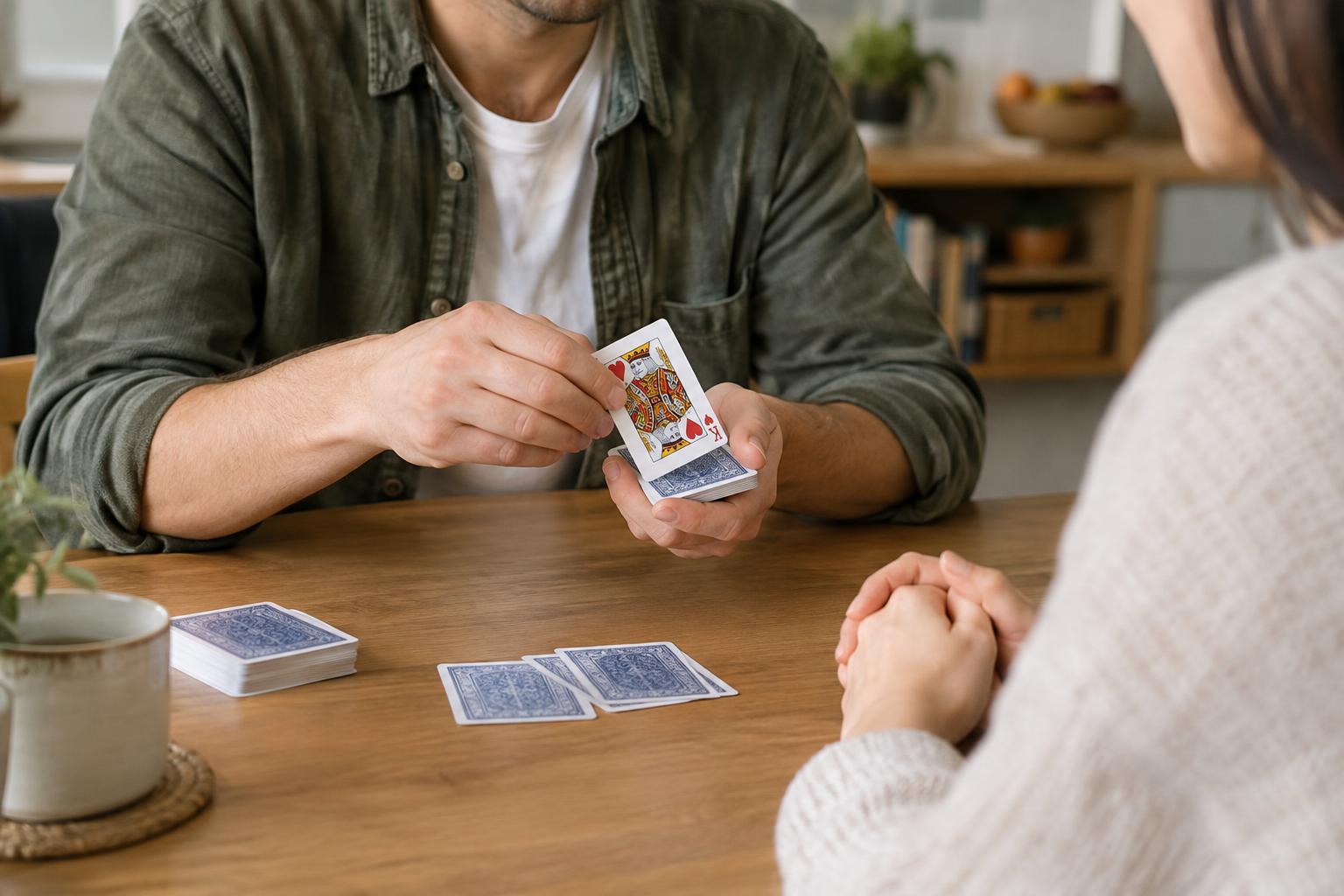
Here is one trick to practice: before anyone selects a card, quietly note the card on the bottom of the deck. This is your key card. Ask someone to take a different card, look at it, and place it face down on top of the deck. Give the deck one ordinary cut near the middle, moving a portion from the top to the bottom. Do not shuffle it. That cut places your key card immediately before their card when you later look through the deck face up.
To reveal the selection, spread the cards toward yourself and find your key card. The card immediately after it is the chosen one. Rather than naming it the instant you see it, close the spread and take a beat. You might say, “Keep your card in mind,” then turn their card face up. Practice the sequence alone first, using a face-up selection so you can check that the cards land where you expect. Once the order feels dependable, practice without that reminder.
Repeat the parts that need work
Running the whole trick ten times may help, but targeted repetition is more efficient. If you keep forgetting the bottom card, practice looking at it naturally while you square the deck. If the cut feels awkward, repeat only the return-and-cut sequence until your hands know where to go. A few focused minutes are easier to fit into a weekend than a long session that turns frustrating.
Try three passes with different purposes. On the first, check the mechanics slowly. On the second, say your planned words aloud while your hands move. On the third, perform at a comfortable pace without stopping to correct yourself. Afterward, note one change for the next round. A small, specific adjustment, such as pausing before the reveal, is more useful than deciding you need to “be better at magic.”
Make the presentation easy to follow
Magic works best as a shared moment, not a test the spectator can fail. Give simple directions: “Take any card, remember it, and put it here.” Allow enough time for the person to see their card. Keep your hands visible when possible, and avoid talking over an important action. If you sound relaxed, your audience can relax too.
A short story can give the trick shape without adding much to memorize. You could frame the reveal as a memory challenge or say you are trying to catch one detail they will not tell you. Use words that feel natural in your own voice. Before performing for someone, rehearse the opening sentence, the instruction to return the card, and the final reveal. Those transitions often matter more to the experience than an extra flourish.
Share it, then build from there
Start with a willing friend or family member rather than an audience that is busy doing something else. Perform once, enjoy the reaction, and resist repeating the same trick immediately for the same person. Repetition helps you learn, but seeing an identical sequence twice can shift their attention from the effect to the method. If a step goes wrong, it is fine to smile, stop, and try again another time.
After you can perform one trick comfortably, choose your next one for contrast: perhaps a simple effect with a coin or a rubber band. Keep the same practice pattern of learning the steps, rehearsing the words, and trying a complete performance. Over time, you will have a small set of tricks you can do without much preparation—and a creative skill that fits into the spare moments of a weekend.