Start with a situation, not a long study plan
An app can make it easy to show up for a few minutes, but a completed lesson does not always feel like a usable skill. To make practice more personal, choose one situation you would like to handle in your new language. You might want to order a drink, describe your weekend, ask for directions, or understand a recipe. A specific situation gives you a reason to learn words and phrases that belong together.
Keep the first goal small enough for one weekend. Write down five to ten phrases you might use, including a question and a possible answer. Say them aloud before checking whether you remember them. You can still use an app to look up vocabulary or review, but let the situation decide what you practice rather than letting the next lesson decide for you.
Turn listening into an active habit
Listening to a song, a short video, or a familiar scene in your target language can be enjoyable even when you understand very little. Pick something brief that you would not mind hearing twice. On the first listen, notice the setting and any words you recognize. On the second, listen for one repeated phrase or a useful expression. There is no need to catch every sentence.
If a transcript or subtitles are available, check them after listening rather than reading throughout. Note one phrase you could imagine saying yourself, then listen again to its rhythm. This approach makes a few minutes of audio more useful than leaving a long program on in the background and hoping the words will stick.
Speak before you feel ready
You do not need a conversation partner to begin speaking. Narrate a small task while you do it: making tea, choosing an outfit, or packing a bag for an outing. Use simple sentences and repeat them with different details. If you get stuck, write down what you wanted to say and look up only the words you need. The aim is to practice getting an idea out, not to produce a perfect description.
A voice note can make this exercise more concrete. Record thirty seconds about your day, listen back, and try again with one improvement. If you have a willing language partner or a casual conversation group, bring a question you have already practiced. A prepared opening can make a short exchange feel less daunting while leaving room for a real reply.
Put the language into an activity you already enjoy
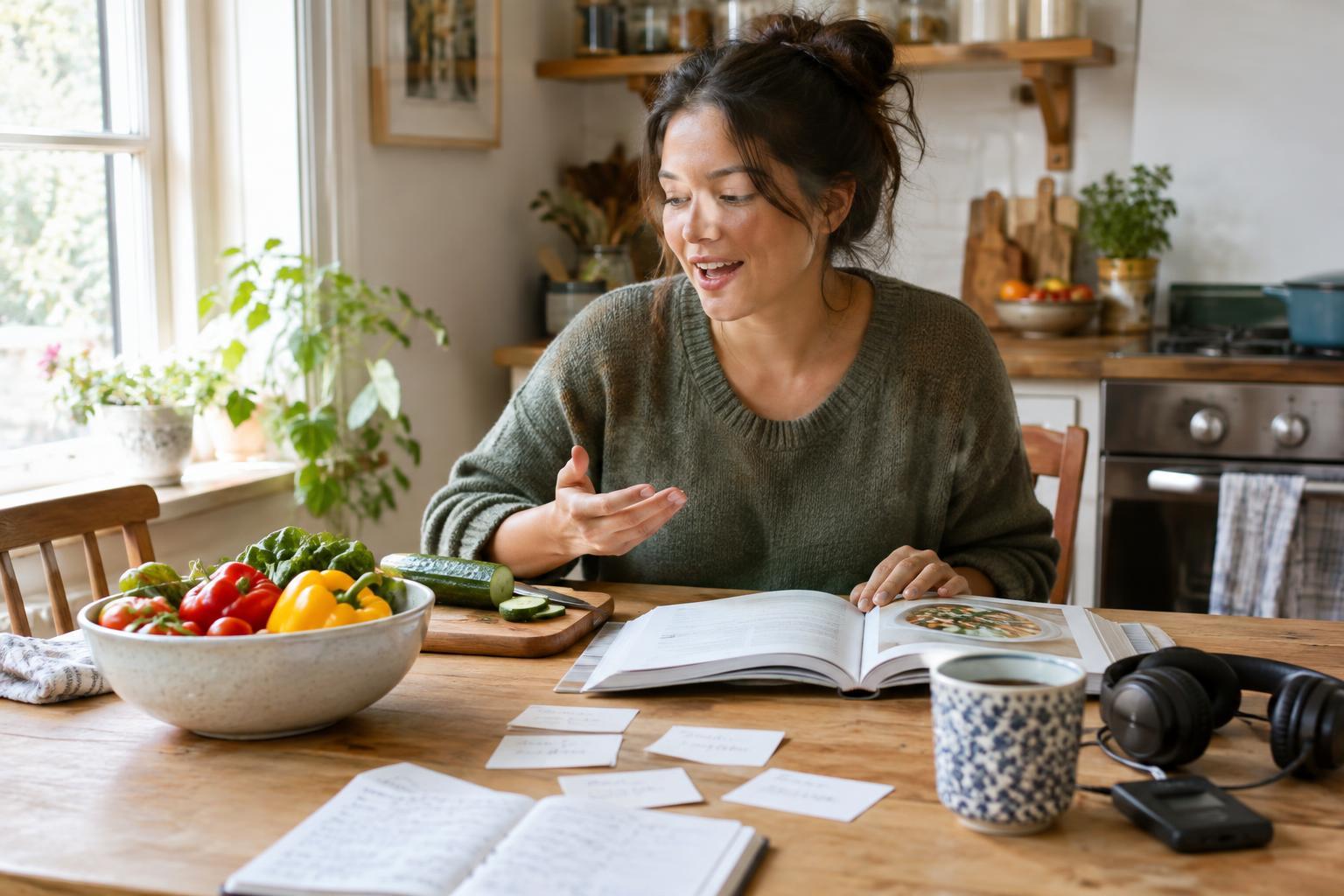
Language practice does not have to occupy a separate block of study time. Try following a simple recipe written in the language, reading the caption on a hobby video, or labeling a few objects you use often. Choose material that is close to your interests and manageable at your level. A familiar activity gives you context when you meet a new word.
Keep a small notebook or note on your phone for phrases you encounter. Save whole expressions rather than isolated words when possible, along with a reminder of where you found them. At the end of the weekend, choose just three to use in your own sentences. That final step turns something you noticed into something you have practiced.
Make a routine you can repeat
A sustainable weekend session can be short: listen to one clip, speak for a minute, and write a few sentences about something you did. If you have more time, repeat the same sequence with new material instead of adding several new resources. Repetition may feel less exciting than collecting fresh lessons, but it gives you a chance to notice what has become easier and what still needs attention.
End by leaving yourself an easy starting point for next time. Bookmark the clip, set aside the recipe, or write one question you want to answer aloud. Some weekends will allow a longer conversation; others may offer only five minutes. Both can count as practice when you know what you want to do with them.