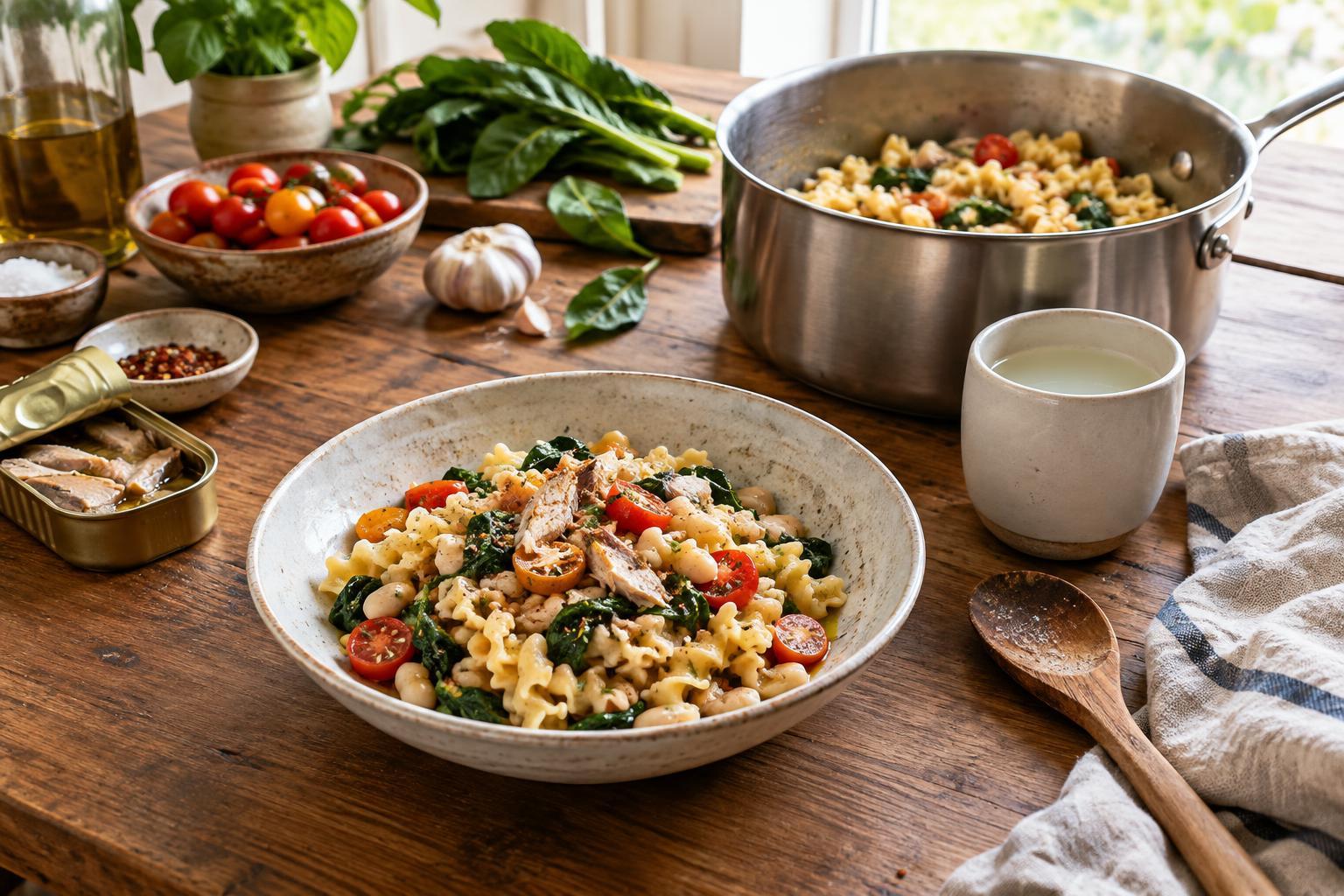
Start with a pot and a loose plan
Before the water boils, take a minute to look through the cupboard. Choose a pasta shape, one ingredient that can anchor the sauce, and one or two additions for substance or contrast. Canned tomatoes, beans, tinned fish, olives, nuts and breadcrumbs are all useful starting points. If you have an onion, a lemon, some greens or a piece of cheese in the fridge, those can join in too. You do not need a formal recipe; you need ingredients that will taste good together.
Put a pot of water on to boil while you gather and open what you need. Choose a pot that gives the pasta room to move, and stir soon after adding it so the pieces do not stick together. Salt the water to your taste, keeping in mind that olives, cheese and tinned fish may add salt later. Cook according to the package as a guide, but start tasting a little before the suggested time ends. Pasta that still has a gentle bite will finish well in a warm sauce.
Save some cooking water before you drain
Just before draining, scoop out a mug of the cloudy pasta water. Its starch can help a sauce cling to the pasta, especially when the sauce is based on oil or is thicker than you want. Add a small splash at a time as you toss the drained pasta with the sauce; you can always add more. If you forget to save it, a little plain water can loosen the sauce, though it will not have quite the same effect.
The easiest way to bring the meal together is to make the sauce in a wide pan while the pasta cooks. When the pasta is ready, move it into the pan and toss everything over low heat for a minute or two. This gives you a chance to check the texture and seasoning before serving. If the pan looks dry, add a splash of cooking water. If the dish tastes flat, try a squeeze of lemon, a little vinegar or some black pepper before reaching for more salt.
Build a sauce from what you have
For a tomato version, warm a little olive oil with sliced garlic or onion, if available. Add canned tomatoes and let them simmer while the pasta cooks. A pinch of dried oregano, chili flakes or both can add character. Stir in drained beans for a heartier meal, then toss with the pasta. If the tomatoes taste sharp, a longer simmer may mellow them; a small drizzle of olive oil at the end can round out the sauce.
For a fast oil-based version, gently warm olive oil with garlic, chili flakes or dried herbs. Keep the heat moderate so the garlic does not burn. Toss in the pasta with enough reserved water to make a light, glossy coating. Add chopped olives, capers or tinned fish if you like, then finish with lemon juice or zest. Since these additions can be salty, taste the dish before adjusting it.
For a creamy-feeling sauce without cream, mash some drained white beans with olive oil and a splash of pasta water. Warm the mixture in the pan, thinning it until it coats the pasta easily. Black pepper, garlic or lemon can brighten it. If you have frozen peas or spinach, add them to the pan and cook until heated through. The beans make the sauce substantial, while the vegetables bring color and variety.
Use texture to make a simple bowl feel complete
A pantry pasta can be satisfying with just a few ingredients, but a crisp topping makes it feel more considered. Toast breadcrumbs in a little oil in a separate pan until golden, stirring often, and scatter them on at the table. Chopped nuts or seeds can play a similar role. Add these toppings last so they stay crunchy.
Look for balance rather than a long ingredient list. A rich sauce welcomes something bright, such as lemon. Soft beans or tomatoes pair well with a crunchy topping. If the meal needs more substance, add beans, tinned fish or an egg cooked separately to your liking. Fresh herbs and cheese are pleasant extras when you have them, not requirements for making dinner work.
Keep the next pasta night easy
As you cook, notice which cupboard combinations you enjoy and which ingredients you tend to run out of. Keeping one favorite pasta shape, a can or two of tomatoes or beans, olive oil and a seasoning you like gives you a reliable starting point. A small reserve of breadcrumbs, olives or nuts offers options without demanding much preparation.
If you make more than you need, cool the leftovers promptly and refrigerate them in a covered container. Reheat with a splash of water to loosen the sauce. The goal is not to turn every spare ingredient into the same dish; it is to have a dependable method that makes a low-effort meal possible whenever a quiet weekend calls for one.