Start with the weekend you actually have
A good pair of jeans should work for your life, not just look appealing on a hanger. Before shopping, picture where you will wear them: a café visit, a walk around town, an afternoon at home or dinner with friends. Think about how much you will sit, walk and move, as well as which shoes and tops you reach for most often. This gives you a clearer goal than searching for a supposedly perfect fit.
Decide what matters most to you. Perhaps you want a soft waistband for long stretches of sitting, room through the thighs for easy movement, or a clean shape that works with a favorite jacket. You do not need to optimize every detail at once. Choosing two or three priorities makes it easier to compare pairs without getting distracted by a long list of cuts and washes.
Understand what the fabric will feel like
Fabric can affect comfort as much as size. Jeans made with rigid denim tend to feel structured and may soften with wear, while denim with a little stretch often feels more flexible from the first try-on. Stretch is not automatically more comfortable for everyone: a snug, stretchy pair may feel less relaxed than a roomier pair in rigid denim. Read the fabric label and pay attention to how the jeans feel on you rather than relying on a product name.
Feel the weight of the denim, too. A heavier fabric can hold a defined shape, while a lighter one may feel easier for a warm day or a long outing. Neither is universally better. If you want jeans for mixed weekend plans, look for a fabric that lets you bend and sit comfortably but still has the appearance you like. Check the care label before buying so the upkeep suits your routine.
Choose a rise and leg shape you like wearing
The rise is the distance from the crotch seam to the top of the waistband. A higher rise sits farther up the waist, a lower rise sits closer to the hips, and a mid rise falls between them. These labels can vary between brands, so use them as starting points. When trying jeans on, notice whether the waistband stays where you want it when you sit and stand. If you keep tugging it into place, another rise or size may be easier to live with.
Leg shape changes both the feel of jeans and how they work with your wardrobe. Straight legs offer a fairly consistent width down the leg; wider cuts give more room; tapered cuts narrow toward the ankle. Instead of choosing by trend, try a few shapes with shoes you already own. Notice whether you like the amount of fabric around your knees and ankles, and whether the hem falls where you want it. A cut you enjoy wearing will usually get more use than one you feel obliged to style.
Use a short, useful try-on routine
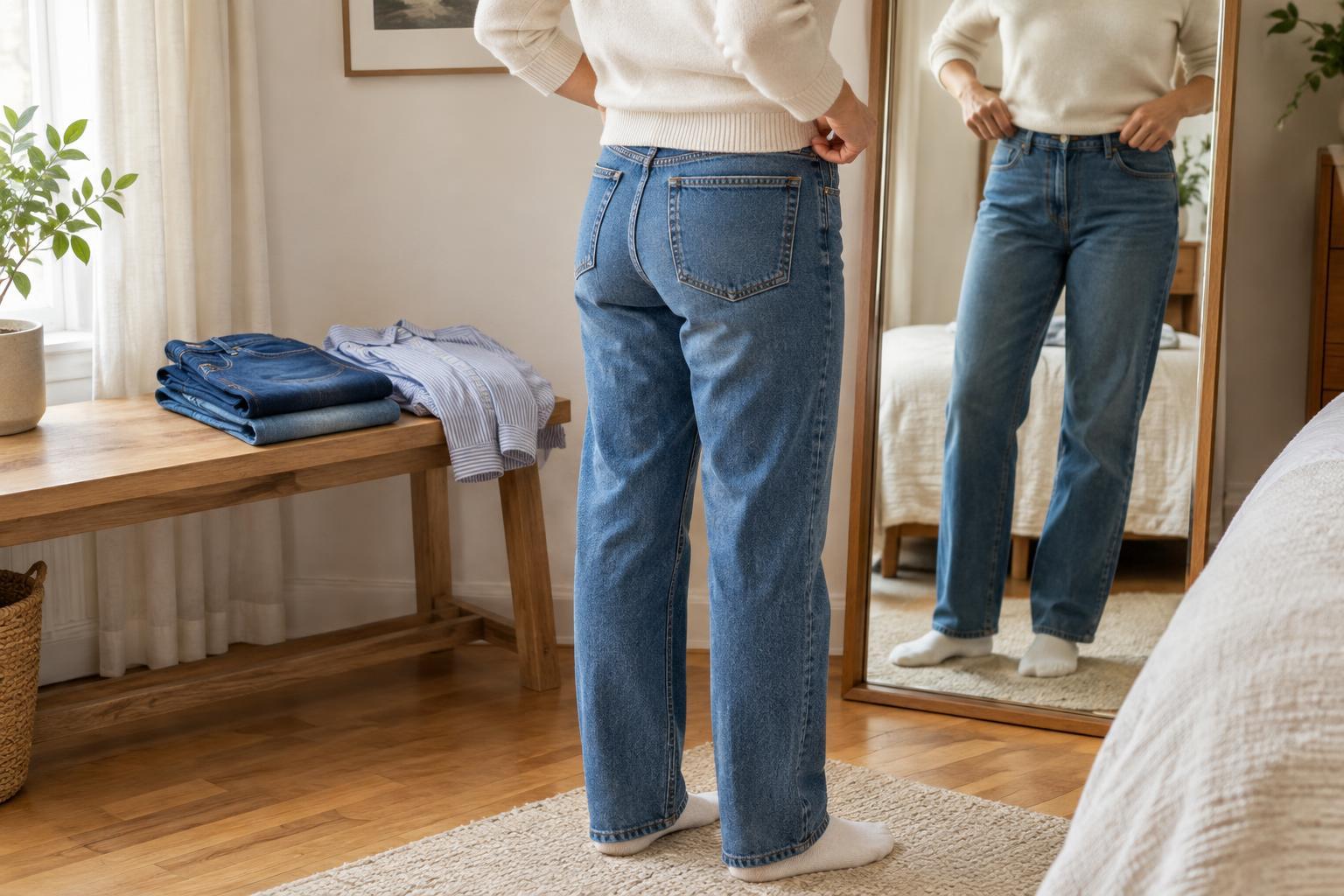
Try each promising pair with the same simple test. Walk a little, sit down, stand up, bend to pick up an item and put your hands in the pockets. The waistband should feel secure without pinching, and the jeans should let you move without constant adjustment. Check the fit from the side and back as well as the front. Minor creases are normal; focus on whether the pair feels comfortable and looks the way you want.
If you are comparing sizes, try both when possible. Sizing varies, and the number on the label does not tell you how a particular pair will fit. Also look at length before deciding a pair is wrong: a hem that bunches or catches under a shoe may be fixable with a different inseam, a cuff or an alteration. Before committing, ask yourself whether you would happily wear the jeans for several hours, not just for a quick look in the mirror.
Let the finishing details serve your wardrobe
Once the fit feels right, consider color and details. A dark, even wash can give jeans a tidier look with a shirt or jacket, while a faded wash may feel more relaxed with a T-shirt or sweater. Pocket placement, stitching, distressing and hardware also influence the overall effect. There is no need to choose the most versatile pair if you genuinely want something more expressive, but it helps to imagine at least two outfits you would wear with it.
If your shopping time is limited, take a photo of a pair you like and note its size, rise, leg shape and fabric composition. Those details are more useful for future comparisons than the size alone. The right jeans need not meet anyone else’s rules about what is flattering. They should support the way you move, fit into the clothes you already enjoy and make getting dressed for the weekend a little easier.