Start with the outfit you actually wear
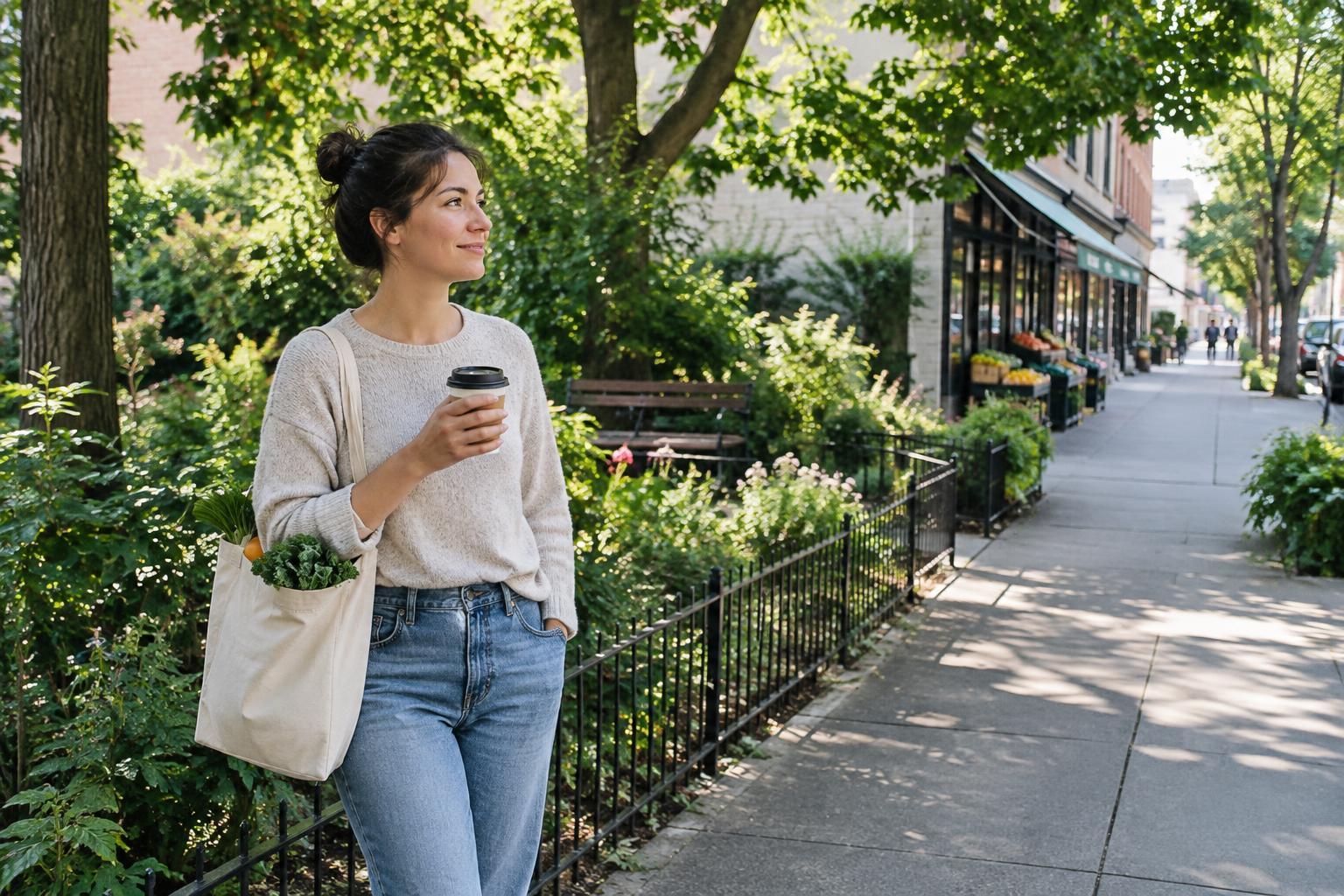
Pick a reliable weekend outfit before you open a drawer or closet: jeans and a T-shirt, loose trousers and a knit, or a dress you can move around in. Accessories are easier to choose when you have a real starting point. Think about where you are going, how long you will be out and whether you need to carry anything. An outfit for a walk and coffee may need different shoes and a bag than one for staying home and meeting friends later.
Next, gather a small selection of accessories you already own. Set out two pairs of shoes, a couple of bags, and a few smaller pieces such as a scarf, belt, hat or jewelry. You do not need to sort your entire wardrobe. The goal is to notice pieces that have slipped out of your usual rotation, then try them against the clothes you wear most often. If something is uncomfortable or difficult to use, leave it out rather than building an outfit around it.
Choose one point of interest
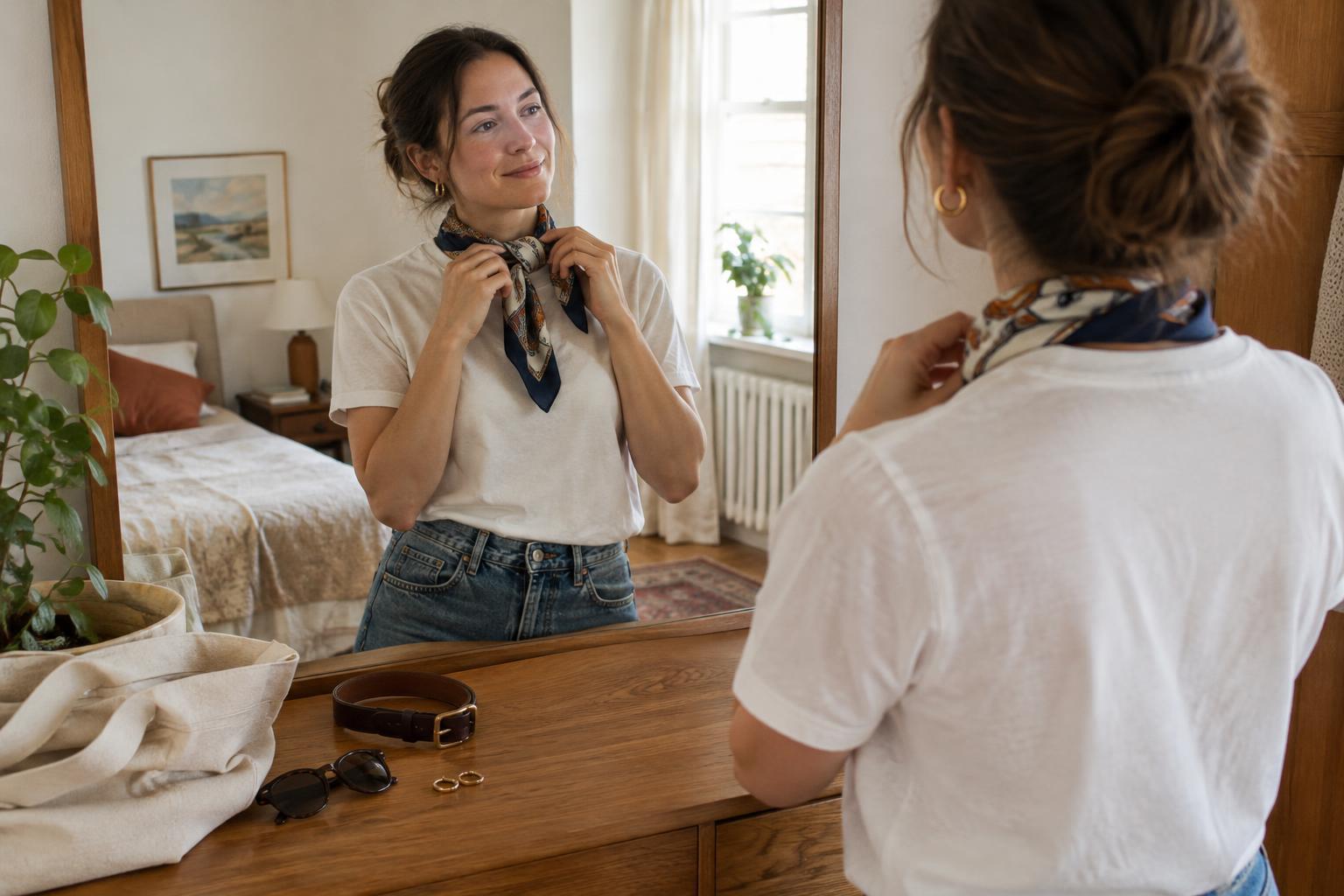
An accessory can change the mood of an outfit without changing every piece. With a plain top and trousers, try a patterned scarf at the neck, in your hair or tied to a bag handle. If you prefer a quieter look, use a scarf that repeats a color already in your clothes. A belt can add shape to an untucked shirt or relaxed dress, while a familiar necklace can make a simple neckline feel more intentional.
Give one item the lead role and let the others support it. For example, if you choose bright earrings, keep your necklace simple or skip it. If your shoes have a bold color or noticeable texture, try a bag that does not compete with them. This is not a rule about how many accessories to wear; it is a quick way to get dressed when you have limited time. If the result feels too plain, add one more piece and check again.
Use swaps to change the feel of familiar clothes
Shoes and bags often make the biggest practical difference. The same jeans and shirt may feel ready for errands with comfortable sneakers and a roomy tote, or more put-together for a casual meal with loafers and a smaller bag. Choose shoes for the walking and weather you expect, not just for the mirror. A bag should fit what you will actually carry, so you are not juggling keys, a water bottle or an extra layer.
Smaller swaps can be just as effective. Roll a sleeve to show a watch or bracelet, move a scarf from your neck to your hair, or try a belt over a cardigan instead of through trouser loops. Check the overall proportions: a large bag can balance a roomy outfit, while a smaller crossbody may keep a layered look from feeling bulky. None of these combinations needs to be permanent. Take a moment to compare two options and keep the one that feels natural.
For an especially quick refresh, use a one-swap approach. Leave the outfit exactly as you usually wear it and change only the shoes, bag or scarf. This makes it easier to see what the accessory contributes. If the outfit still feels familiar in a good way, you have found a variation you can repeat without adding more decisions to your weekend.
Make the refresh easy to repeat
A little preparation can turn an experiment into an easy habit. Once you find a combination you like, take a photo for your own reference or place the smaller accessories together where you will see them. If a scarf needs a quick press, a bag needs emptying or a pair of shoes needs cleaning, do that when you have a few minutes rather than waiting until you are about to leave.
Before heading out, use a final comfort check. Can you walk easily, sit comfortably and reach what you need in your bag? Will the accessories stay in place through the day you have planned? Remove anything you keep adjusting. The best refresh is one that helps familiar clothes feel enjoyable to wear, not one that makes a relaxed weekend more complicated.