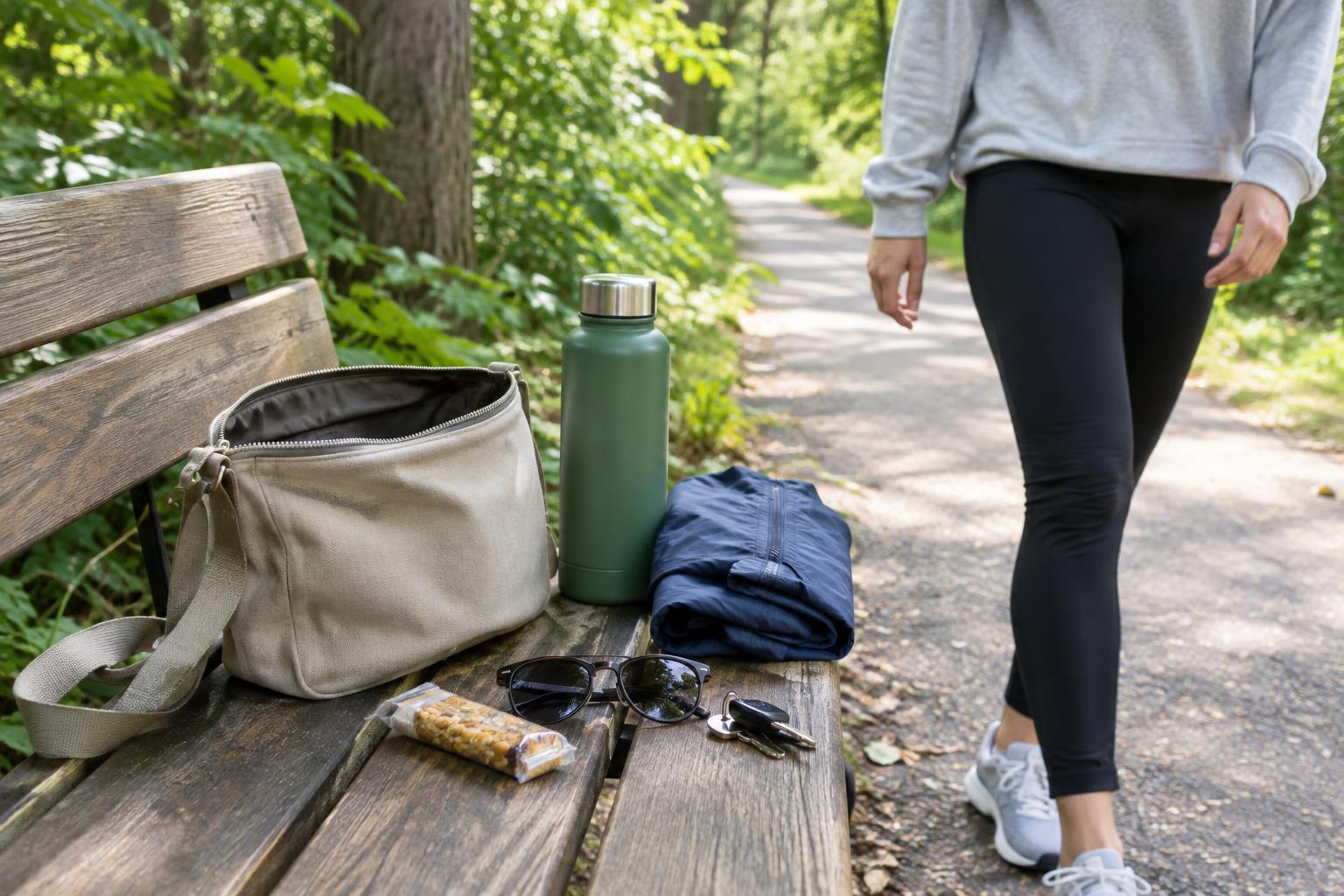
Start with the outing, not the bag
A two-hour outing should feel easy to start. Before reaching for a backpack, picture what you will actually do: walk around a neighborhood, browse a market, sit in a park or visit a café. Consider how far you will be from home, whether you will be outdoors the whole time and what you can comfortably carry. A nearby stop with shops and restrooms calls for less preparation than a quiet trail with few facilities.
Choose the smallest bag that comfortably fits your essentials, or use pockets if they work for your plans. A small crossbody bag keeps your hands free; a compact backpack may suit a walk that calls for water and an extra layer. The goal is not to fill the available space. It is to avoid bringing something that will make you cut the outing short.
Build a small essentials kit
For most short trips, start with your phone, keys and a payment method. Add anything you personally need to get home or complete the plan, such as a transit card, ticket, identification or necessary medication. Check that your phone has enough charge for directions or a ride home. A portable charger is useful if its battery is already low, but it need not be an automatic addition to every two-hour trip.
Bring water when you expect to walk, spend time in the heat or be away from an easy place to refill. A small bottle is often more pleasant to carry than a large one. Tissues and a compact hand sanitizer can be helpful, particularly if you plan to eat on the go. Keep these basics together in one pouch or in the same part of your bag so that leaving the house does not become a search for scattered items.
Dress for comfort before packing extras
What you wear can do more work than what you carry. Choose shoes that suit the distance and ground, even if the outing feels casual. Check the forecast and look outside before leaving: a light layer, hat, sunglasses or rain protection may be worthwhile depending on conditions. If you can wear a layer instead of packing it, you gain space without giving up comfort.
Try to avoid packing for every possible change in weather. If rain seems plausible, a compact umbrella or lightweight rain jacket is usually enough; you rarely need both for a quick local trip. If the weather looks settled, you may need neither. Your route matters too. A breezy waterfront or shaded park can feel different from a sunny street, so choose for the places you will actually spend time.
Add one or two activity-specific items
Once the basics are covered, add only what supports the purpose of the outing. For a park break, that might be a small sitting mat or a book. For a market visit, bring a foldable tote if you expect to buy something. For a sketching walk, choose a pocket notebook and one pen rather than your entire supply kit. A snack makes sense if you are leaving near a mealtime or traveling with someone who may need a pause.
Use a simple test for each extra: Will I be disappointed not to have this during these two hours? If the answer is only “maybe,” leave it behind unless it is especially small or important to your comfort. This keeps a spontaneous outing from turning into a carrying project. It also makes room for something you pick up along the way.
Do a quick exit check, then go
Before leaving, take a moment to check your route, opening hours if a destination matters, and how you plan to get back. Tell someone your plans if you are heading somewhere less familiar and that would be sensible for your circumstances. Then check your essentials: phone, keys, payment method and any personal necessities. These few checks are more valuable than adding another just-in-case item.
When you return, notice what you used. If a bottle came home full or an extra layer never left the bag several times, you can adjust next time. If you missed something, add it to your usual kit. Packing light is not a strict rule; it is a way to make short outings easier to repeat, with enough preparation to enjoy the time you have.


