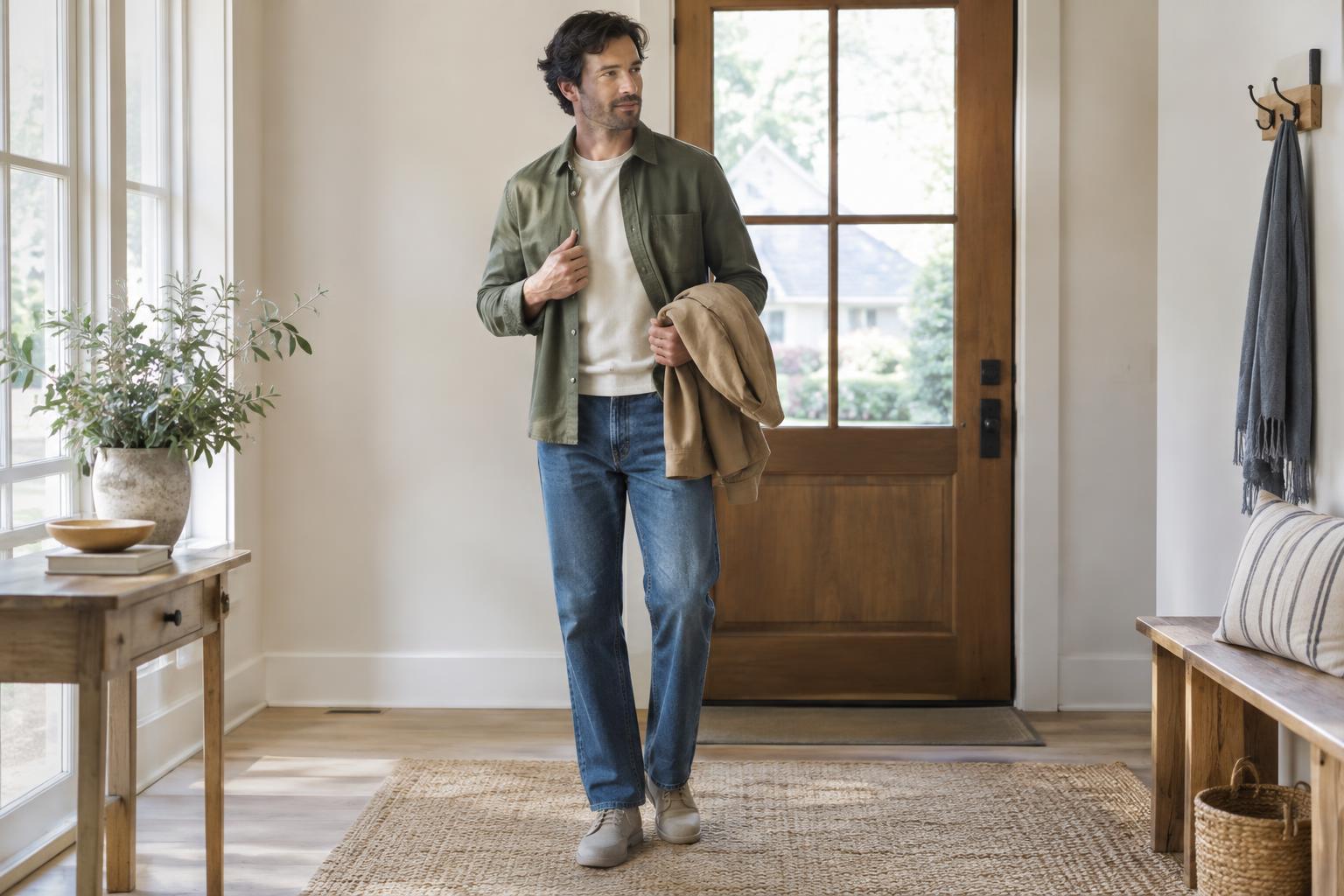
Give each layer a purpose
The easiest way to avoid a bulky outfit is to stop treating every layer as a source of warmth. Start with a base that feels good against your skin, add a middle layer only if you need insulation, and finish with an outer layer suited to the weather. On a mild day, a T-shirt and light jacket may do the whole job. On a cooler day, a thin sweater between them can add warmth without forcing you into a much larger coat.
Think about your plans before getting dressed. If you will move between a warm café and a cool walk, choose a middle or outer layer you can remove easily. If you expect to stay outside, pay more attention to wind and dampness. A layer that solves a specific problem earns its place; one that merely repeats the job of another piece often adds volume without making you more comfortable.
Start close to the body, not tight
A smooth, comfortable first layer gives everything above it room to settle. A fitted tee, long-sleeve top, or lightweight knit can work well, but fitted does not mean restrictive. You should be able to reach forward, sit down, and breathe normally without the fabric pulling. If the first layer bunches at your waist or under your arms, the rest of the outfit is likely to feel awkward too.
Pay attention to hems and sleeves. A base layer that extends far below a shorter sweater may create an unintended strip of fabric at the hip. Sleeves that are much longer than the layer above them can gather at the wrist. Before leaving, pull each layer into place and move around for a minute. Small adjustments at the start are easier than repeatedly fixing an outfit while you are out.
Choose a light middle layer
The middle layer is often where bulk builds up. Instead of reaching automatically for the thickest sweatshirt, try a fine-gauge sweater, a light cardigan, or a soft overshirt. Each can add some warmth while remaining easy to wear under a jacket. Look for fabric that drapes rather than standing stiffly away from the body, and check that the shoulder seams do not crowd those of the outer layer.
A middle layer need not cover everything. If your torso gets cold but your arms feel comfortable, a vest may be useful. If you mainly want something to take off indoors, a cardigan or unbuttoned overshirt is convenient. Keep one question in mind: can you still move your arms freely when the outfit is complete? If not, try a thinner middle layer before sizing up every piece around it.
Let the outer layer set the shape
An outer layer should have enough room for what sits beneath it, without ballooning around the waist and shoulders. Put it on over your actual outfit when checking the fit. Button or zip it, then raise your arms and sit down. If the front strains or the sleeves pull sharply, the combination is too crowded. If the coat hangs neatly but feels chilly, changing the middle layer may help more than adding another oversized piece.
For a relaxed weekend look, keep the outfit’s outline simple. A straight jacket over a slim or regular-cut top is one option; a roomier coat can balance well with uncomplicated trousers. You do not have to follow a strict rule about proportions. The goal is to see where the fabric gathers and avoid stacking several loose, heavy pieces in the same area. Leaving a jacket open can also make an outfit feel less dense when the weather allows.
Build a small routine you can repeat
When time is short, assemble a few reliable combinations rather than reinventing your outfit every weekend. For example, pair a plain tee, light cardigan, and casual jacket for an afternoon with indoor stops. For a longer walk, swap the cardigan for a thin sweater and choose an outer layer that suits the conditions. Wear the combination at home once to check that collars, cuffs, and hems sit comfortably together.
Accessories can help you fine-tune warmth without adding another full layer. A scarf is easy to remove, and socks can make a noticeable difference to comfort in cooler shoes. Keep these additions practical rather than piling them on by default. Before you leave, ask whether you can remove one piece and still feel appropriately dressed. That flexibility is the real advantage of layering: a casual outfit that adapts to the day without weighing you down.


