Starting before you know what dinner is
A common time trap is beginning with an ingredient rather than a plan. You put a pan on the stove, then decide what should go with the vegetables, whether there is enough rice, and which sauce might work. The burner is ready, but the meal is not. Before cooking, take one minute to name the main dish, its side, and the way you will finish it. “Eggs, toast, and sliced tomatoes” is a complete plan; it does not need to become a larger project.
Check the ingredients you intend to use before you start chopping. If the recipe needs a sauce you have run out of, choose a substitute or a different meal immediately. This small check is especially useful when free time is tight: it moves decisions to the beginning, when changing direction is easy, instead of the middle, when several things may already be cooking.
Mistaking short cook time for short total time
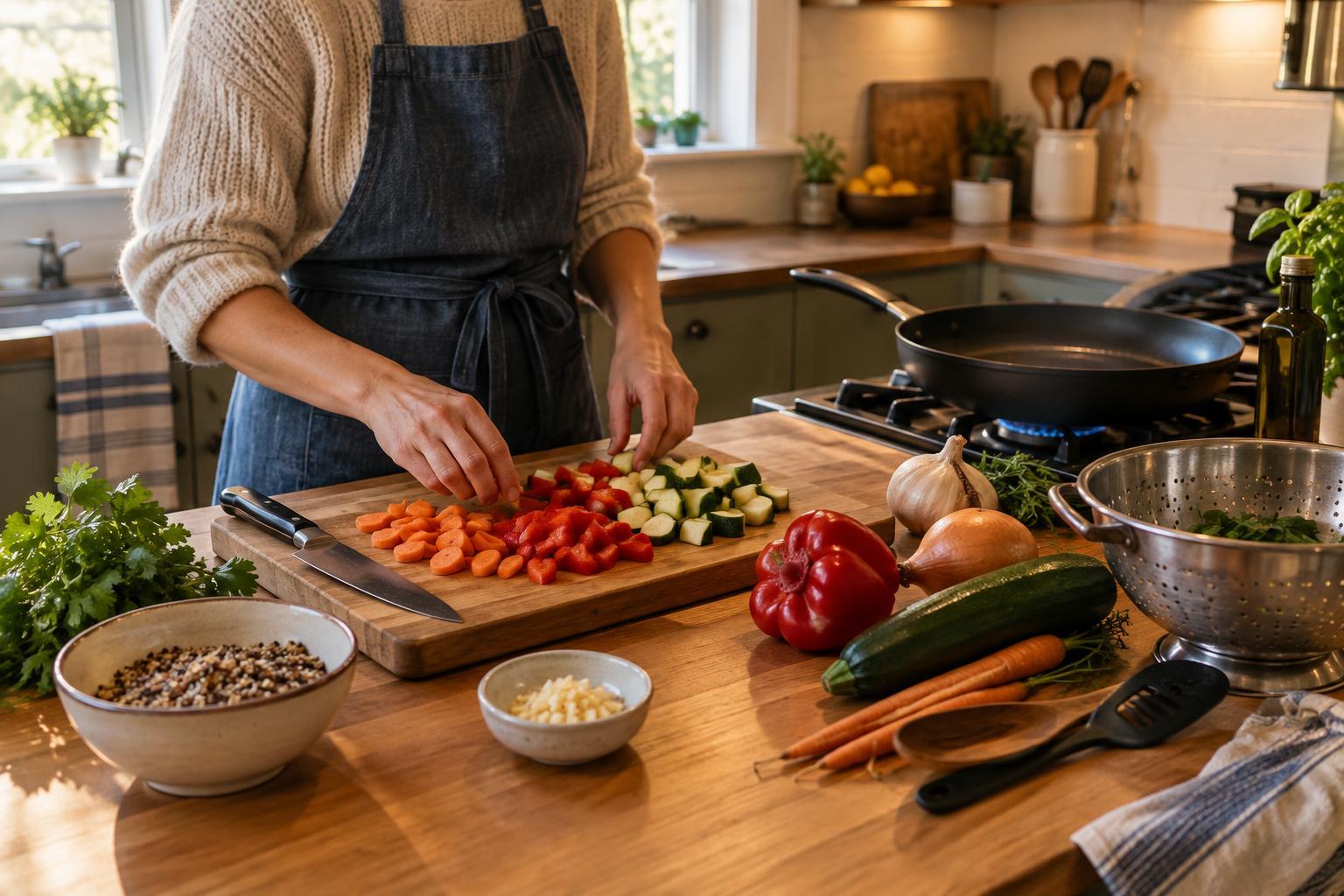
A dish that cooks in ten minutes may still require washing greens, peeling vegetables, thawing protein, or waiting for water to boil. When choosing a quick meal, count the steps between opening the fridge and sitting down—not just the minutes a pan spends on the heat. A whole head of cauliflower, for example, asks more of you than pre-cut vegetables, even if both finish cooking quickly.
Pick ingredients that match the time and energy you actually have. Canned beans, eggs, frozen vegetables, quick-cooking grains, and leftover cooked components can form the base of a meal without much preparation. Convenience ingredients are not required, though: cutting vegetables into smaller pieces or choosing a sandwich instead of a hot side can make the same ingredients easier to use.
Doing every task one after another
Quick meals slow down when each step waits for the previous one to finish. You might stand beside a simmering pot, then start making the salad only after the pot comes off the stove. Instead, look for natural waiting periods. While water heats, wash produce. While a tray bakes, mix a dressing or set out plates. This is not about rushing; it is about giving each quiet cooking interval a useful job.
Keep the overlap simple enough that you can still pay attention to the food. Trying to manage three pans, a blender, and a chopping board at once can create mistakes and extra cleanup. For a limited-time meal, one active cooking task and one straightforward prep task are often easier to handle than several recipes competing for attention.
Using the wrong pan or too many tools
A crowded pan can turn browning into steaming, leaving you waiting for moisture to cook away. A pan that is too small may also force you to cook in batches. When possible, use a pan large enough for the food to sit in a reasonably even layer, or choose a method that welcomes a full pot, such as a soup or a covered simmer. Let the method fit the amount you are making.
Tools cost time at both ends of a meal. A food processor may chop an onion quickly, but assembling and washing it might take longer than using a knife. Before reaching for another appliance or bowl, ask whether it removes a meaningful step. Measuring a simple dressing directly into a serving bowl, for instance, can spare a separate container without making the meal harder to prepare.
Adding more finishing touches than the meal needs
The last few minutes can stretch when a simple dinner gathers optional extras: a second sauce, a separate garnish, or a side dish that needs its own cooking time. Decide what will make the meal satisfying, then stop there. A bright topping such as lemon juice, herbs, or a spoonful of yogurt can add interest, but you do not need all three every time.
It also helps to define what “done” looks like before you begin. If tonight’s goal is a filling meal and a manageable kitchen, a warm bowl of beans, vegetables, and toast may be enough. Save elaborate versions for a weekend when the preparation is part of the pleasure. The quickest meal is not necessarily the one with the fewest ingredients; it is the one whose steps fit the time you have.