Start with the bread and the meal you want
Savory toast is useful when you want a meal without committing to a recipe. It works for a slow weekend lunch, a quick dinner, or the hour between an outing and your next plans. The trick is to treat the bread as one part of the meal, not the whole meal: give it a filling topping and at least one contrasting texture.
Choose bread that can carry what you plan to put on it. A thick slice can hold warm beans or sautéed vegetables; a thinner slice is better with a light spread and a small topping. Toast it until the surface feels firm, including the edges. If the bread is soft in the middle, moist toppings will make it harder to pick up. For a generous serving, use two slices or make one loaded slice and add fruit or cut vegetables on the side.
Build a topping that will keep you satisfied
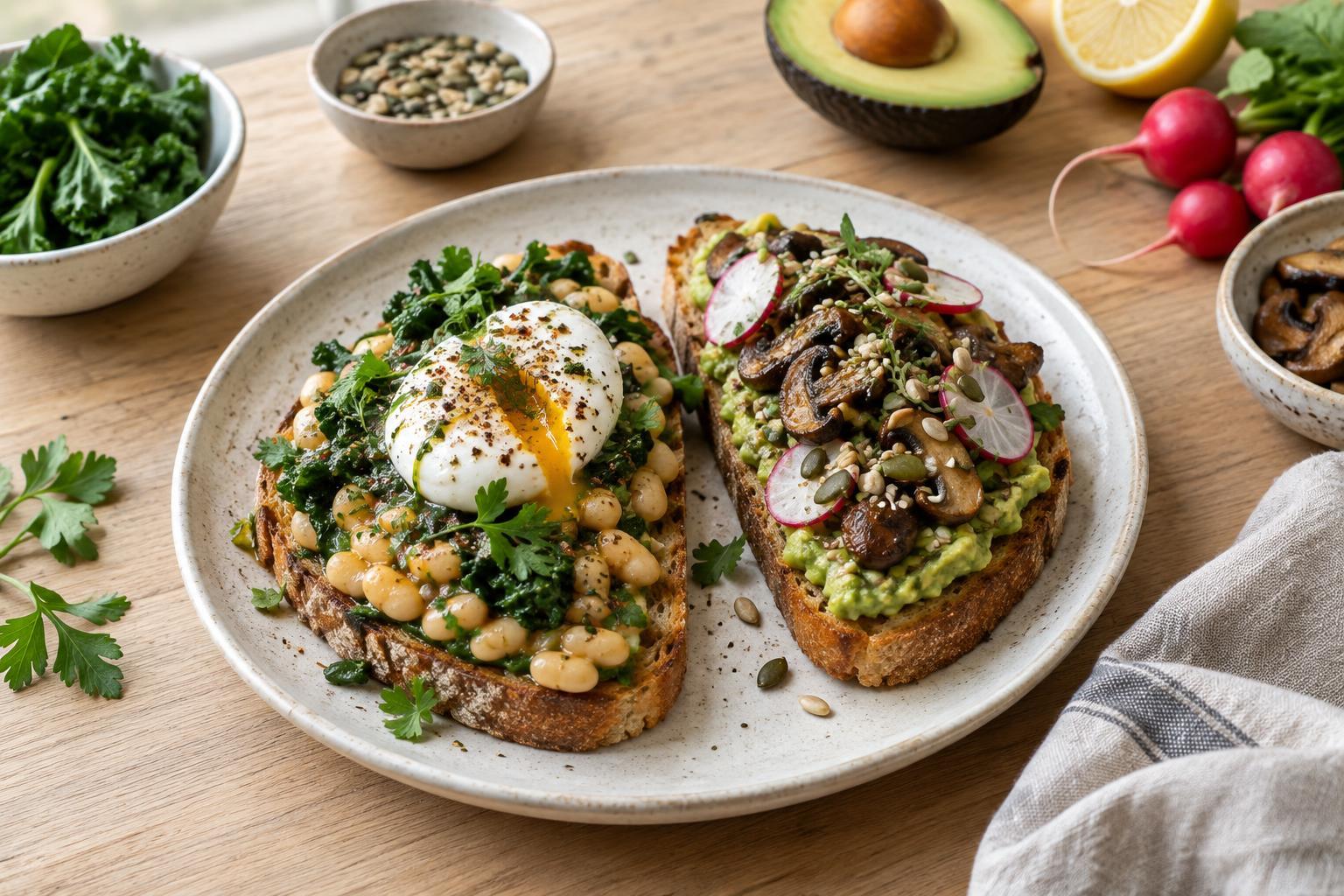
A helpful starting point is one filling ingredient, one flavorful spread or seasoning, and one fresh finish. Eggs, beans, tofu, cheese, hummus, or leftover cooked chicken can provide the substance. Mustard, pesto, yogurt mixed with herbs, or a little olive oil can connect the flavors. Finish with sliced tomato, cucumber, herbs, or a squeeze of lemon, depending on what is already in your kitchen.
For example, mash warmed canned beans with olive oil and a pinch of salt, spoon them onto toast, and add chopped cucumber and lemon. Or spread hummus on toast, add a cooked egg, and scatter a few herbs over the top. These are combinations rather than strict recipes: use enough topping to make the toast feel like a meal, but not so much that it slides off when you lift it.
If you are using leftovers, reheat them appropriately before adding them to the toast. Cold toppings can work well too, provided they have been stored properly. There is no need to assemble a complicated stack; two or three compatible ingredients often make a more manageable meal than everything available in the fridge.
Keep crisp and moist ingredients in balance
Toast gets soggy when a wet ingredient sits directly on it for too long. Let cooked mushrooms or greens release excess moisture in the pan, and drain ingredients such as canned beans or pickled vegetables before using them. If you are adding juicy tomatoes, slice them shortly before eating. A thin layer of a thicker spread, such as hummus or cream cheese, can also separate the bread from a wetter topping.
Think about the order in which you assemble everything. Put sturdy ingredients on first, then add delicate greens, herbs, or crunchy vegetables at the end. If a topping is hot, wait until you are ready to eat before placing it on the toast. For a packed lunch, carry the bread and topping separately and assemble them when you sit down; this takes an extra container but preserves the texture.
Make it fit the time you have
On a low-energy day, pick one of three easy routes: a spread with sliced vegetables, a warm topping made in one pan, or a portion of leftovers refreshed with a crisp garnish. You can toast the bread while the other ingredients heat or while you wash and cut the vegetables. Set out only what you intend to use so the meal does not turn into a long search through the kitchen.
Savory toast is also easy to adjust for different appetites. Add another slice, an egg, or a side of fruit if one piece will not be enough. If the topping is especially rich, a handful of raw vegetables can provide a welcome contrast. Once you find a combination you like, remember its pattern rather than its exact ingredients. That gives you a quick option for another weekend without requiring a special shopping trip.