Give the visit a smaller purpose
A small museum or gallery can look easy to cover in an afternoon. Once you arrive, though, each room may offer more objects, labels and ideas than you can comfortably absorb. Treating the visit as a task to complete can turn a pleasant outing into a hurried walk past everything. Instead, decide that success means finding a few things worth your attention.
Before you go, choose a loose focus: a material you enjoy, a period you know little about, the way artists use color, or simply one room that catches your interest. You do not need to study the collection in advance. If practical details matter to your plans, check the venue’s opening hours, admission information and any access details it provides. Then leave room for the visit itself to surprise you.
Start with a quick orientation, not a strict route
At the entrance, glance at the map or room signs and notice where you might take a break. If there is a temporary exhibition or a gallery that especially appeals to you, go there while your attention feels fresh. Otherwise, choose the first doorway that interests you. A route is useful when it helps you relax, but you can change it at any point.
Give yourself a comfortable amount of time rather than a checklist. You might plan to stay for an hour and allow more time if you are enjoying yourself. This makes it easier to pause in front of one work without feeling that you are falling behind. If you are visiting with someone else, agree that you can move at different speeds and meet up later.
Practice looking at fewer things for longer
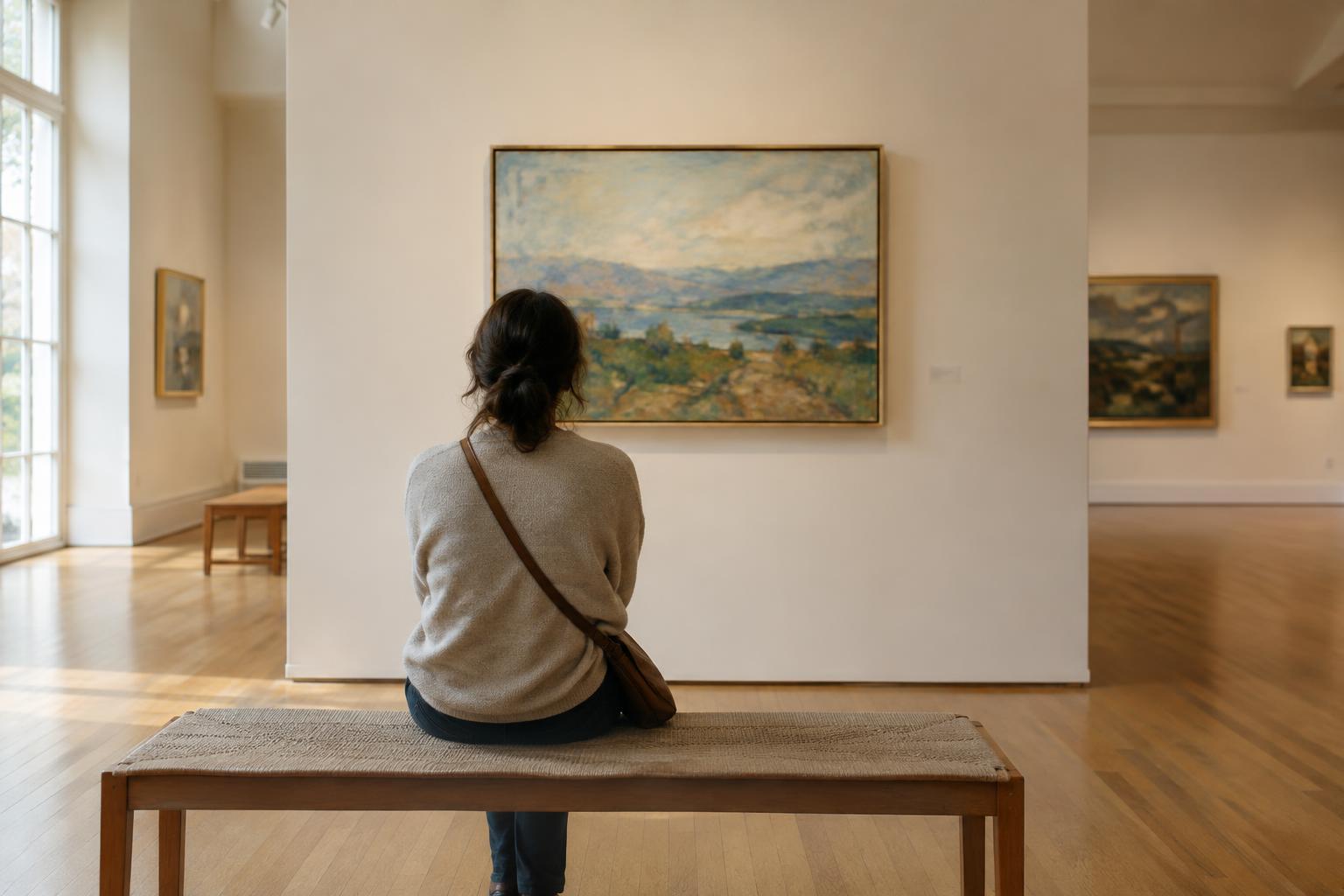
When something catches your eye, stop before reading its label. Notice what drew you over: its shape, scale, texture, subject or placement in the room. Look for a detail you might have missed at first glance. Then read as much of the label as you want and look again. The text may add context, but you do not have to read every word to have a worthwhile encounter.
You can give yourself a simple question to carry through the visit. What seems carefully made? What feels unfamiliar? Which object would you tell a friend about? There are no right answers to collect. These questions merely help you pay attention, especially when several rooms begin to blur together. If a display does not hold your interest, moving on is a reasonable choice.
Make space for pauses and practical needs
Looking closely can be tiring, even in a quiet space. Sit down when seating is available, step into a less crowded area or take a water break where the venue permits it. If you need a quieter or more accessible route, ask staff what options are available. Your pace does not have to match anyone else’s, and a break does not interrupt the outing; it is part of making the outing work for you.
Be considerate of the space while you explore. Follow posted guidance about bags, food and photography, and give other visitors room to see the displays. If you want to take a note or photo to remember something, check the venue’s rules first. Often a short note about what caught your attention is enough.
Leave while you still have something to think about
You do not need to reach the final room to make the trip count. When your curiosity starts to fade, consider ending the visit rather than pushing through. On the way out, name one thing that surprised you and one thing you would like to see again. Those small observations can make the outing feel more distinct than a mental inventory of everything on display.
If you have time, pair the visit with a simple walk or a relaxed stop nearby. You can talk about what you saw, jot down a thought or let the experience settle without doing anything more. A small museum is well suited to a modest weekend plan: arrive curious, follow what interests you and leave the rest for another day.