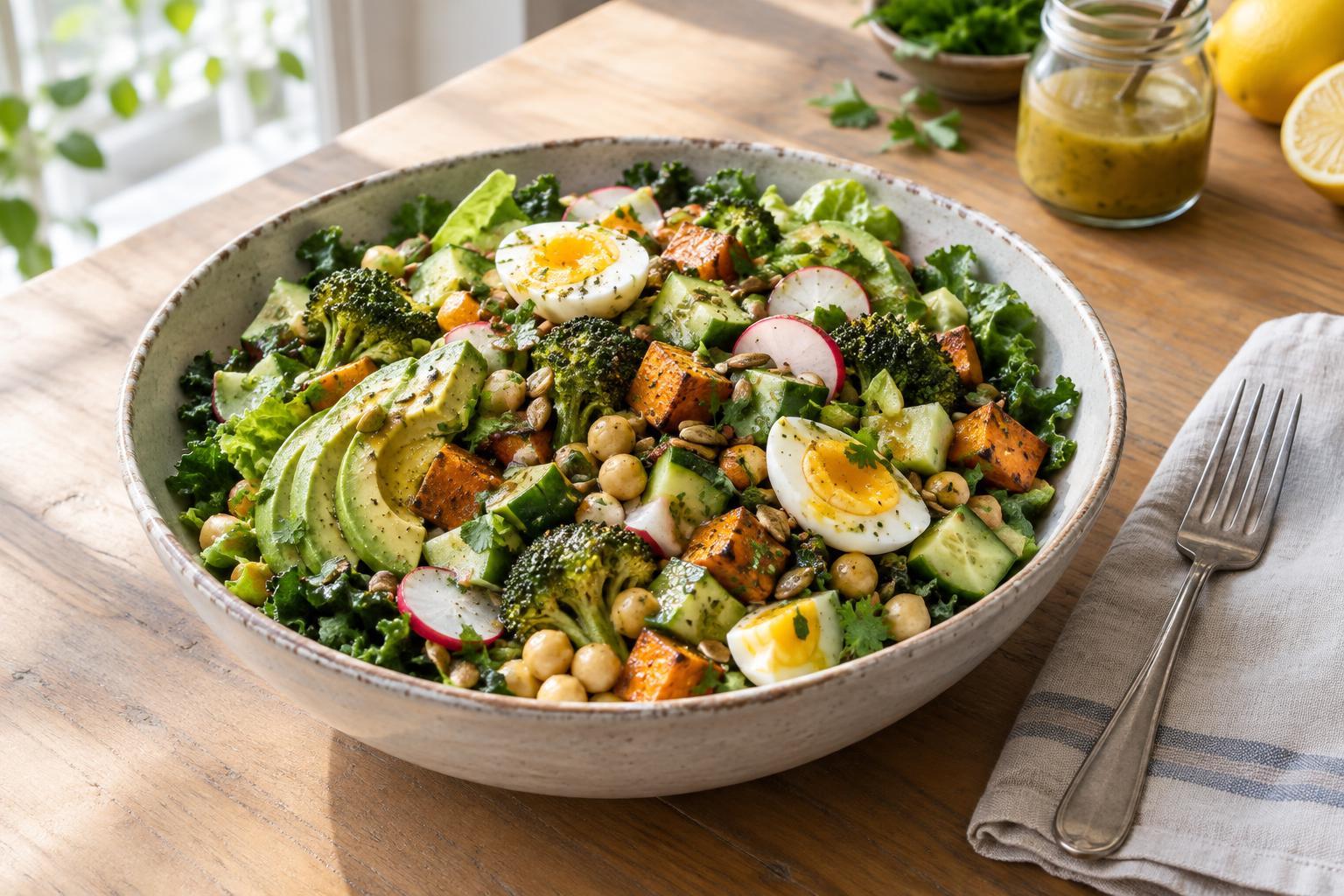
Give the salad a job
A side salad can get by on lettuce, a few sliced vegetables, and dressing. A salad meant to be lunch or dinner has a bigger job: it should be enjoyable to eat and substantial enough that you are not immediately looking for something else. The easiest way to make one is to think in layers rather than follow a strict recipe.
Start with a base, add a generous serving of something substantial, include a little richness, and finish with flavor and crunch. The proportions can change with your appetite and what is in the kitchen. A bowl built around leftover rice and roasted vegetables will feel different from one built around crisp greens and chicken, but both can work as a complete meal.
Choose a base with staying power
Greens make a fresh starting point, but they do not have to carry the whole salad. Tender leaves are best when you plan to eat right away. Chopped kale, cabbage, or romaine offers more crunch and generally holds up better if you are packing lunch. For a warmer bowl, try cooked grains, potatoes, or roasted vegetables as part of the base, then add a handful of greens for contrast.
Mixing bases is an easy way to make a salad more interesting without extra cooking. Put chickpeas over chopped cucumber and romaine, or pile leftover roasted sweet potato onto shredded cabbage. Cut bulky ingredients into comfortable forkfuls so every bite can include more than one element. If your bowl feels like a mountain of lettuce with a few toppings lost on top, reduce the greens or increase the other ingredients.
Add the part that makes it a meal
Choose one main ingredient you would be happy to eat outside a salad. Beans, lentils, eggs, tofu, chicken, canned fish, or leftover cooked meat can all give a bowl more substance. Cooked pasta, quinoa, rice, or potatoes can play the same role, especially alongside beans or another protein-rich ingredient. You do not need a long list of add-ins; one generous choice is more useful than a scattering of five.
This is where weekend preparation can save time later. Cook an extra portion of grains, roast another tray of vegetables, or keep a can of beans ready for a low-effort meal. If you are using leftovers, store them appropriately and check that they are still suitable to eat. A filling salad should make good use of what you have, not create a second cooking project every time you want lunch.
Build contrast, then dress it well
Rich and crisp ingredients keep a substantial salad from feeling heavy or monotonous. Add avocado, cheese, olives, nuts, or seeds for richness; use raw peppers, radishes, cucumber, toasted bread, or crunchy cabbage for a different texture. Pick two or three accents that suit the main ingredients. Too many small toppings can make a bowl busy without making it more satisfying.
Dressing should connect the ingredients, not just wet the leaves. A basic mixture of olive oil, lemon juice or vinegar, a pinch of salt, and mustard works with many combinations. Taste it before tossing: if it seems flat, it may need more acid or seasoning. Dress sturdy ingredients such as beans or grains first so they pick up flavor, then fold in delicate greens. Keep crunchy toppings separate until serving if you want them to stay crisp.
Use a flexible formula for busy days
When you are short on time, build from what is already prepared: a base, one substantial ingredient, two contrasting vegetables, a rich accent, and dressing. For example, combine romaine, canned chickpeas, cucumber, roasted peppers, feta, and lemon dressing. Or try leftover rice with shredded cabbage, tofu, carrots, peanuts, and a quick lime-and-soy dressing. These are starting points, not combinations you have to copy exactly.
Before you call the salad finished, look at the bowl and ask what is missing. If it seems too light, add more beans, grains, or another main ingredient. If it seems dull, try a squeeze of citrus or something salty. If every bite feels soft, add crunch. A few thoughtful adjustments turn a collection of ingredients into a meal—and make the next salad easier to improvise.


