Start with the path through the door
An entryway drop zone is simply a designated place for the things you carry in and out. It does not need a bench, a built-in cabinet or even a separate hallway. Before buying anything, stand at the door and notice what happens when you arrive home. Where do you set your keys? Where do shoes collect? Does a bag land on the floor because its usual storage spot is too far away? Start with the items that regularly create clutter rather than trying to store everything near the entrance.
Next, measure the available wall and floor space with the door fully open. Leave a comfortable path for walking and carrying groceries, and keep the door, switches and any shared access clear. In a very tight space, the best drop zone may be a narrow stretch of wall, the side of an existing cabinet or a shelf a few steps beyond the entrance. Convenience matters more than making it sit directly beside the door.
Give everyday items a specific home
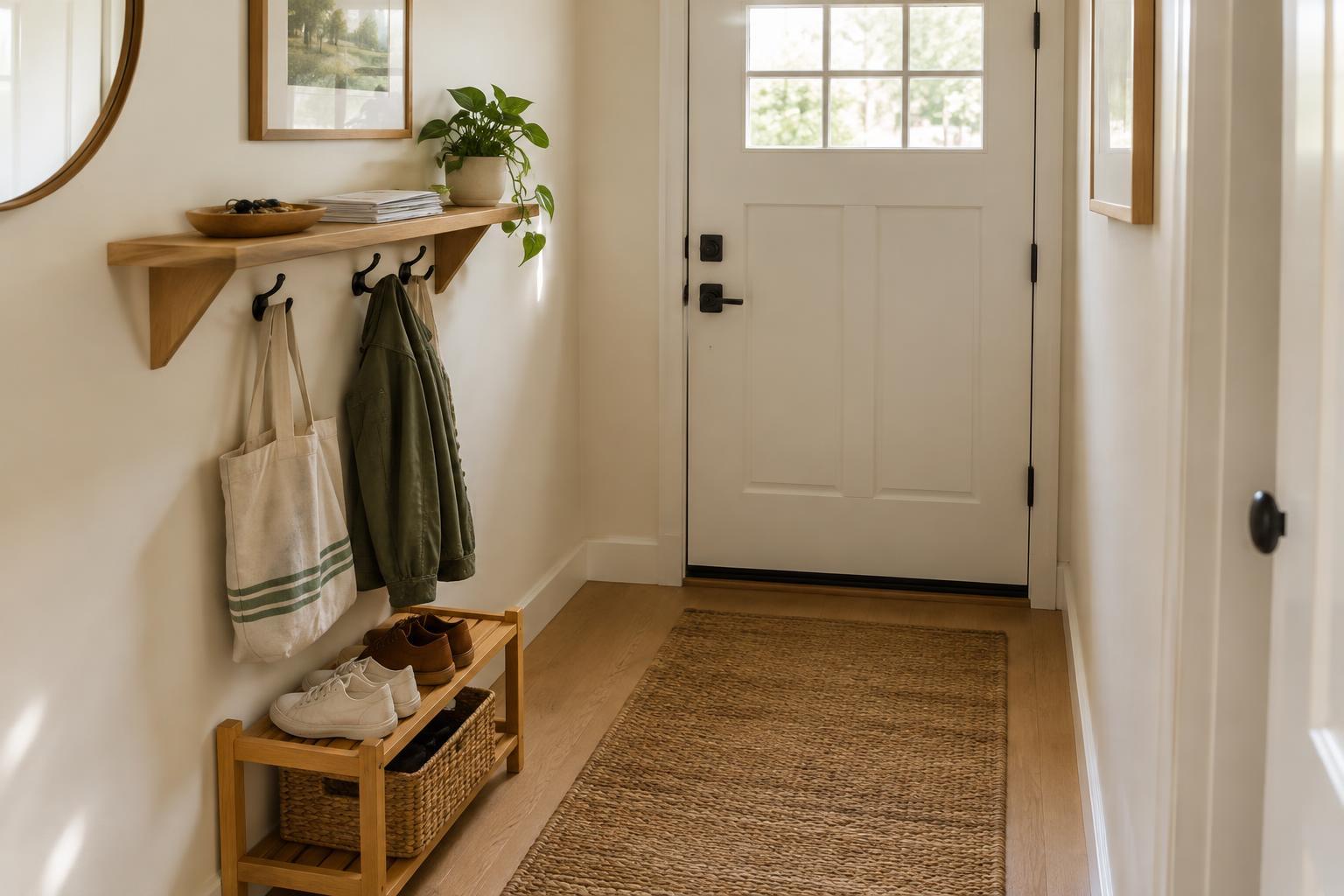
Choose a landing place for the things you handle first: perhaps a shallow tray for keys, a hook for a daily bag and a small spot for shoes. A tray or bowl contains little objects better than an open tabletop, where they can spread out. Hooks work well when you can reach them without stepping around furniture. If several people use the entrance, give each person a hook or a clearly defined portion of a shared rail.
Be selective about what stays. An entryway designed for two pairs of frequently worn shoes is easier to use than one expected to hold an entire collection. Keep backup bags, seasonal accessories and rarely worn footwear elsewhere if you can. For mail, use one upright holder or folder as a temporary stop, not permanent storage. Decide when you will empty it, whether that is during a weekly reset or whenever it fills.
Choose storage that respects the footprint
Look for pieces with a small depth before worrying about how much they can hold. A narrow shelf, slim shoe rack or wall hooks may keep the floor clearer than a large basket. If you already own a console, make better use of it with a tray on top and one container underneath. In a rental, freestanding storage and removable options may be appealing, but check product directions and the wall surface before relying on any adhesive hook for weight.
Use vertical space carefully. Put everyday items at an easy height, lighter or less-used items higher up, and shoes or a washable mat below. Avoid stacking things where they might fall as the door opens. If you add a freestanding unit, make sure it is stable and follow its instructions for securing it when needed. The goal is not to fill every available inch; it is to create a few spots that are pleasant to use.
Make the setup work for real-life arrivals
A drop zone succeeds when putting things away feels easier than dropping them on the nearest surface. Place the key tray where your hand naturally reaches. Hang the bag hook where straps will not brush against the door. If shoes tend to come off immediately, put their spot before the rest of the storage rather than across the room. Small adjustments like these are often more useful than adding another organizer.
Think about what arrives with you on a wet or busy day. A washable mat can define the shoe area and make cleanup simpler. A small container for gloves or other loose accessories can prevent them from taking over the key tray. If the entrance is too narrow for these extras, move them to a nearby closet or cabinet. Your drop zone can extend around a corner; it only needs to follow a routine you can remember.
Set it up this weekend, then edit
You can make a useful first version in one weekend session. Clear the area, sort what is already there and return only the daily essentials. Try temporary placements with items you own before installing anything or purchasing new storage. Then walk through an ordinary arrival: open the door, set down what you are carrying, remove your shoes and pick up what you will need when you leave. If any step feels awkward, move the storage rather than assuming you need more of it.
Live with the arrangement for a little while before treating it as finished. A hook may need to shift, a shoe container may prove too small or the mail holder may be unnecessary. Keep a quick reset simple: return stray items to their proper rooms, clear the tray and shake out or clean the mat as needed. A small drop zone works best when it holds just enough to make coming home easier.