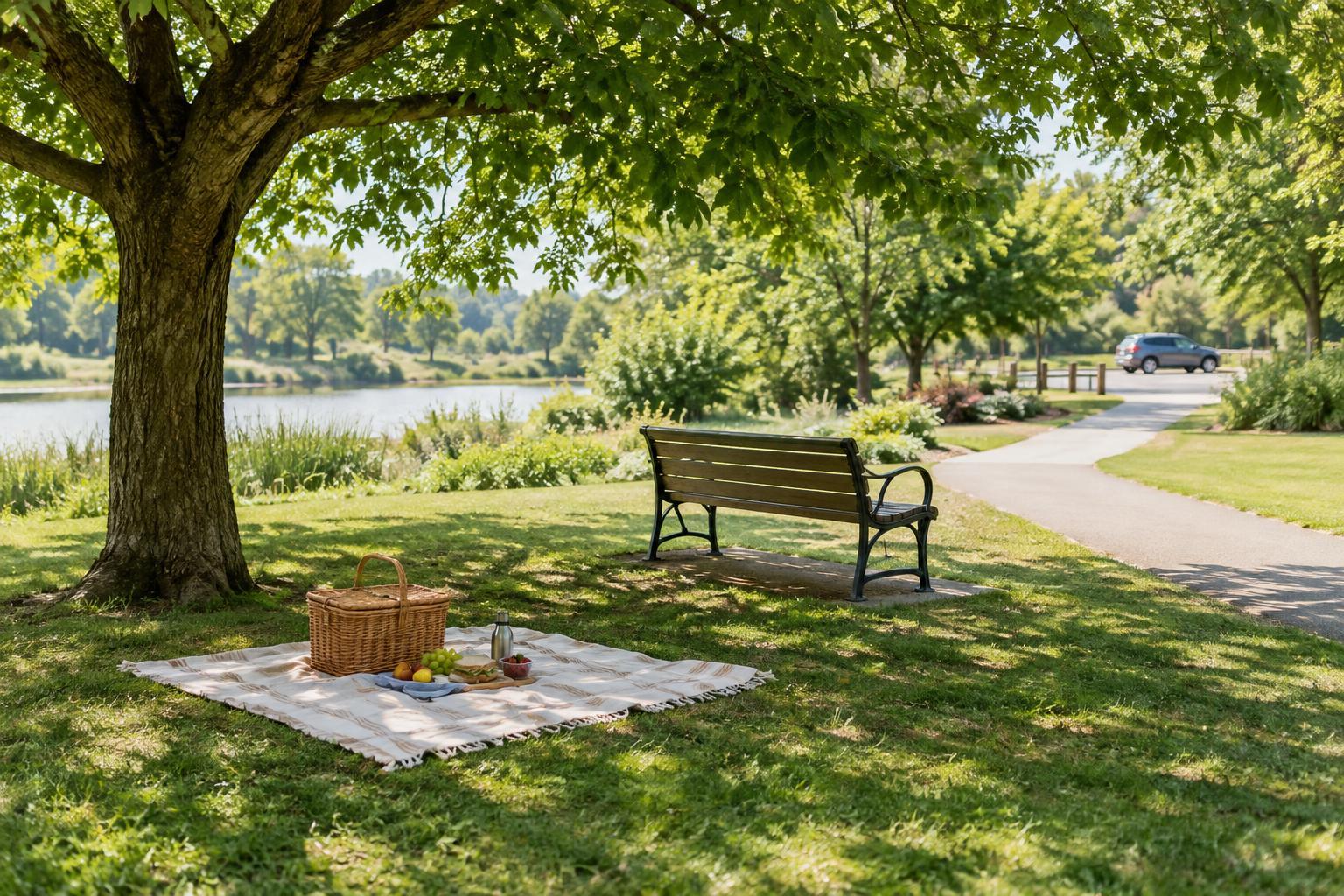
Start with the trip, not the view
The easiest picnic is often the one that takes the least effort to settle into. Before choosing a park or scenic stop, decide how much time you want to spend getting there, carrying food and finding a place to sit. A lovely location may feel less appealing if it requires a long walk with a cooler, a search for parking or an uncertain route to a restroom.
Make a short list of what your group actually needs. That might include a nearby transit stop, a level path for a stroller or mobility aid, room for children to move around, or a place to refill water. Pick the two or three essentials first; treat a pretty view as a bonus. This keeps the search manageable when you have only a small part of the weekend free.
Look for shade you can use
Shade makes a picnic more comfortable, but a shaded area is only helpful if there is enough room to sit and eat. Look for a cluster of trees, a shelter or another spot where your group can gather without blocking a path. Notice whether the ground beneath it seems reasonably dry and clear of low branches, roots or other obstacles. If you are visiting later in the day, remember that the shaded patch may shift as the sun moves.
Bring a light hat or an umbrella if shade is uncertain, rather than depending on a single tree. On a breezy day, check that anything you set up can stay secure. If a sheltered table is important, find out whether it is open to casual visitors or may be reserved. A backup spot nearby can save the outing if your first choice is occupied.
Decide what comfortable seating means for your group
A blanket on the grass suits a leisurely picnic, but it is not the easiest option for everyone. Someone who finds it difficult to sit on the ground may prefer a bench or picnic table. Families with small children might want a broad, fairly level patch of lawn, while a couple carrying a simple lunch may be happy with a short stop on a bench.
When comparing spots, picture the whole meal: where will you put drinks, open containers and bags? Is there space to stand up without stepping around other picnickers? If you plan to use a table, bring a small cloth or wipe in case the surface needs attention. If you plan to sit on the ground, a blanket with a sturdy underside and a cushion or two can make a short outing feel much easier.
Check the route from arrival to lunch
Easy access means more than a short distance on a map. Consider the path between your arrival point and the place you hope to sit. Steps, steep slopes, gravel or a stretch of soft ground can change how manageable a walk feels, especially when you are carrying food. For a low-effort picnic, choose a spot you can reach comfortably with everything in one trip.
Also think about the facilities you may need during the visit, such as restrooms, drinking water and a place to dispose of rubbish. Availability can vary, so check details before leaving if any facility is essential to your group. Pack food in a bag you can carry easily, and keep drinks and frequently used items within reach. The simpler the walk in and out, the more time you can spend enjoying lunch.
Make a quick final check before you go
Once you have a promising location, make a small plan for changeable conditions. Check the forecast before packing, and decide what would make you switch to a different spot or postpone. A sheltered alternative, a shorter visit or a lunch you can eat at home can take the pressure off the outing. You do not need a perfect day to have a pleasant picnic, but you do need a comfortable place to pause.
Keep the kit modest: food that travels well, water, something to sit on, wipes and a bag for anything you need to take home. When you arrive, spend a minute checking the ground, shade and nearby activity before unpacking. If the first patch is crowded or uncomfortable, move on. Choosing a picnic spot is less about finding the most impressive backdrop and more about making it easy for everyone to relax.


