Start with the clothes you actually reach for
Color is easier to use when you begin with a familiar outfit rather than build one from scratch. Think of the jeans, trousers, T-shirt, sweater, or jacket you tend to wear on an ordinary weekend. Keep most of that outfit intact and change one piece. A blue shirt in place of a white one, or a green cardigan over your usual top, lets you notice the effect of color without also sorting out a new silhouette.
Before deciding what to add, look at the colors already in regular rotation. You may wear more color than you think: dark denim, an olive jacket, or a striped shirt all count. Choose a shade you enjoy seeing on yourself and that works with at least two things you own. That is more useful than buying a color because it seems as though you should wear it.
Give one color the leading role
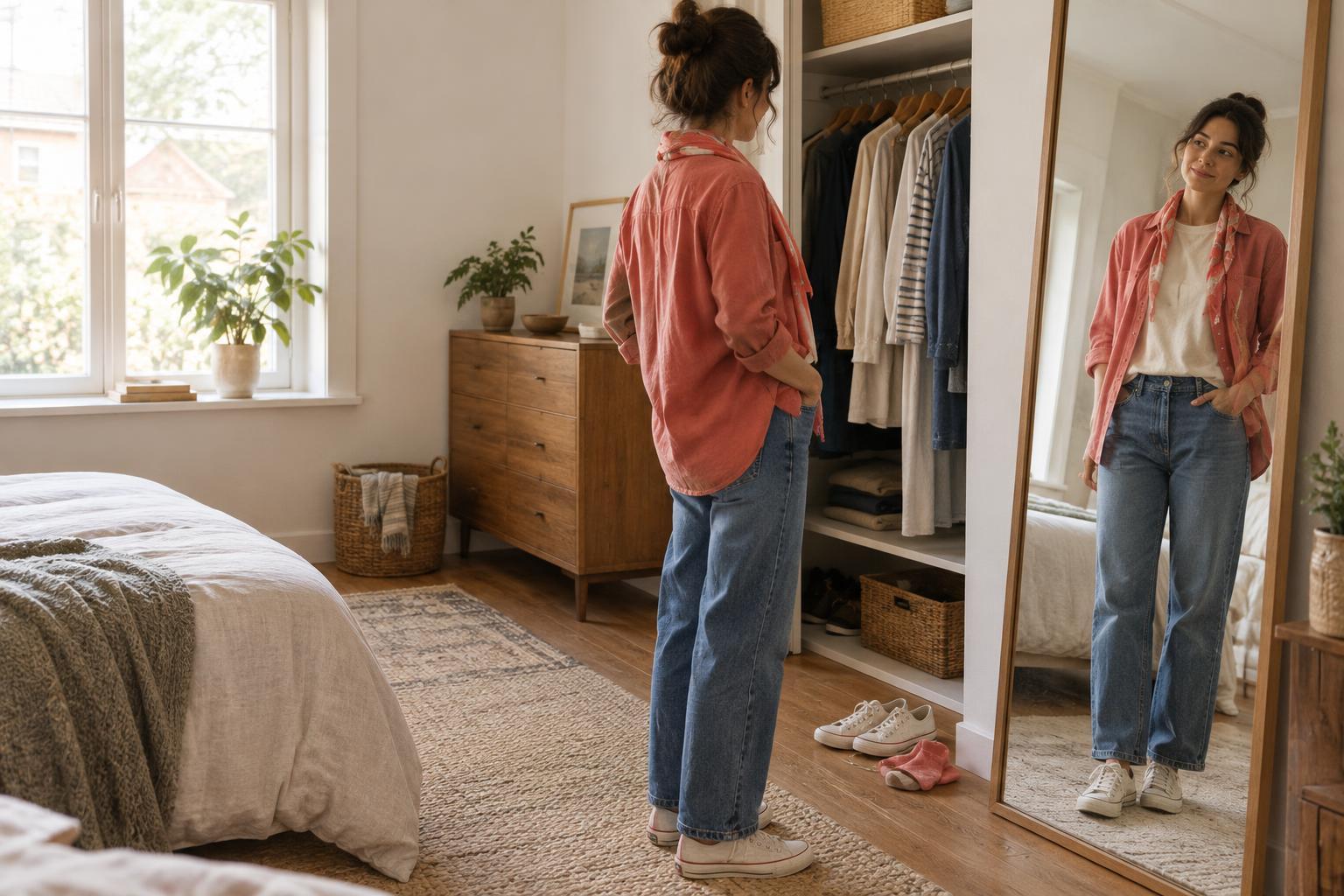
A simple starting point is to make one item the most noticeable color in the outfit. Pair a rust sweatshirt with your usual jeans and shoes, or wear a bright tee beneath a neutral overshirt. The other pieces do not need to match; they can provide a quiet background. Denim, black, cream, gray, brown, and other colors you already treat as basics can all do that job.
If a colorful jacket or pair of trousers feels like too much, try a smaller item first. A cap, socks, bag, or scarf can bring in a shade without changing the feel of the whole outfit. You can also let a little color show at a collar or cuff. The aim is not to make the smallest possible statement, but to find a level that feels comfortable enough to wear outside the house.
Use repetition when you want the outfit to feel connected
Repeating a color once can make separate pieces feel related. If your shirt has a muted blue stripe, blue socks or a blue bag may give the outfit a sense of continuity. The shades do not have to be identical. In fact, a lighter and darker version of the same color can look more relaxed than an exact match.
Patterns offer an easy shortcut. Pick one color from a checked shirt, printed skirt, or graphic tee, then echo it in a plain piece or accessory. Keep the rest of the outfit familiar so you are not trying to coordinate every detail. If repetition starts to feel fussy, skip it. One colorful item with no matching partner is a complete outfit choice, too.
Pay attention to contrast, not just the color name
Two outfits can use the same colors and feel very different depending on how light or dark the pieces are. A pale yellow shirt with light denim feels softer than the same shirt under a dark jacket. Neither approach is better. When an outfit feels too busy, try replacing one high-contrast piece with something closer in depth to the rest. When it feels flat, a lighter tee, darker outer layer, or brighter accessory may be enough.
Texture can also change how bold a color seems. A soft knit or washed cotton often gives a vivid shade a more casual feel, while a smooth, crisp fabric may make it stand out. If you are unsure about a combination, put the pieces on and check them in ordinary daylight. You will learn more from seeing the full outfit than from holding two items together on a hanger.
Make a few easy combinations for busy weekends
Once you find a combination you like, remember it. You might keep a colorful top with your favorite jeans, a neutral tee with colored trousers, or a patterned layer over a plain outfit in mind. Having two or three reliable options takes the decision-making out of mornings when you would rather get on with your day.
You do not need to settle on a permanent palette. A color that feels right for a walk, a market visit, or lunch with a friend may not be the one you want every weekend. Try a piece at home, wear it for a short outing, and notice whether you feel at ease. If you do, wear it again in a different combination. If not, change one thing at a time. Getting dressed can be a small experiment, not a test you have to pass.


