Begin with what is already around you
Creative writing can feel difficult when the first task is to invent an entire story. Observation gives you a smaller starting point: notice something, describe it, then see where your attention goes. A chipped mug, the sound of a door closing or the way light reaches a kitchen wall can all give you material to work with. You do not have to decide whether any of it is interesting enough for a finished piece.
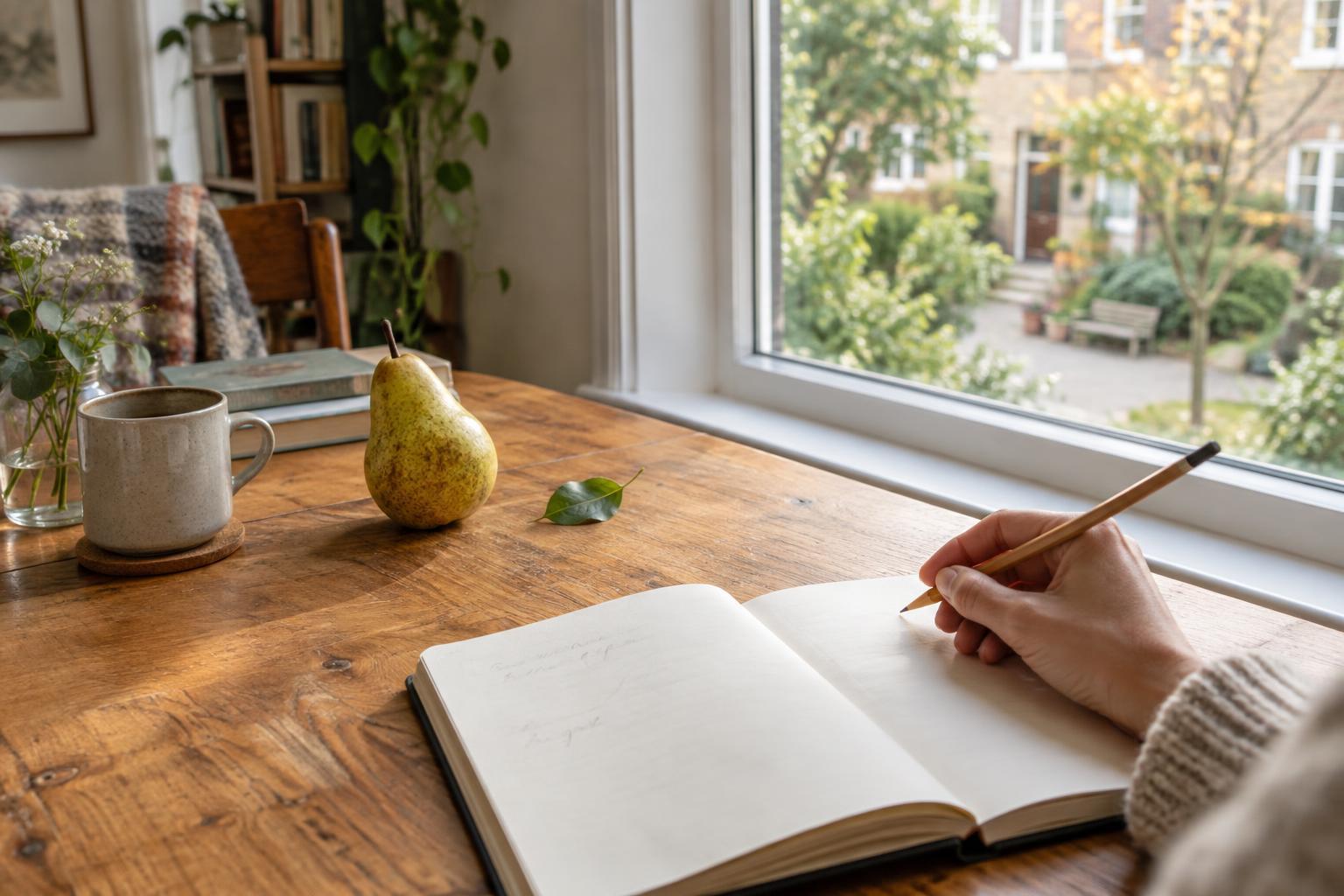
Set aside ten minutes with a notebook or a notes app. Choose a place you can comfortably stay for a few minutes, such as your sofa, a café table or a park bench. Write down five things you notice without trying to make them elegant. Include more than what you see: a texture, a repeated sound or a smell can make a scene feel particular. If you are observing other people, stick to public, non-identifying details rather than recording private conversations.
Try a one-object close-up
Pick one ordinary object and describe it for three minutes. Resist naming its purpose at first. Instead of writing “a set of keys,” you might note the uneven edges of the keys, a worn ring and the soft knock they make against a tabletop. When the timer ends, read your description and circle the detail that feels most vivid.
Now write for another three minutes using that detail as a starting point. You could describe who might keep the object, where it belongs or what would change if it went missing. This second step is where observation can become invention. There is no need to find the correct story behind the object; you are practicing the move from a concrete detail to a possibility.
Capture a place in six sentences
For a quick scene exercise, choose a familiar place and give yourself exactly six sentences. Use the first to establish where you are. In the next four, describe distinct details: perhaps a sound, a small movement, a surface and something that seems out of place. Use the last sentence to show how the place feels to the person standing there, without relying on a broad label such as “cozy” or “busy.”
The sentence limit keeps the exercise manageable on a crowded weekend. It also helps you choose details instead of listing everything in view. A quiet room, for example, might be more clearly suggested by a clock ticking beside an untouched cup than by the word “quiet” alone. If your first version feels flat, replace just one general word with a detail you could sense. That small revision counts as writing practice, too.
Turn noticing into a character prompt
Observation can also help you imagine a person without trying to invent a full biography. Notice a harmless everyday action: someone straightening a stack of books, checking the weather before leaving or moving a chair closer to a window. If you are drawing on a real person, change the context and avoid assuming you know their thoughts or circumstances. Treat the action as a prompt for fiction, not as evidence about them.
Write three possible reasons an invented character might perform that action. Then choose the least obvious reason and write a short paragraph from the character’s point of view. Let them notice one detail you recorded earlier. This gives you a simple bridge between an external scene and an inner life, while leaving plenty of room to change your mind about the character later.
Make a small practice you can return to
Keep the barrier to starting low. You might leave a notebook where you drink your morning tea, or use a phone note titled “Things I noticed.” On a busy day, collect a single sentence rather than completing an exercise. On a freer weekend, choose one of those sentences and write for ten more minutes. A modest collection of details is useful because you can return to it when you want to write but do not know what to write about.
Do not judge each entry as a potential masterpiece. Look instead for what holds your attention: sounds, objects, brief changes in light or the way a place feels at a particular moment. When you reread your notes, underline one detail and ask, “What could happen here?” You may find a scene to continue, or you may simply have practiced noticing. Both are worthwhile ways to begin.