Take stock before you decide what to cook
When you have limited time, opening the fridge without a plan can make every container look like a separate problem. Start by putting the likely ingredients where you can see them. Look for cooked grains or pasta, eggs, beans, tofu, cheese, leftover meat, vegetables, herbs, and small amounts of sauces or condiments. Check the pantry and freezer too, but let what needs using guide the meal.
Set aside anything you cannot confidently use. Follow storage guidance for perishable foods, and discard leftovers that have been stored improperly or whose safety is uncertain. A meal made from what you have should be convenient, not a reason to take chances. Once you have a few usable ingredients, choose a format that fits them rather than trying to recreate a specific recipe.
Choose a format, then fill in the gaps
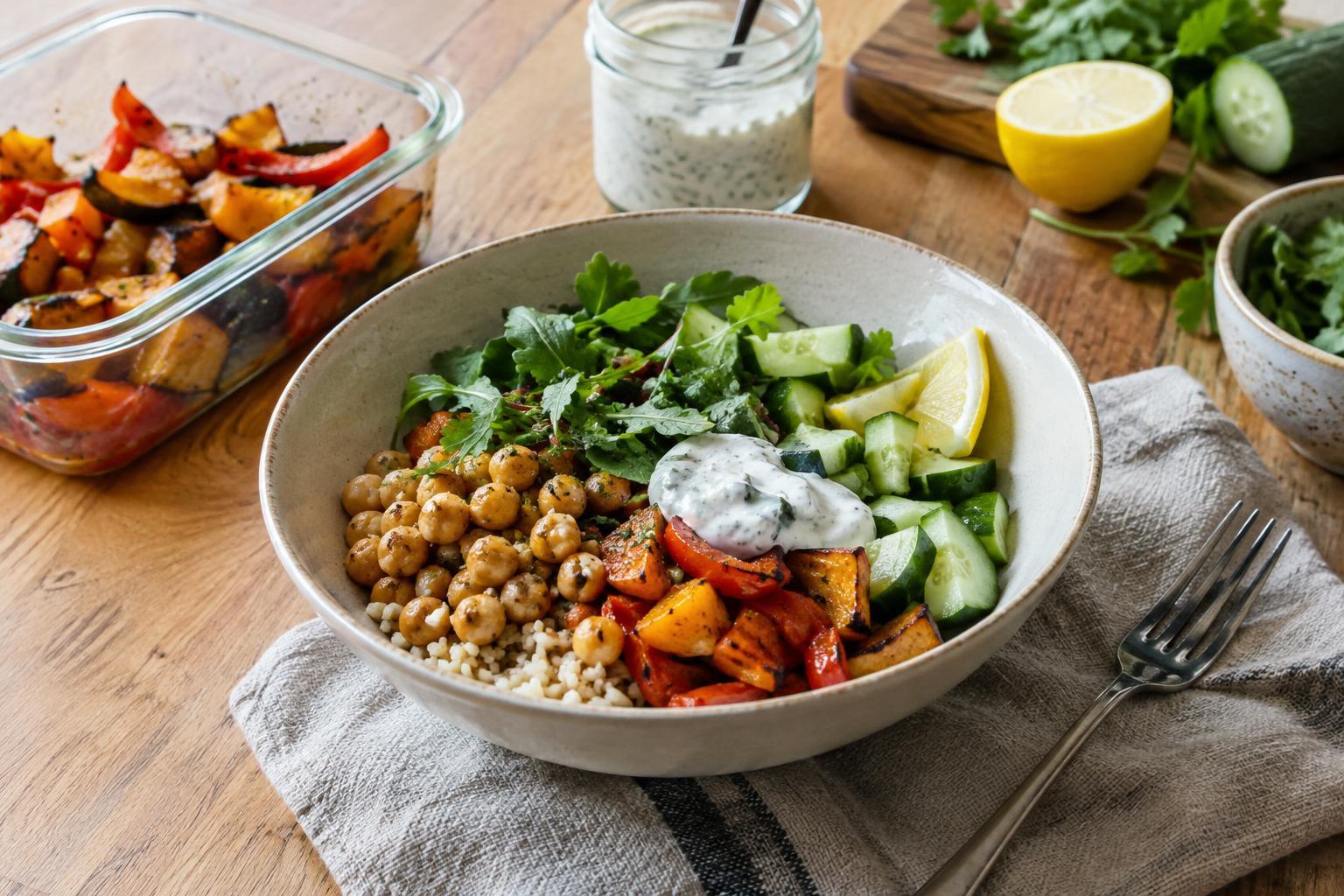
A bowl, toast, skillet, soup, or wrap can accommodate ingredients that do not quite add up to a conventional dinner. For a bowl, start with rice, noodles, greens, or roasted vegetables. For toast or a wrap, think about what can be piled or folded without spilling. A skillet is useful when several ingredients would taste better warm; soup can stretch a small portion of leftovers with broth and vegetables.
Next, add something that makes the meal feel substantial: beans, an egg, tofu, cheese, or an appropriate portion of cooked leftovers. There is no need for every component to be elaborate. Warm beans spooned over toast with sautéed greens and a little grated cheese can be a complete, appealing plate. If you have only a small amount of a filling ingredient, spread it through the meal instead of making it carry the whole dish.
Build contrast with texture and temperature
Fridge meals sometimes disappoint because everything is soft, cold, or similarly seasoned. One contrasting element can change that. Add raw cucumber to warm rice and beans, crisp leftover potatoes in a pan, or scatter toasted nuts over a plate of vegetables. Pickles, sliced apple, or shredded cabbage can provide crunch without requiring much preparation.
Temperature is another easy lever. A warm base with a cool topping often feels more intentional than a plate of unrelated leftovers. Try warmed grains with cold yogurt and herbs, or hot vegetables with a handful of fresh greens added just before serving. If you are reheating cooked food, heat it thoroughly and use a method suited to the ingredient. Delicate greens may only need a brief toss at the end, while dense vegetables may benefit from time in a covered pan.
Use a small sauce to connect everything
A sauce gives assorted ingredients a shared direction. It can be as simple as yogurt stirred with lemon juice, or olive oil whisked with vinegar and mustard. A spoonful of pesto can coat pasta and vegetables; a little salsa can bring eggs, beans, and rice together. Start with less than you think you need, toss or drizzle, then taste. You can always add more.
If the meal tastes flat, consider what is missing before adding another ingredient. Acid, such as a squeeze of lemon or a splash of vinegar, can brighten rich or starchy foods. Salt or a salty topping may make existing flavors more noticeable. For extra depth, try a little chili crisp, grated cheese, or toasted seeds if you have them. Choose one clear flavor direction rather than combining every open jar in the fridge.
Make it easier on your next weekend
You do not need to meal-prep several finished dishes to make this approach work. Keeping one versatile base ready, such as cooked grains or washed greens, gives future leftovers somewhere to go. A few useful finishing ingredients—lemons, yogurt, pickles, or a favorite condiment—can help turn that base into different meals without much effort.
Before shopping again, note which ingredients you repeatedly struggle to use. If half a bunch of herbs often gets left behind, plan a yogurt sauce or add the herbs to a bowl before they fade. The goal is not to empty the fridge at any cost. It is to make one good meal with what is suitable, save what will keep, and leave yourself with a little less to puzzle over tomorrow.


