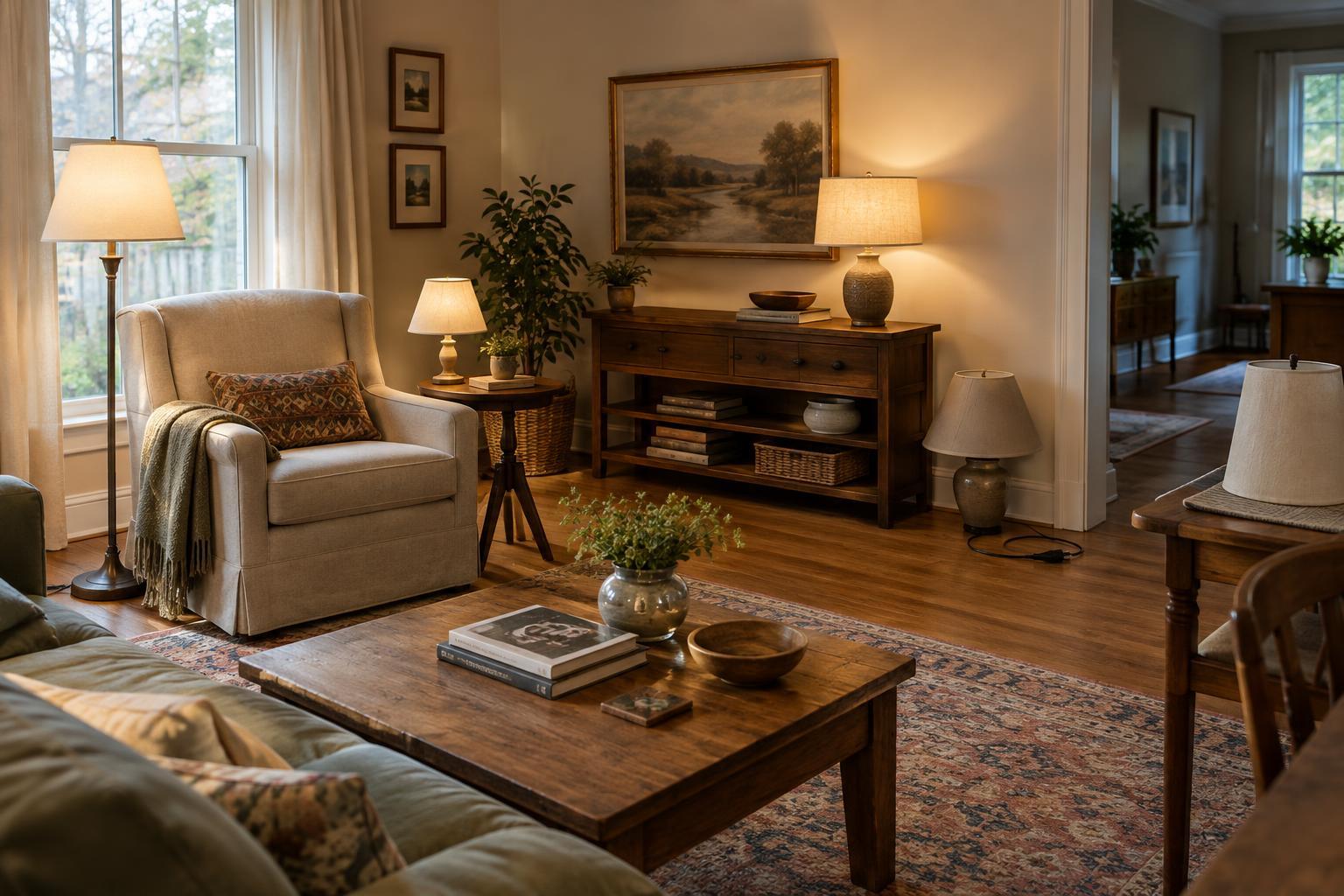
Start with the way you use the room
Before moving anything, spend a few minutes noticing where the room feels too dim, too harsh or simply awkward. Think about what you do there: read on the sofa, prepare food at a table, work on a hobby or settle in for a quiet evening. A room does not need to be equally bright everywhere. It needs enough light where you use it and a comfortable balance between those areas.
Gather the portable lamps you already own, including any that have ended up in a spare room or corner. Check which outlets are available, then choose one activity to improve first. Focusing on a specific spot makes this a manageable weekend project rather than a whole-room redesign.
Move lamps before changing anything else
Try placing a lamp near the activity it supports instead of expecting it to light the entire room. A table lamp beside a reading chair can be more useful than the same lamp across the room. For a desk or craft table, position the light so your hand or body does not cast a shadow over your work. Move it a little at a time, sit down and check the result from your usual position.
Next, look for dark corners and strong contrasts. Moving a floor lamp from behind furniture to an open corner may help the room feel more balanced. If a lamp produces an uncomfortable glare, shift it so the bulb is not in your direct line of sight. You can also try placing it near a light-colored wall, which may soften the effect as light spreads across the surface.
Use shades and bulb choices to shape the light
A lampshade changes where light goes. An opaque shade may direct more light up and down, while a lighter, more translucent shade may spread it more widely. If you own compatible shades, try swapping them and observing the difference. Keep each shade properly fitted and leave the clearance intended for the fixture; do not drape fabric or paper over a lamp to dim it.
Bulbs can make two nearby lamps feel mismatched. If you have suitable spare bulbs, compare their labeled brightness and color appearance rather than judging only by wattage. A warm-looking bulb may suit a relaxing corner, while a clearer, brighter one may help at a work surface. Always follow the lamp’s bulb-type and maximum-wattage instructions, and turn it off and let it cool before changing a bulb.
Test the room in layers
Once the lamps are in place, switch them on one at a time. Begin with the lamp that helps you see what you are doing, then add another to brighten a nearby wall or corner. Notice whether each addition solves a problem or creates glare. You may find that two well-placed lamps work better for an evening at home than switching on every light in the room.
Test the arrangement after dark as well as during daylight, when the window can no longer fill in dim areas. Walk through the room, sit in your usual places and check for reflections on screens or glossy surfaces. Small adjustments to a lamp’s angle or distance from the sofa can matter more than a complete rearrangement.
Finish with a practical safety check
Keep cords out of walkways and away from places where they could be pinched by furniture. Set each lamp on a stable surface, with space around the bulb and shade. Do not use a damaged cord, plug or socket, and avoid crowding an outlet with multiple high-power devices. If a lamp flickers, smells unusual or becomes unexpectedly hot, turn it off and address the problem before using it again.
Finally, leave the arrangement in place for a few evenings. Pay attention to whether reading is easier, whether a corner still feels gloomy and whether you actually switch each lamp on. The best setup is not necessarily the brightest one: it is the one that makes your usual weekend activities comfortable without adding clutter or extra work.


