Look for clues beyond the invitation
“Come as you are” can mean different things at a backyard lunch, a restaurant dinner or a neighbor’s open house. Before choosing clothes, picture what you will actually do. Will you sit on the floor, walk between venues, eat outdoors or help with a shared meal? The activity often tells you more than the word “casual.”
Consider the time of day, location and weather, too. A daytime gathering at someone’s home may call for clothes you can move in and shoes that are easy to wear for several hours. A casual evening at a restaurant may feel better suited to a slightly tidier version of your everyday look. If a quick question would help, ask the host something specific and low-pressure, such as whether people will be outdoors or whether the venue has a dress expectation.
Build from an outfit you already trust
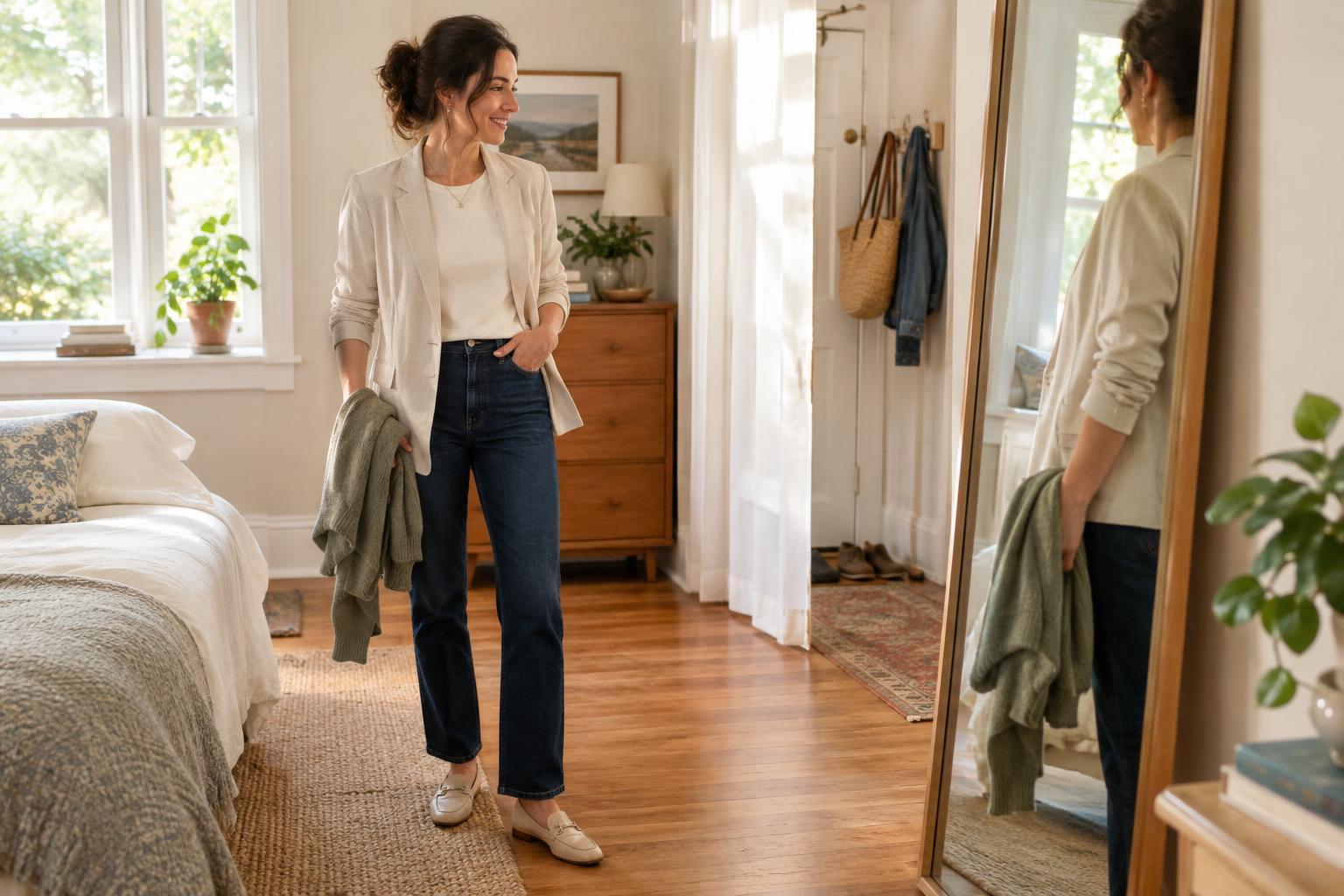
An unclear dress code is not the best moment to test an unfamiliar outfit. Start with pieces that fit comfortably and let you move, sit and eat without constant adjustment. That might be dark jeans and a neat shirt, relaxed trousers and a simple knit, or a casual dress with shoes you can walk in. The exact pieces matter less than feeling at ease in them.
Then add one element that looks intentional: a structured overshirt, a favorite jacket, a clean pair of shoes or a simple accessory. One considered choice can make everyday clothes feel ready for company without turning the outfit into a costume. Check for wrinkles, stains and loose buttons before you leave; those small details are often easier to manage than finding a completely different look.
Aim for the comfortable middle
When you cannot tell whether others will be dressed up, choose a middle ground that works in either direction. Pair a more relaxed item with a slightly smarter one: jeans with a crisp top, tailored trousers with a plain T-shirt, or an easy dress with a casual layer. This gives the outfit balance without making it feel formal.
Think about footwear as part of that balance. Clean sneakers, simple flats, loafers or comfortable boots can each work, depending on the setting and what you own. Choose shoes for the ground and the journey as well as the room. An outfit that looks right but makes you avoid walking to the gathering is not serving your weekend well.
Leave yourself one easy adjustment
A removable layer is useful when both the temperature and the mood of the gathering are uncertain. A jacket, cardigan or overshirt can add polish on arrival and come off if everyone is more relaxed. If you are carrying a bag, keep it practical rather than packing a second outfit. You should be able to settle in, not manage a wardrobe change.
Try the complete outfit on before it is time to go, including shoes and any layer you plan to bring. Sit down, reach for something and check that you feel like yourself. If one piece demands repeated fixing, swap that piece rather than starting over. This quick test is especially helpful when you have limited time to get ready.
Get dressed, then let the outfit go
You may arrive and find that some guests are more dressed up and others less so. At a casual gathering, that range is often easier to navigate than it seemed beforehand. A comfortable, considered outfit gives you room to focus on the people and the occasion instead of comparing every detail.
For next time, notice which combinations helped you feel both relaxed and prepared. Keep a mental shortlist of reliable outfits for different settings, such as a friend’s home, an outdoor get-together or an informal dinner. When another vague invitation appears, you can start from something that already works and spend less of your weekend deciding what to wear.


